More details, please. The case for Australian SSNs is incomplete
The Australian government still has some explaining to do on the AUKUS submarine program. Two of the stated reasons for buying nuclear attack submarines (SSNs) – deterrence and trade protection – have holes in them.
This is not to say they are necessarily false. But the public needs more details about a program that’s estimated to cost as much as A$368 billion over 30 years.
And, on the point of money, that needs explaining, too. We have not heard a thorough explanation from the government of why buying SSNs is preferable to buying other equipment, such as aircraft, or other economic security measures, such as subsidising domestic production.
Limits of deterrence
On deterrence, the logic of AUKUS is collective: Australian SSNs will operate with US and allied forces to raise the costs to Beijing of initiating conflict. But if Beijing concluded that Taipei and Washington were moving to put peaceful unification with Taiwan out of reach, the expert consensus is that it would accept war to prevent permanent separation.
Deterrence also depends on credibility. Beijing must judge not only what allied forces and could do but also whether and under what circumstances they would be used. In a war across the Taiwan Strait or in the South China Sea, it is not clear that Canberra, Washington and other allied capitals know what they’d do with their forces, much less pass unambiguous answers to Beijing.
The other question is how much difference Australian SSNs would even make to the probability, timing or outcome of such a conflict.
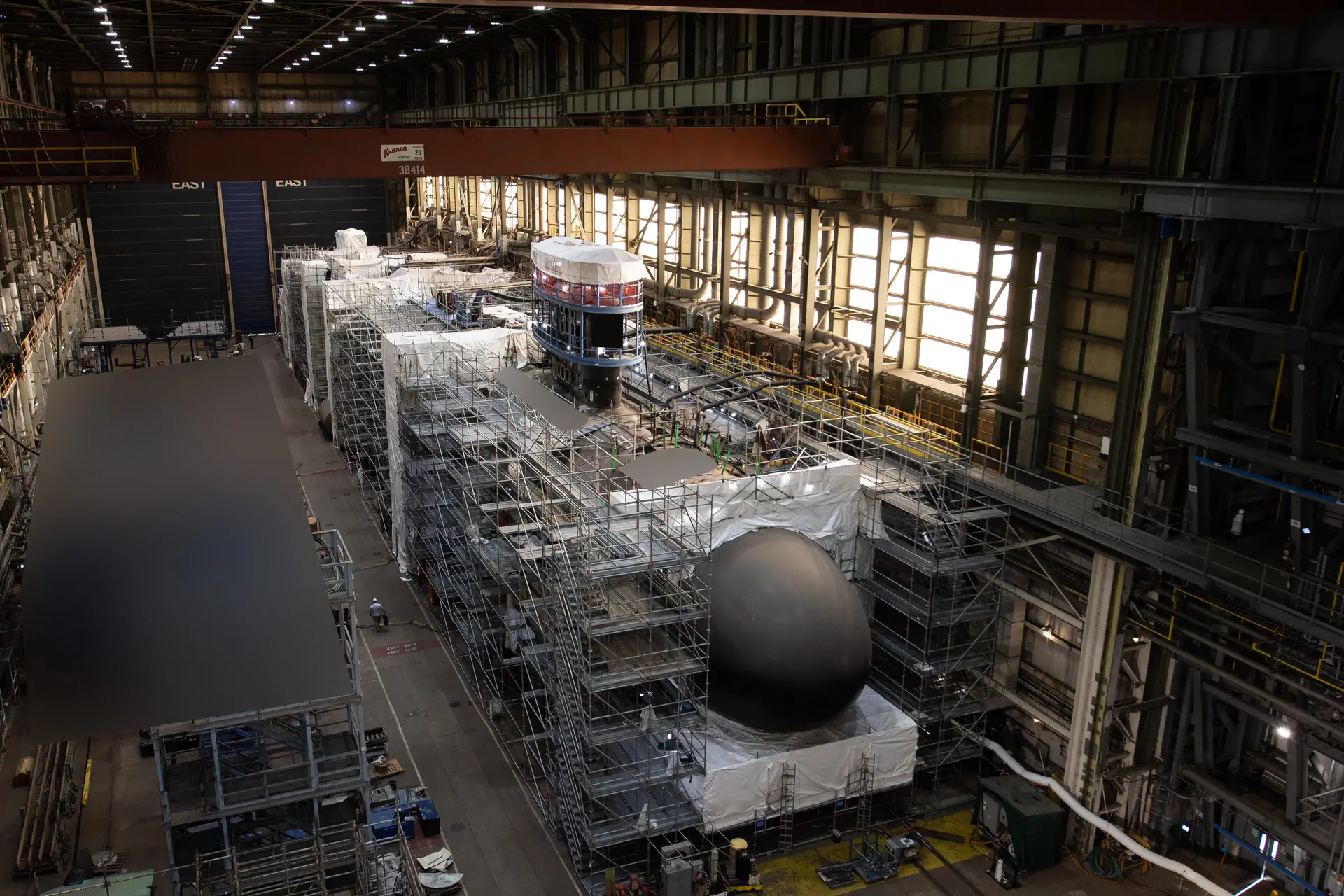
Australia’s initial batch of SSNs will come from the existing US inventory. A transfer does not increase total allied hull numbers, nor has the US’s production of SSNs expanded at the pace required to transfer submarines while expanding its own fleet, despite billions of dollars in Australian funding for the US industrial base.
Forward allied basing at HMAS Stirling to the south of Perth offers a more immediate benefit by reducing submarines’ transit time to potential conflict zones and keeping them longer in a fight. However, claims that these arrangements could increase allied submarine capability by 50 to 63 percent depend on optimistic assumptions that a maximum of four US SSNs and one British SSN are forward deployed and using the base. This is yet to be seen, and indeed there have been reports that at times this year no British nuclear attack submarine has been at sea.
Increased forward presence seems to depend on a net increase in allied operational capacity.
Safeguarding maritime trade
If deterrence failed, SSNs could be powerful instruments of sea denial, preventing hostile forces from operating freely. But trade protection requires coordinated submarines, surface combatants, aircraft, surveillance and logistical support.
And scale still matters. Even if Australia’s eighth and last SSN arrives in the mid-2050s as forecast, defence experts point to only two being consistently available. Those two boats would have many tasks, including intelligence collection, anti-submarine and anti-surface warfare, long-range strike, defence of Australia’s approaches, and protection of commercial shipping.
Australia’s economic security can also be threatened through multiple channels. According to the Productivity Commission, two-thirds of vulnerable imports come from China. That would stop regardless of what SSNs did.
Also, maritime trade is not as precarious as often implied. A regional conflict could severely disrupt trade, but this should not be equated with cessation of essential supply. The continued movement of oil tankers through the Strait of Hormuz during the current US–Iran conflict, albeit at much higher cost, illustrates this distinction.
Australia has widely dispersed ports and many lines of maritime approach. Trading partners, such as Japan, have incentives to maintain flows. So an attempt by an enemy to impose comprehensive economic strangulation would not be straightforward.
This begs the question of whether SSNs would in fact be necessary to safeguard trade.
Moreover, their value in such a role looks limited – mainly listening for enemy submarines and cueing aircraft to attack them. They couldn’t shoot down bombers and their anti-ship missiles.
Opportunity cost
The choice is not between acquiring SSNs and leaving Australia undefended. It is between alternative portfolios of military capability and economic resilience: long-range strike, conventional and autonomous underwater systems, maritime surveillance, anti-submarine warfare, stockpiles and supply-chain diversification.
None necessarily replicates every advantage of SSNs. This is precisely why the AUKUS submarines’ unique benefits must be weighed against their significant cost, potentially delayed delivery and the capabilities forgone elsewhere.
The strategic case for AUKUS cannot rest on the uncontroversial propositions that SSNs are powerful weapons and Australia is an island nation dependent on trade.
Rather, its advocates must demonstrate what additional deterrence and trade protection Australian-owned SSNs provide, and why comparable outcomes cannot be achieved sooner, more reliably or at lower cost.
Treating AUKUS as irreversible simply by insisting, as Deputy Prime Minister Richard Marles has, that ‘AUKUS is happening’ substitutes political commitment for the strategic assessment that Australia’s largest defence investment demands.
About Author