Kasandigan – the Philippines is pivotal to Australian strategy as never before
The rising significance of the Philippines in Australian strategy was one of the lesser-noticed developments in Prime Minister Anthony Albanese’s Asian itinerary last week. The Kasandigan statement he issued with Ferdinand Marcos Jr brings Australia and the Philippines closer than ever before – and solidifies the Squad quadrilateral grouping with Japan and the United States.
Australia, like the Philippines, is building closer defence ties with the United States and its allies, and with a wider range of partners. The purpose is to bolster resilience and knit together new forms of collective deterrence in search of a stable regional balance of power.
For Canberra this has brought about a transformation of the Philippines relationship, which is now central to Australia’s objectives. A rapid acceleration in security cooperation, especially since the 2023 strategic partnership between the two countries, aims at supporting Philippine defence, upholding maritime rules and building deterrence.
Albanese politely said cooperation with the Philippines wasn’t directed at any one country, but the intensification of China’s coercive pressure was the subject of a major conference held in parallel. It’s that pressure which makes the Philippines pivotal – with its US alliance, democratic system and support for international law. Between the South China Sea and the Pacific, and in close proximity to Taiwan, the Philippines is also integral to military strategy.
If there’s to be a region where ‘no country is dominated’, as Foreign Minister Penny Wong puts it, the Philippines is on its front line.
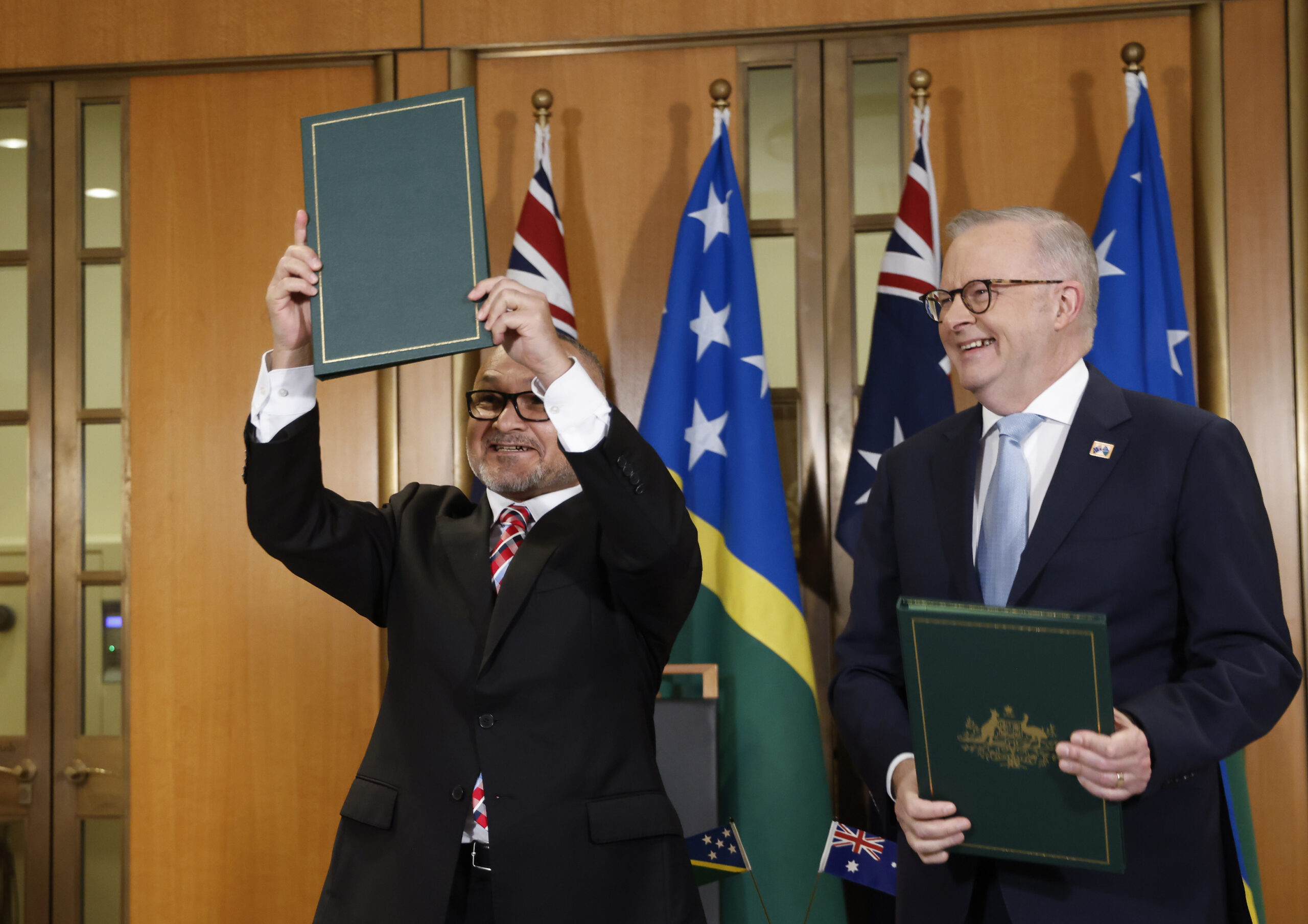
Kasandigan is a Tagalog word meaning to lean against each other, best understood in this context as ‘mutual reliance’. The statement is the latest in Canberra’s growing network of security commitments. Its core provision is to ‘consult each other on contingencies that may affect our sovereignty or shared defense and regional security interests, and consider appropriate measures in response, consistent with our respective processes’.
This is much the same as the 2022 declaration between Australia and Japan and the 2026 Jakarta Treaty with Indonesia, and resembles Australia’s non-reciprocal undertakings with Malaysia and Singapore in the Five Power Defence Arrangements. While not a formal treaty alliance like those Australia now has with Papua New Guinea, Fiji, New Zealand and the US, it represents a major elevation of Australia’s commitments to the Philippines.
It’s also a historical shift. Australia’s first diplomatic relations in Southeast Asia were with the Philippines, but the relationship has often been described as ‘overlooked’. Things might have been different had Washington not decided in 1951 on a trilateral Australia–US–New Zealand pact and a bilateral Mutual Defence Treaty with Manila – at a time when all countries were willing to enter a quadrilateral alliance.
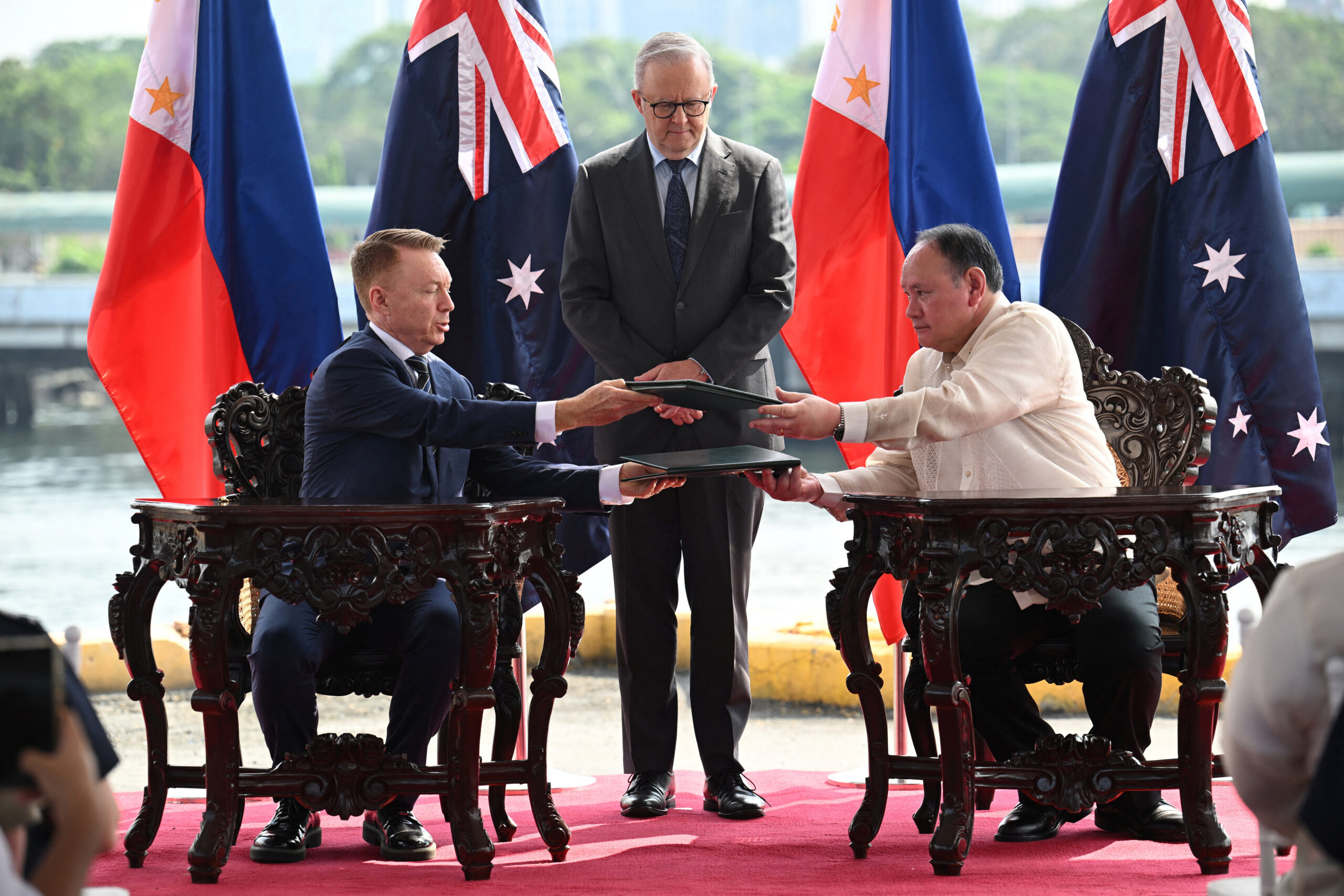
The change is seen in the Defence Cooperation Arrangement (DCA), signed by Australia and the Philippines a day before the Kasandigan statement, which modernises the expanding defence relationship between Australia and the Philippines. The DCA foreshadows increased cooperation in maritime security, littoral operations, logistics and sustainment, information-sharing, strategic dialogue, planning, training and infrastructure development. Kasandigan also points towards more security cooperation in civil maritime, foreign information manipulation, cyber and transnational crime.
These expanding bilateral ties fit within growing quadrilateral coordination announced by the Philippine, Australian, American and Japanese defence ministers on 10 November. The four-country Squad will establish a Combined Coordination Centre at Camp Aguinaldo in Manila. It follows the creation of a Pacific Chiefs of Defense Cooperation Council which agreed last May to run regular maritime patrols ‘to sustain persistent, deterrence-reinforcing presence’.
The Squad is synchronising support for the Philippines ‘in defending its archipelago’, increasing consultations among ministers and senior officials and expanding the scope, complexity and frequency of combined exercises and cooperative activities. It is fast emerging as a joint operational structure to support the defence of the Philippines and counter China’s maritime pressure. It boosts deterrence, shares risk and complicates China’s activities and retaliation.
None of this is premised on a reduced US role. The Trump Administration has shown firm support for defence of the Philippines, maritime rules in the South China Sea and deterrence along the First Island Chain, notwithstanding anxieties about Trump’s predictability and possibilities of American retrenchment.
Rather, the three US allies are stepping up efforts, increasing their capabilities, doing more to support each other, and coordinating action to greater effect. This is the right way to build the mutual support and collective deterrence needed for a stable balance in an enduring contest with Beijing. It improves the position of the three allies, but, given the enormous scale of China’s military expansion, the United States remains essential for balancing and deterrence.
Albanese and Marcos also committed in the Kasandigan statement ‘to strengthen engagement between our leaders, ministers, senior officials and armed forces’. Australia and the Philippines already have substantial institutional links, but deepening consultation ought to be Canberra’s next step. The relationship hasn’t carried this kind of strategic priority or risk before and there’s need for an increased level of political engagement and understanding that matches it.
About Author