Fake Conferences, OAuth and WhatsApp: Inside Russia’s New Espionage Tactics
Fake Conferences, OAuth and WhatsApp: Inside Russia’s New Espionage Tactics

 August 21, 2026
Google tracks three Russia-linked espionage clusters using phishing and legitimate authentication tools to target researchers, diplomats and defense staff.
Google’s Threat Intelligence Group tracked three separate suspected Russia-linked cyber espionage clusters. All three focus on the same thing: abusing authentication features that are supposed to protect accounts to access them instead.
Threat actors target researchers, academics, government officials, think-tank analysts, and defense sector personnel across Europe and the United States. The three clusters are tracked as UNC6293, UNC7005, and UNC5976, and while they operate differently and with different tools, Google published them together for a reason.
“These clusters engage in persistent, adaptive phishing campaigns, using sophisticated social engineering tactics to compromise personal accounts across multiple platforms.” reads the report published by GTIG. “Because these operations abuse legitimate authentication flows which may not immediately seem like phishing attempts to users, GTIG is raising awareness about these social engineering campaigns targeting individuals so that targets can more readily recognize malicious outreach.”
UNC6293 is the oldest of the three and the most precisely attributed. Google assesses with moderate confidence that it’s a sub-cluster of ICE RELIC, the group also tracked as APT29, responsible for initial access operations.
Its operations are narrow by design: typically fewer than five targets at a time, with themes built around diplomatic events and upcoming conferences. Since it was first documented in June 2025, UNC6293 has consistently impersonated US State Department officials to run app password phishing. The technique is simple but effective. The attacker convinces a target to set a specific app password on their account, one that the attacker already knows, and then uses it to log in without triggering two-factor authentication.
By October 2025, UNC6293 was still reusing screenshots from its June phishing lures, including the ms.state.gov reference, while only changing the surrounding text. By June 2026, the group had added OAuth phishing. After logging in to a legitimate service, victims were asked to share a URL or “verification code,” allowing attackers to obtain valid access tokens. The trick works because the login itself is legitimate, while the attackers hide the malicious step elsewhere.
UNC7005, tracked by Microsoft as STORM-2945, is a related but separate cluster first identified in February 2026. Google assesses it’s also connected to ICE RELIC, but notes it operates with lower technical sophistication and worse operational security than UNC6293. It compensates with a wider toolkit. UNC7005 runs app password phishing, device code phishing against both Microsoft and WhatsApp, malware distribution, and OAuth phishing operations, sometimes in the same month.
“UNC7005 also conducts device code phishing operations for both Microsoft and WhatsApp accounts.” continues the report. “The themes of these phishing waves often involve invitations for calls with individuals from notable organizations related to the target’s field or, most recently, invitations to diplomatic events and conferences. “
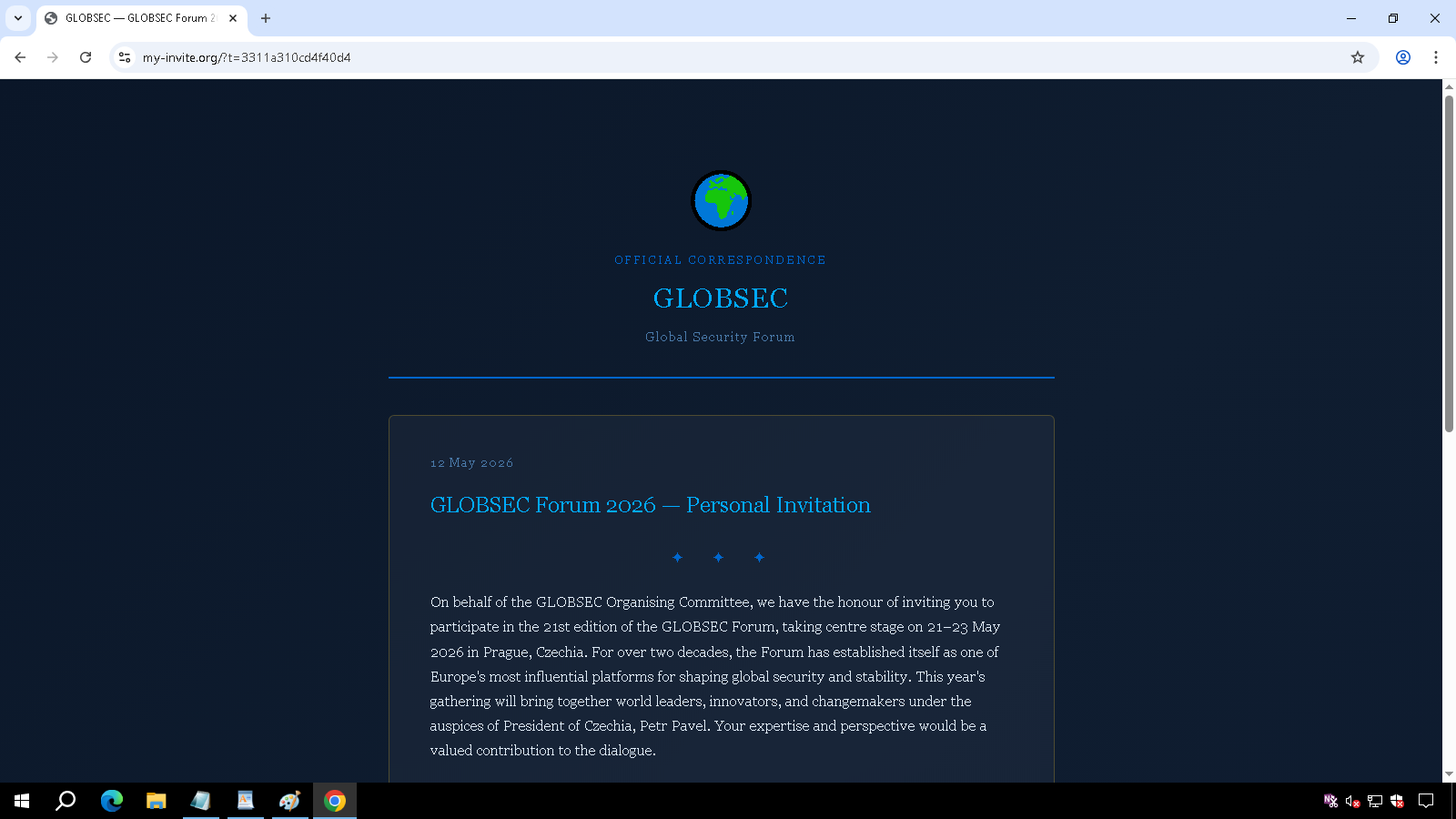
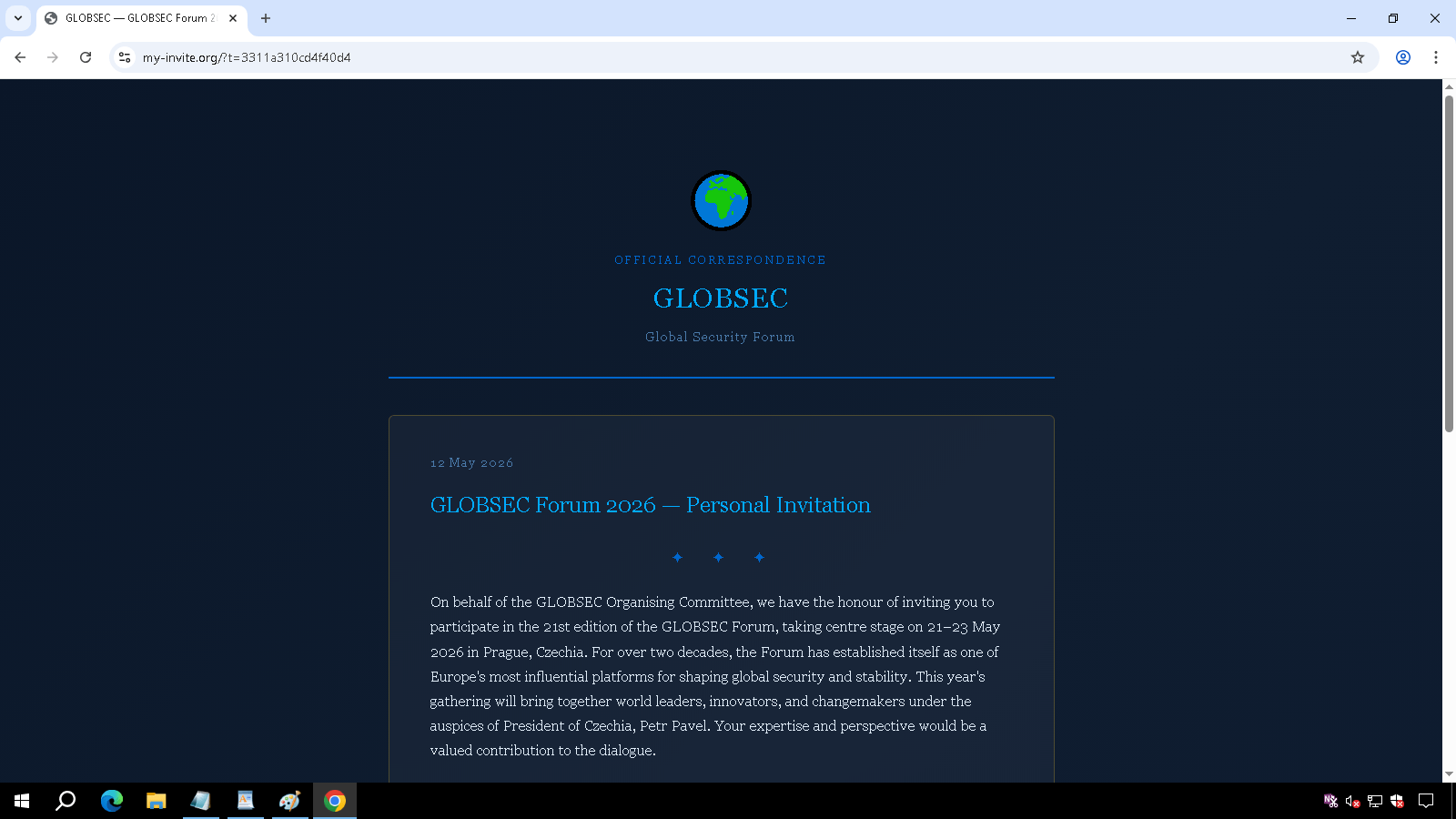
The GLOBSEC conference spoof is a useful illustration of how UNC7005 works. The actor built a landing page mimicking an invitation to the legitimate GLOBSEC forum in May 2026, collected detailed registration information from targets including, not for the first time in ICE RELIC-linked operations, a wine selection for a fictional dinner, and then presented a Microsoft device code for the target to enter. The registration form still contained a reference to “Embassy security policy” rather than GLOBSEC, a leftover from the previous lure template that the actor hadn’t cleaned up. When Google flagged the page quickly, UNC7005 revised the template within days, citing “technical difficulties” to explain the change to anyone still watching.
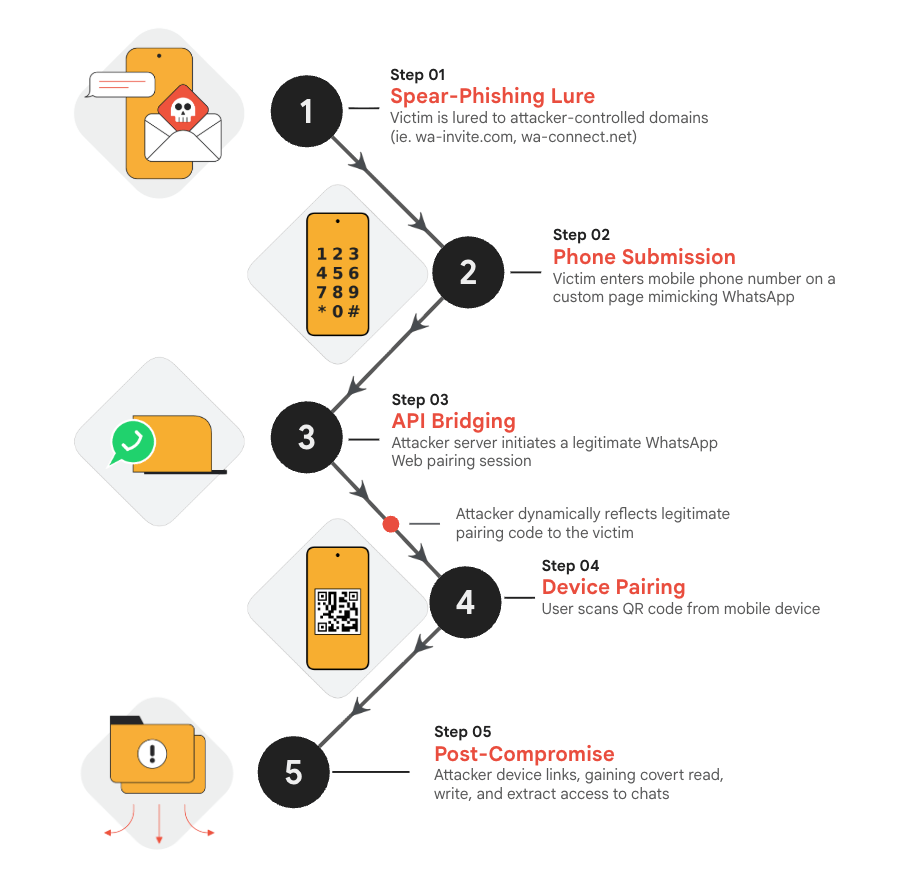
UNC7005 also used WhatsApp phishing pages to trick victims into linking their accounts to an attacker-controlled device. The fake pages offered options such as joining a call, opening an encrypted chat or downloading a file. If victims chose the call option, malicious JavaScript asked for microphone and camera access, recorded them, and sent the footage to the attackers.
In late May 2026, UNC7005 ran a broader phishing wave targeting US-based academics, diplomats, and Russia researchers. The lure was a fake “Summit Companion App” to read a document supporting Ukraine.
“In May and June 2026, UNC7005 conducted social engineering operations spoofing WhatsApp. The phishing pages distributed by the attacker lure targets into linking their WhatsApp accounts with an attacker controlled device in order to join a secure WhatsApp call, chat, or document share.” states the report. “The attacker also attempts multiple other methods of compromise after the device is linked.”
Windows users who downloaded it received VIDAR, an off-the-shelf infostealer sold as a service that pulls saved credentials, cookies, and payment data from browsers. Mac users received ATOMIC, also known as AtomicStealer, a macOS infostealer operating the same business model. Neither is custom tooling. The actor’s email address in this operation was nearly identical to one used by UNC6293 a year earlier.
The hospitality captive portal campaign, previously reported by Reliaquest and Microsoft and attributed to Midnight Blizzard, connects directly to UNC7005. Google traces the infrastructure back to April 2026: domains spoofing Microsoft authentication resources, which Google added to Safe Browsing blocklists as they appeared. By mid-July 2026, those same domains were receiving redirects from captive portals at hotels and conference centers. The IP resolution trail links the captive portal infrastructure to the GLOBSEC device code phishing operation and to ENGINELIGHT, a Go-based malware used in a separate limited UNC7005 operation in May 2026.
CHERRYPIE, also known as ChocoShell, is a PowerShell infostealer that adds another interesting detail. Google found comments and code references that appear consistent with AI-generated code, suggesting the attackers may be using an LLM to develop malware. The data it targets overlaps with the commercial infostealers already used by UNC7005, leading Google to suspect that CHERRYPIE could be a customized version of a malware-as-a-service tool.
UNC5976 is the third cluster and the most distinct. It focuses on military, aerospace, defense industrial base, and NGO targets, concentrating geographically on Ukraine and Armenia. Instead of residential proxies for post-compromise access, as UNC6293 and UNC7005 use, it runs dedicated infrastructure. Its OAuth phishing is more automated: the actor registers file-sharing-themed domains, creates Google Cloud projects behind them, and uses cloud-hosted scripts to collect authentication tokens from targets who log in through what looks like a Google sign-in prompt on a fake file-sharing page. Within three months of Google disrupting this infrastructure, UNC5976 had built at least twelve new domains and was already migrating toward non-Google hosting providers.
In April 2026, UNC5976 also distributed HEADRUSH, a malicious Excel plugin, through a domain impersonating a Ukrainian research institute, potentially targeting a Ukrainian aerospace and imaging company. HEADRUSH eventually leads to an HTA downloader, though Google wasn’t able to recover the full infection chain.
The defender challenge that runs through all three clusters is the same one Google names directly.
” The accounts these groups target are often personal, rather than corporate domain-joined accounts, creating a visibility gap for monitoring compromise from an organizational perspective. The likely use of encrypted messenger applications instead of email for initial outreach also presents a challenge to defenders hoping to track and remediate abuse.” concludes the report. “The combination of these tactics not only enables the attacker to conduct quick-turnaround exfiltration operations, but also presents opportunities for the attacker to further phish targets of interest from compromised, legitimate accounts. “
Security teams watching corporate email and endpoint telemetry won’t see the initial contact. By the time a compromised personal account starts being used to phish the target’s contacts, the original access event is already cold.
Google’s practical guidance for individuals: don’t set app passwords for anyone who asks, revoke existing ones you don’t recognize, check WhatsApp’s linked devices list, and treat any OAuth authorization prompt from an unsolicited message as suspicious regardless of how polished the surrounding page looks. High-risk individuals should consider Google’s Advanced Protection Program, which blocks app password creation entirely.
Follow me on Twitter: @securityaffairs and Facebook and Mastodon
(SecurityAffairs – hacking, Russia)
About Author