
Australia must turn its quantum edge into a powerful deterrent
Defence should establish a procurement-to-export program for quantum clocks and sensors that connects successful trials to military qualification, Australian production and allied orders. Integrating the Australian Defence Force throughout development would help embed these emerging technologies into industry, sustaining domestic engineering and manufacturing through repeat demand.
In turn, directing Defence funds towards industrial development would help the ADF navigate and coordinate forces when GPS is disrupted, while building local capacity to supply, repair and upgrade that equipment during conflict.
Quantum technologies control the behaviour of atoms and light to measure physical changes, process information or communicate in new ways. In the military domain, these technologies are important in coordinating forces and navigating when satellite signals are unavailable.
Atomic clocks already underpin GPS. Newer quantum clocks could keep military communications and radar networks synchronised for longer when satellite timing is disrupted. Quantum sensors can measure motion or variations in Earth’s magnetic and gravitational fields, helping vehicles estimate their position without GPS, including underwater.
These technologies have different levels of maturity. Many newer systems still require smaller components, protection against vibration and temperature changes, and repeatable manufacturing. A laboratory result translates to military capability only when the device works reliably within a ship, aircraft or vehicle and can be maintained affordably. It must pass qualification by meeting the platform’s safety, reliability and performance requirements.
Australia already supports this transition. The 2023 National Quantum Strategy addresses commercialisation, infrastructure, skills and standards. The Critical Technologies Challenge Program connects researchers, companies and end-users through feasibility and demonstrator grants.
These measures support development. But for the technologies to be adopted by the ADF, they require qualification for particular types of equipment and funded acquisition.
QuantX Labs, an Australian quantum sensing company, demonstrates the pathway out of universities. Its optical clocks emerged from more than seven years of research, initially at the University of Adelaide in partnership with Defence. In 2024 Defence announced two contracts with QuantX worth a total of A$2.7 million, and QuantX and the University of Adelaide each contributed two clocks to AUKUS trials in 2025.
Other Australian companies in the field are also working with Defence. Q-CTRL develops quantum navigation through its Ironstone Opal system, while Nomad Atomics draws on gravity and acceleration research at the Australian National University and Humboldt University of Berlin. In May, Defence’s Advanced Strategic Capabilities Accelerator awarded A$7.2 million across magnetic-navigation developer Phasor Innovation, Nomad and Q-CTRL for undersea navigation development.
Such contracts demonstrate engagement with military needs, but they’re not enough to guarantee that prototypes will enter sustained production. Australia needs continuity from successful trials to funded acquisition decisions and repeat production. Otherwise, it risks financing discoveries while manufacturing and integration capabilities accumulate elsewhere.
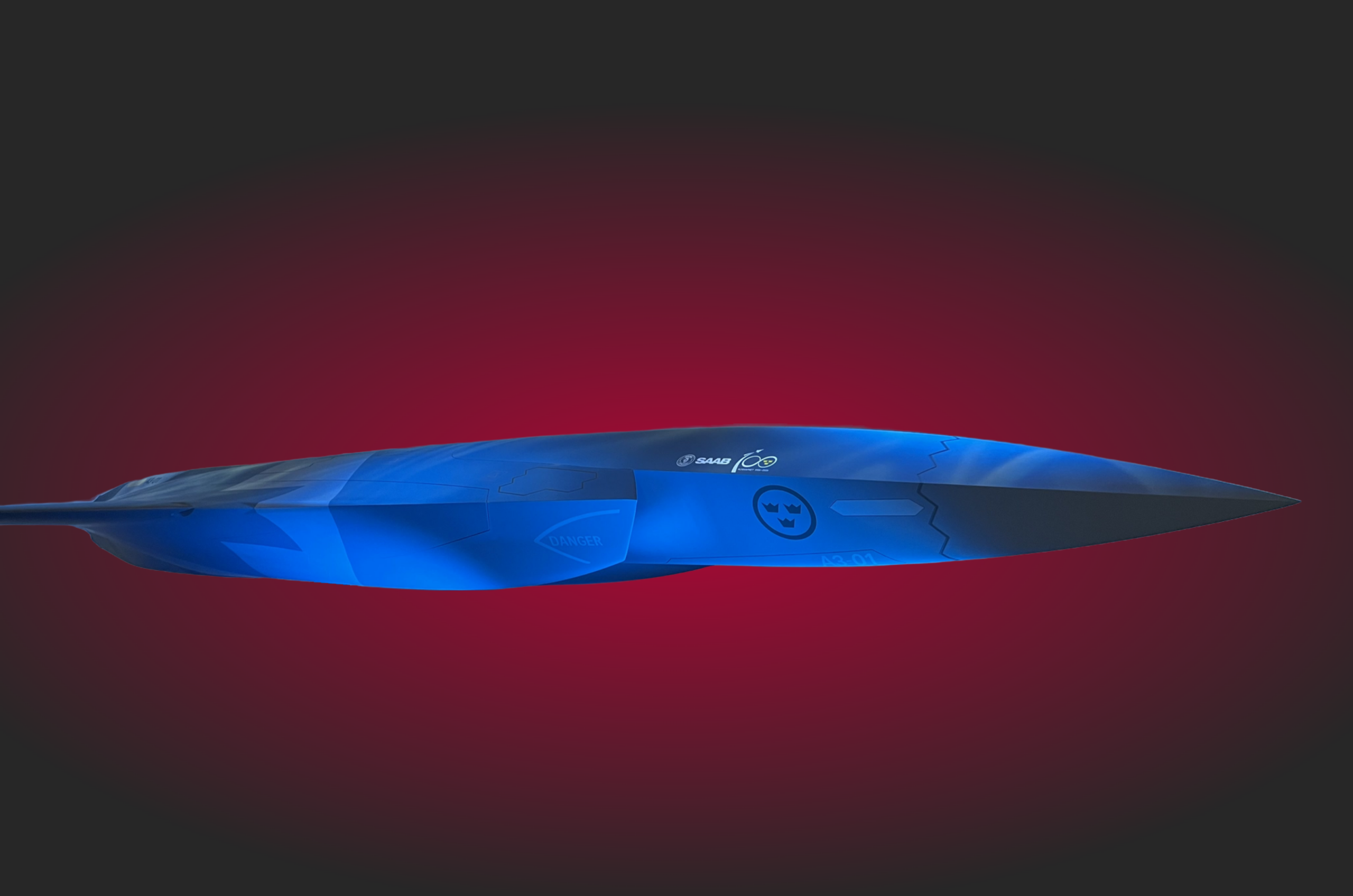
AUKUS partners are addressing this problem. In August, the US Defense Advanced Research Projects Agency launched a program for pilot manufacturing of tactical optical clocks, and the British Royal Navy trialled clocks from British startup Aquark with radars from Swedish defence company Saab.
Quad partners are also taking action. India has demonstrated quantum key distribution, a method of sharing encryption keys that can detect if they are intercepted, through a kilometre of open air rather than fibre-optic cable. Meanwhile, Japan supports quantum sensing research through its Q-LEAP program.
Australia should build its own program within existing Defence arrangements. The 2026 Defence Industry Development Strategy already supports faster procurement. The new program should start with resilient timing for communications and navigation for autonomous underwater vehicles. Each selected quantum project should have an ADF customer, a platform manufacturer and a funded route to an acquisition decision. They should agree operational requirements and acceptance tests before development begins, with operators involved throughout.
The program should support supply by financing the engineering that makes prototypes reproducible: component production, packaging, calibration and shared testing facilities. For example, QuantX’s Australian Space Agency-backed photonics facility already supports assembly and testing. Defence could competitively fund additional tooling and qualification work for firms such as QuantX to produce repeatable batches of military clocks. Universities and companies should work with manufacturers to establish reliable assembly processes. Funding should reward repeatable performance and affordable production, as well as scientific advances. Licensing or spinout arrangements should give companies access to university intellectual property, with researchers working alongside production engineers.
The program must also ensure that demand increases to match supply. Defence could purchase initial batches for operational evaluation, with options for multi-year orders conditional on performance and military need. Predictable purchasing would help companies retain engineers and justify production investment; unsuccessful systems should stop at agreed milestones.
Allied customers could help define compatible interfaces and testing requirements early, allowing Australian suppliers to design for several militaries. AUKUS trade reforms ease eligible transfers but they don’t qualify products or guarantee sales. Defence should seek recognition of shared test results where partner requirements permit. Contracts should preserve Australian capacity to manufacture, repair and upgrade equipment as companies enter allied supply chains.
The Nulka Active Missile Decoy, built in collaboration with the United States, offers an industrial precedent. The initiative sustained Australian production, with an A$150 million contract announced in 2021.
Quantum policy should pursue a similar program that supports continuity through development, military use and export demand. If successful, it can translate Australian quantum devices into equipment that Australian companies reliably produce and sustain, and that militaries repeatedly buy.
About Author