Operation Jackal: 58 Arrests Expose the Money Laundering Machine Behind Global Scams
Operation Jackal: 58 Arrests Expose the Money Laundering Machine Behind Global Scams

 August 26, 2026
INTERPOL’s Operation Jackal IV made 58 arrests and exposed global networks laundering money from scams, fraud and sextortion.
INTERPOL announced that Operation Jackal IV, running from November 2025 to June 2026, led to 58 arrests and identified 263 suspects tied to West African organized crime networks, groups like Black Axe that are responsible for a huge share of the world’s romance scams, crypto fraud, and business email compromise (BEC) schemes.
“Operation Jackal IV (November 2025 – June 2026) aimed to disrupt money laundering, identify high-value targets, seize assets, and support arrests and prosecution.” Interpol announced. “The operation, which brought together 22 countries from six continents, is a response to the escalating global threat posed by West African criminal networks – such as the Black Axe and other similar groups. These groups are responsible for a significant share of the world’s cyber-enabled financial fraud, typically through romance scams, cryptocurrency and investment scams or business email compromise fraud, as well as other serious and violent crimes.”
The goal wasn’t to chase individual scammers. Investigators followed the money behind the scams: shell companies, mule accounts and criminal services that help move and hide stolen funds. Tomonobu Kaya of INTERPOL’s Financial Crime and Anti-Corruption Centre explained the approach: By following illicit financial flows across borders, we are attacking the very lifeblood of organized crime.
Argentina turned up one of the operation’s biggest finds. Investigators identified 196 individuals connected to a crime-as-a-service network suspected of supplying website domains and laundering support specifically for West African criminal groups, resulting in 17 arrests. INTERPOL sent an Operational Support Team to help analyze seized data and map out the wider network of suspects, the kind of cross-border analytical work that individual national police forces usually can’t pull off on their own.
South African authorities raided seven locations in Johannesburg linked to a group running romance and investment scams against retirees in English-speaking countries.

The syndicate assigned members to specific roles, such as “conversion” and “retention” agents. The operation led to 39 arrests, $2.67 million seized and 257 bank accounts frozen, the largest number of arrests in the operation.
Italy’s case shows how much damage a single laundering account can absorb. One individual was tied to a pan-European laundering network moving money through shell companies and remittance services, and investigators traced €845,000 laundered through a single account across 560 separate transactions using 20 different financial instruments. That’s not a careless operator; that’s someone who understood exactly how to fragment a large sum into a pattern designed to look unremarkable at every individual step.
Romania’s case was the biggest by dollar value, and arguably the most brutal in its simplicity. A call center ran a fake investment scheme promising big returns on stocks and crypto, funneling victims’ money into wallets the operators controlled, and by the time authorities dismantled it, the estimated theft and laundering total had climbed to around €143 million globally. Eleven arrests and roughly €379,000 in cash and crypto seized, plus six properties and several luxury watches, is a real result, but it’s a fraction of what actually got stolen.
“Beyond individual cases, Operation Jackal IV also enabled the analysis of critical and emerging trends, including a rise in West African organized crime groups using sextortion to target minors, with victims as young as 14. Offenders typically contact minors via social media, build trust and coerce them into sharing explicit images or videos.” concludes INTERPOL. “They then threaten to distribute this material to the victim’s contacts unless a ransom is paid.”
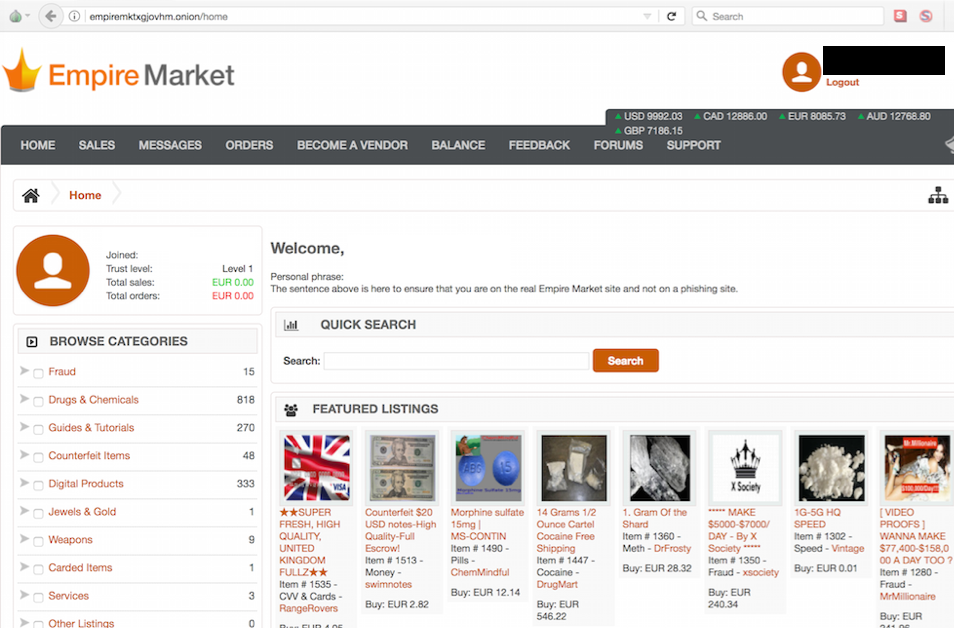
The report’s darkest finding sits outside any single country’s arrest count. INTERPOL flagged a rising trend of these same criminal networks using sextortion against minors as young as 14, building trust through social media before coercing victims into sharing explicit images and then threatening to distribute that material unless a ransom gets paid. Some of these groups were even observed buying crime-as-a-service support through the dark web specifically to outsource pieces of that operation, treating exploitation infrastructure as just another service line alongside laundering and fraud.
That’s the uncomfortable throughline connecting every case here: these aren’t scattered opportunists, they’re networks running organized business models with specialized roles, outsourced services, and financial engineering sophisticated enough to move hundreds of millions across borders. Twenty-two countries coordinating for eight months produced real numbers, real arrests, real frozen accounts. It also produced a fairly clear picture of how much more organized this side of cybercrime has become, and how much further there is to go.
Follow me on Twitter: @securityaffairs and Facebook and Mastodon
(SecurityAffairs – hacking, Operation Jackal)
About Author