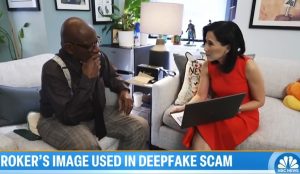
Contrary to reality, Al Roker was showcased in a deceptive deepfake video across Facebook, depicting health issues he never experienced.
During a recent NBC segment, Roker exposed a fraudulent AI-generated video misusing his identity to endorse a fake health product, spreading misinformation about his health.
Roker expressed astonishment, recalling how he stumbled upon the video and heard himself discussing non-existent health issues.
The manipulated video fooled acquaintances and even some of Roker’s celebrity colleagues, demonstrating the deceptive nature of such deepfakes.
Although Meta removed the video post-alert from Facebook, the impact had already taken its toll, emphasizing the prevalence and credibility of deepfakes in the digital era.
Roker remarked, “The conventional belief of ‘Seeing is Believing’ no longer holds true.”
From Al Roker to Taylor Swift: The Emergence of New Swindles
Deepfake scams targeting public figures are becoming prevalent, with instances involving Taylor Swift in a fake product promotion video and Tom Hanks disapproving a fake ad featuring him endorsing a dental plan.
These scams mislead and defraud individuals by misusing the image and reputation of well-known personalities for illicit purposes.
Reflecting on the situation, Roker shared his concerns with colleagues, highlighting the evolving technological landscape and its potential risks.
Nguyen’s demonstration illustrated the ease of generating fakes using freely accessible tools, underscoring BrandShield CEO Yoav Keren’s perspective on the escalating global concern regarding such videos.
The Effectiveness and Hazards of Deepfakes
McAfee’s report revealed that Americans encounter an average of 2.6 deepfake videos daily, with the younger generation exposed to up to 3.5 on a daily basis. These scams capitalize on the technology’s ability to convincingly replicate voices, behaviors, and expressions.
Moreover, the deception extends beyond celebrities:
- Criminal entities have employed fake CEO personas for authorizing deceitful money transactions.
- Individuals have been impersonated during family crises for monetary gain.
- Personal data was collected by them through fake job interviews
Measures to Safeguard Against Deepfake Frauds
Despite the progression of deepfake technology, there are methods to detect and prevent them:
- Monitor for unusual facial expressions, rigid movements, or mismatches between lips and speech
- Listen for mechanical audio, absences of pauses, or unnatural speed
- Inspect uneven or poorly produced lighting
- Validate sensational assertions from credible sources—particularly those concerning finances or health guidance
And most importantly, maintain skepticism about celebrity endorsements across social media. If they appear out of character or too good to be true, they likely are.
McAfee’s Employment of AI Solutions for Assistance
McAfee’s Deepfake Detector, driven by AMD’s Neural Processing Unit (NPU) within the latest Ryzen AI 300 Series processors, identifies manipulated audio and video instantly—supplying users with a vital advantage in recognizing forgeries.
This solution operates locally on your device for quicker, confidential detection—and reassurance.
Al Roker’s ordeal illustrates how intimate—and convincing—deepfake deceptions have grown. They erode the boundaries between reality and fiction, impacting your faith in individuals you revere.
With McAfee, you can take a stand.
The post ‘Seeing is Believing is Out the Window’: What to Learn From the Al Roker AI Deepfake Scam appeared first on McAfee Blog.
About Author