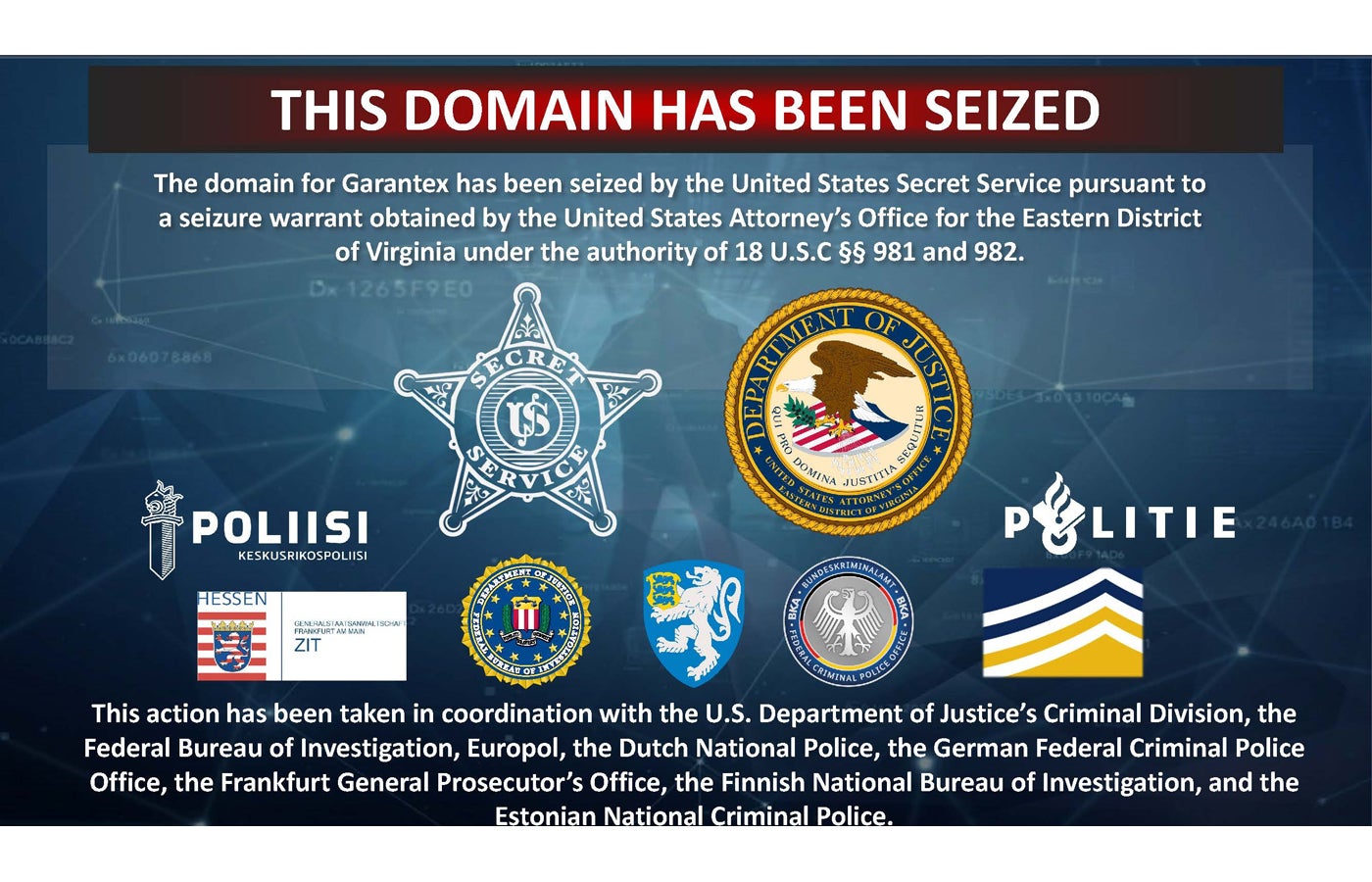
Russian cryptocurrency exchange Garantex’s website has been confiscated by the U.S. Secret Service, symbolizing a significant global crackdown on a platform suspected of facilitating illegal money laundering operations worth billions of dollars.
Through a collaborative effort involving law enforcement authorities from the U.S., Germany, Finland, Estonia, and various European nations, Garantex’s digital domains — Garantex.org, Garantex.io, and Garantex.academy — were shut down and now exhibit a notice of seizure issued by the Secret Service.
Officials state that the exchange has played a critical role in cybercrime, handling over $96 billion in transactions since its establishment in 2019. Investigators allege that a substantial portion of this sum originated from hackers, narcotics distributors, and even terrorist factions.
“The confiscation of the website domains linked to Garantex’s operations and the freezing of more than $26 million in cryptocurrency represents a severe financial blow to cybercriminals on a global scale,” remarked Michael Centrella, assistant director of the U.S. Secret Service’s Office of Field Operations.
Two individuals operating behind the scenes — Aleksej Besciokov, a Lithuanian national residing in Russia, and Aleksandr Mira Serda, a Russian citizen — have been indicted for engaging in a conspiracy to launder money and other offenses. Besciokov additionally faces accusations of breaching sanctions and operating an unlicensed monetary enterprise.
As per U.S. court records, both individuals knowingly aided criminals in transferring funds through Garantex and went to lengths to conceal their actions from authorities. In a particular instance, they purportedly furnished Russian law enforcement with falsified records pertaining to an account linked to one of the suspects.
A Series of Alarm Bells
This isn’t the initial instance where Garantex has attracted attention. In 2022, the U.S. Department of the Treasury’s Office of Foreign Assets Control (OFAC) imposed sanctions on the exchange, alleging its connection to the infamous Conti ransomware gang and Hydra, a defunct darknet marketplace.
Despite being sanctioned, the platform reportedly persisted in its operations by altering wallet addresses daily to evade detection. It also continued to engage with U.S. clients, despite being placed on a blacklist.
Last Thursday, the cryptocurrency stablecoin issuer Tether froze $28 million worth of its tokens held on Garantex. Shortly after, the exchange declared in a Telegram post that it had halted all activities, including cryptocurrency withdrawals. In Russian, the company conveyed, “We have encountered challenges but we are resolute!”
SEE: $1.5B Bybit Hack is Linked to North Korea, FBI Says, in Potentially the Largest Crypto Heist Ever
A Cautionary Signal to Fellow Crypto Wrongdoers?
Authorities and cybersecurity professionals are considering this as a notable triumph in the fight against unlawful cryptocurrency operations.
Michael Centrella of the U.S. Secret Service described the operation as a critical financial setback to cybercriminals globally. Concurrently, TRM Labs, a blockchain analysis firm, characterized the seizure as a “significant milestone” in the worldwide campaign against crypto-related criminal activities.
About Author