Protecting the Human Operating System: How Technology Teams Can Perform Under Pressure in an Always-On World
.jpg "Protecting the Human Operating System: How Technology Teams Can Perform Under Pressure in an Always-On World")
Protecting the Human Operating System: How Technology Teams Can Perform Under Pressure in an Always-On World
Technology organisations invest heavily in risk prevention through protecting systems, infrastructure and data. Yet the most important operating system behind every decision, response and transformation is often overlooked: the human brain.
.jpg&h=420&w=748&c=0&s=0)
For technology teams, pressure is part of the job. Cyber threats do not wait for convenient hours. Transformation programs compete with business-as-usual demands. AI is accelerating both opportunity and risk. When everything feels urgent, the cost is not limited to wellbeing. Sustained pressure can affect how people think, communicate, collaborate and make decisions.
Recent research shows the scale of the challenge. Proofpoint’s 2025 Voice of the CISO study found that 75 per cent of Australian CISOs face excessive expectations, while 68 per cent have experienced or witnessed burnout within the past year. The 2025 ISC2 Cybersecurity Workforce Study found that 48 per cent of cybersecurity professionals feel exhausted from keeping pace with emerging technologies and threats, and 47 per cent frequently feel overwhelmed by their workload.
These figures expose an organisational risk, one that a large majority of business leaders have failed to consider in their risk management strategy.
What pressure changes
Pressure can sharpen attention and mobilise action in short bursts. Yet when it becomes excessive or prolonged, the brain begins prioritising immediate survival over reflective thinking. Research has found that acute stress can impair working memory and cognitive flexibility, two capabilities technology teams rely on to hold competing information in mind, consider alternatives and adapt when circumstances change.
This can show up as tunnel vision, reactive communication, avoidance of difficult conversations or reliance on familiar solutions. Individually, these responses may appear minor. Across a team managing complex systems and high-consequence decisions, they can slow problem-solving and allow risks to grow.
I saw this pattern during my years working in IT security. We helped clients establish incident response plans to mitigate cyber risks, contain breaches and restore operations. It led me to ask a simple question: if organisations create resilience and remediation strategies for their technology, why not create one for their people, targeting the brain, our most important supercomputer?
Drawing on that experience, I developed the P.I.R. model discussed in my book REWIRE for SUCCESS to help people overcome obstacles with the brain in mind: Proactive Protection, Incident Response and Remediation.
A resilience plan for the brain
1. Proactive Protection
Do not wait for pressure to peak. Identify the conditions that support clear thinking and the triggers that undermine it. Protect deep-thinking time, take purposeful brain breaks, prioritise competing demands and leave capacity for the unexpected. Focus energy on what sits within your control or influence.
2. Incident Response
Prepare the response while the brain is calm. Decide who can provide perspective during a high-pressure incident, which decision process the team will follow and how internal and external stakeholders will be informed. Even preparing communication templates in advance reduces cognitive load when clarity matters most.
3. Remediation
Once the immediate issue has passed, move beyond containment. Examine what triggered the response, what helped, what created friction and what needs to change. Apply the learning to the underlying habit, process or team dynamic so the same obstacle is less likely to recur.
From surface-level discussion to better decisions
This approach proved valuable when former Hearing Australia CIO Mike Brett wanted his diverse IT leadership team to become more cohesive and engage in deeper conversations about complex transformation projects.
Technical capability was not the issue. Under pressure, discussions sometimes remained at the surface, leaving people frustrated and important perspectives unexplored. Through a tailored neuroscience-based leadership program, each person developed greater awareness of their own patterns, triggers and responses.
The result was greater openness when tension emerged and more willingness to understand another person’s experience. The team became better equipped to explore issues in depth, solve problems faster and make better-informed decisions without feeling as drained by the process.
Build the response before it is needed
Resilience is not about enduring relentless pressure or asking people to become tougher. It is the ability to prepare, respond, recover and adapt without repeatedly sacrificing decision quality, relationships or energy.
An incident response plan only works when people understand and practise it before a crisis. The same applies to human performance. Insight may create awareness, but repeated action creates the habits teams can access when pressure rises.
Protecting the human operating system is no longer separate from technology performance. It is part of the infrastructure that makes sustainable performance possible.
About the author
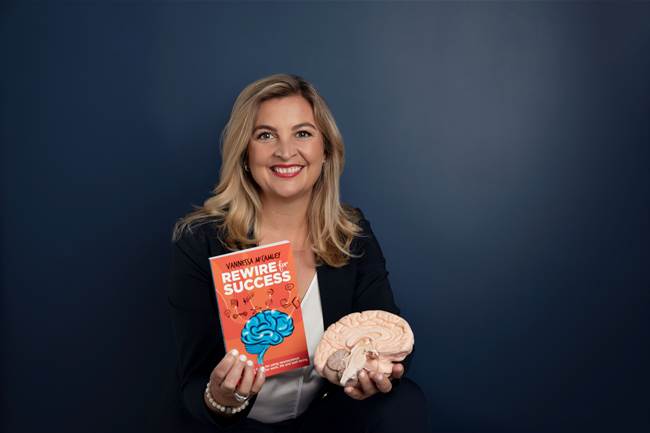
Vannessa McCamley is a neuroscience-based leadership and performance specialist, keynote speaker and author of REWIRE for SUCCESS. Drawing on more than 25 years of leadership experience across the APAC technology sector, including Trend Micro and Microsoft, she helps leaders and teams strengthen decision-making, resilience and sustainable performance under pressure.
Explore Vannessa’s keynotes and team programs and discover the 90-Day REWIRE for SUCCESS Program to identify and rewire one to three high-performing habits.
About Author


.png "From ambition to impact: The next era of government transformation.")


.jpg "The AI era demands a new kind of network")