Is Poshmark safe? How to buy and sell without getting scammed
Like any other marketplace, the social commerce platform has its share of red flags. It pays to know what to look for so you can shop or sell without headaches.

19 Feb 2026
•
,
5 min. read
Social commerce has gone mainstream. According to one estimate, the industry was on track to be worth over $1.1 trillion globally in 2025, with over half of young people buying on social media sites. But wherever money and users are to be found online, so are fraudsters and cybercriminals. So it is with Poshmark: a popular California-based social commerce platform that allows users to trade new and second-hand items such as clothing, accessories, and home goods.
Whether you’re buying or selling on the app, it’s important to remember that scammers are everywhere – and they want your data, your money and your goods.
Why is Poshmark a scammer’s favorite?
Poshmark has become a popular target for scammers due to several factors.
High commission fee
A 20% Poshmark commission for items over $15 means users are only too happy to complete deals off the platform. The problem is that scammers know this, and will often suggest that they do so, which exposes victims to phishing, fake payment confirmation and other types of fraud.
Counterfeit goods
Poshmark users mainly trade in fashion items, especially at the luxury end of the market, meaning many are exposed to counterfeits. Although Poshmark will authenticate certain items as part of its value-add services, it only does so for goods over $500.
Seller beware
Poshmark offers Posh Protect, meaning that buyers receive a full refund if their item never ships or doesn’t match the listing description. But what if it is the buyers who are the bad guys? Sellers can be targeted by refund scams claiming items are missing or damaged.
One-and-done accounts
It’s easy to open an account on Poshmark. But that ease-of-use and onboarding means it’s simple for scammers to create new accounts which are only used (fraudulently) once.
Restricted communications
Poshmark doesn’t allow users to chat privately – only via public comments on listings. This creates an opportunity for scammers to move conversations off platform as soon as possible, where victims are more exposed.
What are the most common scams?
Look out for the following:
Phishing
Fraudsters send you emails purporting to come from Poshmark, but which are designed to elicit personal, financial and log-in information, or trick you into installing malware. They might try to create a sense of urgency to rush you into making a poor decision by claiming your account will be deactivated, or that they need to check a non-existent transaction you made.
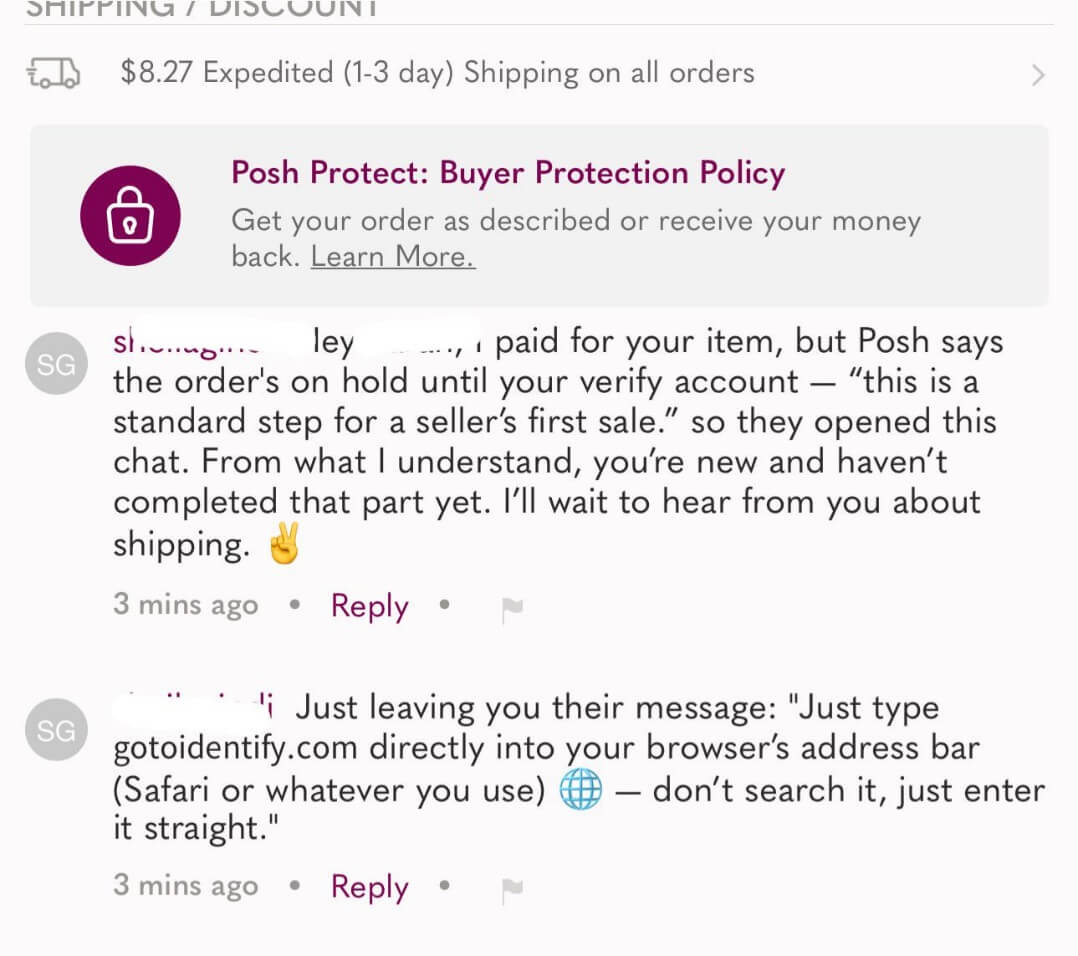
Alternatively, scammers posing as buyers or sellers might suggest moving a transaction off platform. They might say it’s worth doing this to avoid the 20% commission, or that images of your product aren’t loading properly. Once it has moved to email/mobile, they may send you a phishing message designed to install malware or steal persona/financial info.
Some users have also reported scammers posting malicious or suspicious links in the app.
Off-platform payment scam
Similar to the above, a buyer or seller suggests moving the transaction off Poshmark to avoid paying the 20% commission. But this means that you may be at risk of paying without receiving an item. Or shipping an item, having been sent a fraudulent payment confirmation.
Non-delivery scams
Buyers purchase a bundle of items from your “closet” and claim one or some are missing. Poshmark usually demands a refund and return, but this means the scammer keeps the original items they claimed were missing. Another variation is for the buyer to purchase an item with high-value accessories which they claim didn’t arrive, and end up keeping (eg controllers for a gaming console).
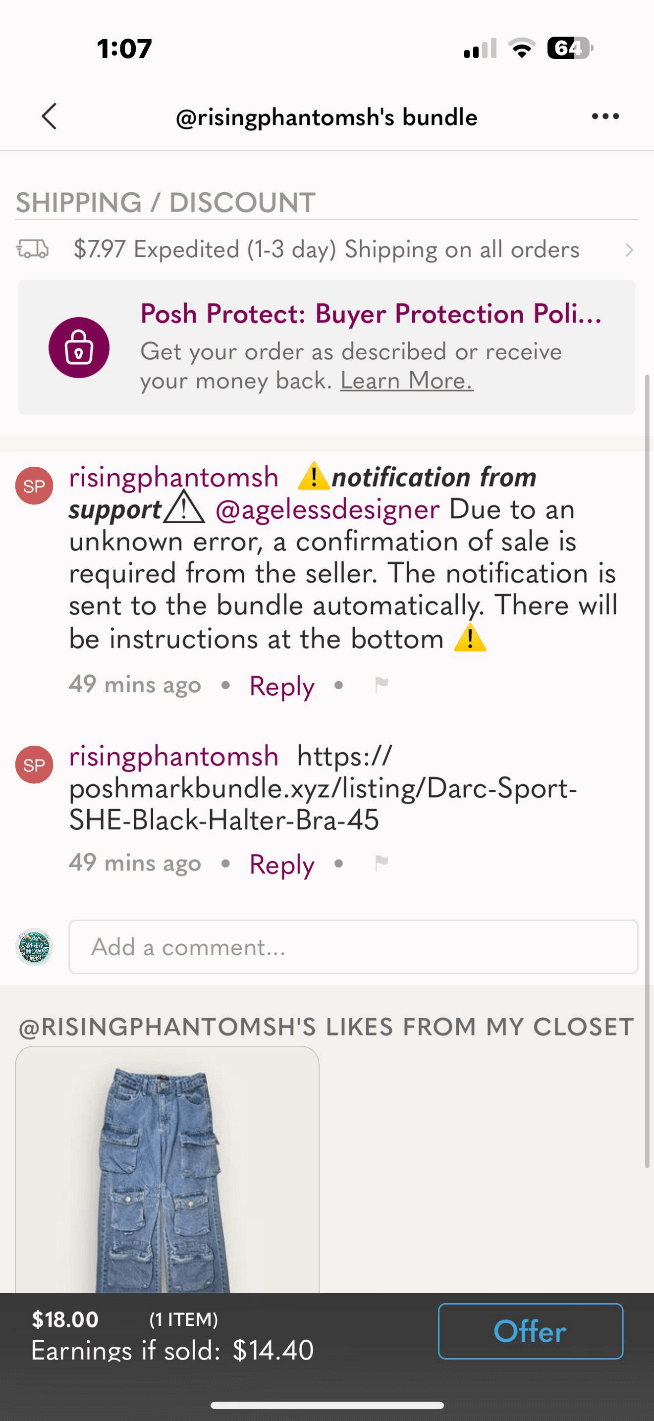
Poshmark support scams
A buyer contacts you with a phishing link purporting to come from Poshmark support claiming there’s a problem with your transaction. Following it could lead to a malicious download or phishing page.
Counterfeit scams
This one can work both ways. Buyers might claim that the item you shipped was damaged, and send back an inferior or counterfeit version of that item. Without proof, you have to reimburse them, and they get to keep the original. Alternatively, a seller might sell a counterfeit item for just under the $500 threshold, over which Poshmark checks for authenticity.
How to spot a Poshmark scam
The good news is that, with a few golden rules in mind when using the site, you can steer clear of the scammers. They will usually try to get you off the site one way or another, and/or send malicious links masquerading as legitimate messages and alerts. Buyers may also pressure you into shipping an item, even providing fake screenshots of payment confirmation, before funds clear in your Poshmark account.
On the other side, scammers may sell items at just under the $500 threshold for authenticity checks, or at a price that seems too good to be true. Also look out for generic descriptions and stock photos – a sure sign of counterfeit items.
What to do if you got scammed
The most important thing to remember is that Poshmark will only step in if your entire transaction has been completed on the platform.
Buyers
You only have three days after delivery to complain about an item. Open a case and upload photos of the item (in the case of damaged/counterfeit claims). If an item never arrived, contact Poshmark support with the relevant tracking details. Posh Protect will cover all lost packages shipped with their prepaid label.
Go to: My Purchases – select the order – Problems/Order Inquiry – Select reason – Upload evidence.
Sellers
Your best protection against buyer fraud is to document everything (photos, tags, packaging, serial numbers and a photo of an item with the Poshmark label on it).
It’s also possible to report fraud (even if you won’t be reimbursed) by going to the scam account – Action Menu – Report User.
Contact your bank/card provider to report any fraudulent transactions. And if it was a high-value item, consider filing a report with the FTC.
Staying safe on Poshmark
Of course, it’s better never to get into a position where you have to try and recoup losses. Ensure you always stay on the Poshmark app, check the profile of any buyer or seller you’re thinking of transacting with (including “love notes”), and avoid following links off platform. Also, never trust screenshotted payment confirmation.
Above all, remember that if something looks too good to be true, it usually is. There may be bargains to be had on social commerce platforms like Poshmark. But there are also scammers circling in growing numbers.
About Author