Fault Lines – Taiwan’s arms hopes, Indonesia’s carrier, Fiji’s chiefs
Welcome to the latest edition of ASPI’s Fault Lines.
Every fortnight, ASPI’s Defence Strategy Program monitors the actions and developments shaping the regional order and Australia’s security.
This edition covers the period from 18 September to 1 October 2026. Subscribe here to receive every edition of Fault Lines direct to your inbox.
Northeast Asia
Arms and/or influence
Earlier this year, it seemed Taipei’s biggest defence procurement headache would be finding the money to buy all the weapons it wanted from the United States. Its problem now is that Washington’s decision to sell remains an airborne political football. Like the previous US–China leader-level summit in May, the 24 September Trump–Xi summit – for all its pomp, circumstance and obligatory pandas – discussed but failed to produce a decision on a major US arms sale to Taiwan. The prospect of the sale became public knowledge back in February. About US$13 to 14 billion (A$18.5 to 20 billion) worth of US-made weapons has been on the table for months. Most of that is high-end air and missile defences, which you can imagine a small island deep inside China’s strike range might find useful.
But the US State Department is yet to initiate the procedure required to get those weapons to Taipei. The idea there seems to be that the promise-slash-threat of a future deal with Taipei can be used as a bargaining chip to win concessions from Beijing, but it’s never been quite clear what those might be. Senior figures in President Donald Trump’s own party don’t seem too sure either.
This would be the second of two major recent US arms deals with Taiwan. The first, valued at US$11 billion and thus the largest on record, was approved by the State Department back in December 2025 and went into effect in March. This happened alongside a long grudge-match between Taiwan’s opposition-controlled legislature and President Lai Ching-te over the latter’s special defence budget request, meaning that Taipei signed up to buy without having the cash to make the first down payment. After a month or so of very hard politicking, Lai’s government managed to scrape in under the wire: it took an emergency disbursement and a generous deadline extension from the US, but the government got the initial payment for their Himars battlefield missile systems out the door with mere days to spare. A (somewhat) down-scoped special defence budget passed 48 hours later.
The US has a long history of using arms sales to try to influence other countries – they’re tools of foreign policy before all else. But it’s usually the buying country whose arm Washington is trying to twist, and even that’s questionably effective much of the time. It’s very questionable indeed whether the all-but-explicit quid pro quo in a Reagan-era policy both sides still like to quote – that the US will reduce arms sales to Taiwan if China maintains a credible commitment to a peaceful resolution of the whole cross-Strait thing – can work the other way.
China’s certainly calibrated its posture in the strait this year: there have been far fewer military aircraft buzzing around the island in recent months, and no major blockade-rehearsal exercise has taken place since last December. But the Chinese navy is out in as much force as ever in Taiwan’s sea approaches, and the interim between May’s Trump–Xi summit and this latest one has seen an unprecedented extension of the China Coast Guard’s law enforcement activity into the waters east of the island. If this is a concession, it isn’t much, and it’s hard to see how the US could get more from China while offering Taiwan (increasingly vaguely worded) reassurances that the sale will happen.
News from abroad
- Taiwan’s coast guard announced on 23 September that a 100-tonne-class patrol vessel was now stationed long-term at Pratas Island, a Taiwan-controlled South China Sea feature about 300 km southeast of Hong Kong. Persistent encroachment by the coast guard’s colleagues from mainland China has led Taipei to adopt a harder law-enforcement posture at Pratas since early 2025, but this upgrade has been planned for longer: the requisite wharf buildout was scoped back in 2020. The announcement is the latest in a series of moves suggesting an appetite for a more visible Taiwanese coast guard presence, deeper into the South China Sea, than in decades.
- The US Army’s new Mid-Range Capability – ‘mid-range’ here meaning ‘1600 km as the Tomahawk flies’ – is a guided missile frigate without the frigate attached. MRC has visited the western Pacific since 2024 and has lately been tiptoeing toward something very much resembling forward deployment in Japan. An MRC unit was positioned at Japan’s Kanoya Air Base in June for the Valiant Shield combined exercise, stayed there for months, and was used again in September’s Exercise Orient Shield. That unit will go into storage at the US Kadena Air Base on Okinawa – temporarily, according to Japan’s defence ministry. Defence Minister Shinjiro Koizumi’s remarks that holding MRC at Kadena will support rapid US deployment and allow more flexible combined US-Japan training suggest this ‘temporary’ situation might last a while.
- The Hai Kun, Taiwan’s first home-made submarine, was seen departing Kaohsiung for its latest round of sea trials on 22 September. The Navy may take delivery as early as next month. For the manufacturer’s sake, they’d better: Taipei wanted that boat in the water last November, and the government’s been fining CSBC Corp for every day it’s delayed.
- Two North Korean soldiers captured in Ukraine were transferred to South Korea around 20 September. President Volodymyr Zelenskyy publicised this at the UN General Assembly on 23 September, provoking a major diplomatic spat with Seoul, which would have preferred to keep the whole thing under wraps. North Korea’s deepening involvement with Russia’s war on Ukraine has rendered it a lot harder for South Korean foreign policy to compartmentalise the North–South issue in the way it’s traditionally done.
Southeast Asia
Carrying burdens
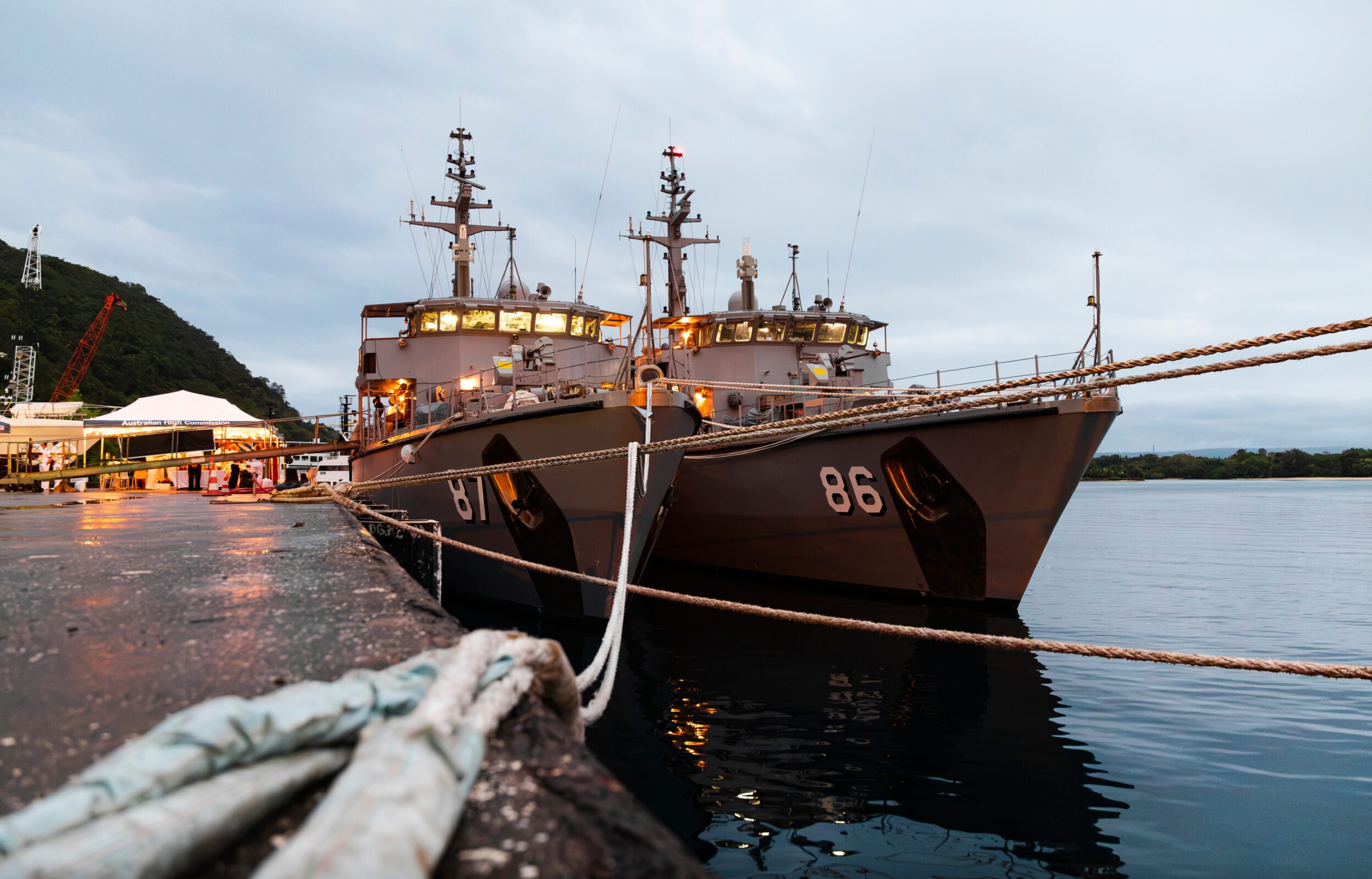
The former Italian aircraft carrier Giuseppe Garibaldi arrived in Jakarta on 18 September. A week later, it was recommissioned as the KRI Sriwijaya-100 – 40 years young, the newest addition to the Indonesian fleet.
Carriers aren’t common in Southeast Asian navies. Until last week, only Thailand had one, and it’s been unclear why Indonesia wants to join the club. Neither its defence planning nor its Minimum Essential Force modernisation program identified a requirement for one, and Jakarta isn’t planning to use Sriwijaya for the principal purpose of most aircraft carriers: projecting fixed-wing air power from the sea.
It’s not hard to see why. Fixed-wing carrier aviation is among the most complex capabilities any military can maintain – it generally demands specialised aircraft and training at the very least. It also tends to come at an eye-watering cost. This is fine for the US and China, maybe, but Southeast Asian navies have to work with the budgets they’re given. Thailand offers a cautionary comparison. HTMS Chakri Naruebet has operated without fixed-wing aircraft since its Harriers were retired in 2006.
Indonesia’s Navy seems to envision its new carrier as a mobile command hub for helicopters and drones to support maritime operations across the archipelago. President Prabowo Subianto has also directed that it be adapted to fight fires. There’s a case for that: its large flight deck could operate substantially more helicopters than Indonesia’s existing amphibious ships, giving emergency services an easier time getting on the scene when roads, ports and airfields are damaged.
Whatever the aim, a carrier is a very expensive way to pursue it. The ship was a donation, but Indonesia’s Finance Ministry nonetheless approved US$450 million for the aircraft carrier program in 2025. Even without carrier aviation, the need to crew, modernise, operate and maintain a ship that’s already seen four decades of wear and tear will land Jakarta with a hefty sustainment bill in years to come. Indonesia also needs to integrate Sriwijaya into a navy whose rapidly growing mix of foreign-designed vessels is already leaving analysts wondering whether it’s a coherent force design or just a collection of ships.

And we’re back
On 24 September, Chinese coastguard and navy vessels obstructed the Philippine mission to the BRP Sierra Madre, the grounded amphibious ship housing Philippine troops stationed at Second Thomas Shoal. The Philippine Coast Guard said ‘dangerous manoeuvres’ on China’s part kept the mission from completing the resupply.
That challenges a provisional arrangement Manila and Beijing reached in July 2024 that’s kept supplies flowing to Philippine troops at the shoal, even while confrontations at sea continue around one of the South China Sea’s most dangerous flashpoints. The incident – coinciding, fortuitously or not, with President Xi Jinping’s trip to Washington – prompted a sharp public exchange between the US and Chinese embassies in Manila. The US has made clear that the US–Philippines Mutual Defense Treaty covers armed attacks on Philippine armed forces and public vessels in the South China Sea. China’s use of ships as physical obstructions is finely tuned to come in under that threshold.
Not that it’s an exact science. This incident and others like it demonstrate the pressure China can apply to Manila across the South China Sea, even as Xi and Trump seek greater stability in the wider US–China relationship.
News from the neighbourhood
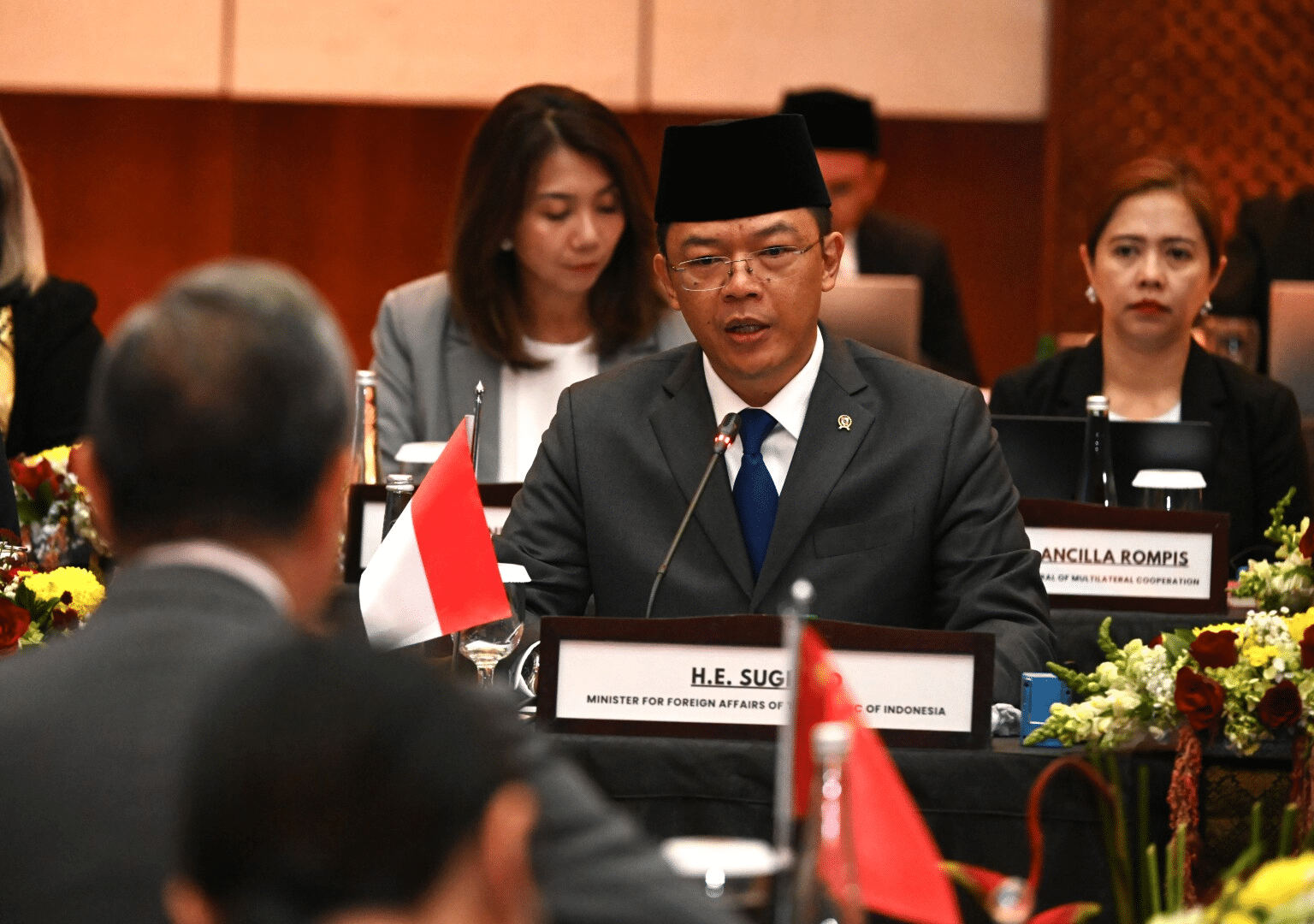
- Indonesia hosted Exercise Trident Resolve from 21 to 25 September in Banten. The exercise brought together around 2,200 personnel from all 19 members of the Association of Southeast Asian Nations Defence Ministers’ Meeting-Plus grouping, including Australia, China, Russia and the US. It was the largest ADMM-Plus exercise in a decade by personnel numbers, demonstrating ASEAN’s ability to bring competitors together – albeit at different scales of participation – for cooperation on disaster relief, military medicine and cyber security.
- China has quietly added a new dot to its overseas military map. Beijing announced on 29 September that the China-Laos Joint Support and Training Center and China-Laos Friendship Aviation Academy had begun operations at Ban Keun airport, just north of Vientiane. Beijing says they will be used to train Lao air force pilots. There are no details available about what Chinese personnel, equipment or capabilities will be based there. Ban Keun’s operational value isn’t obvious, given the Chinese military can already operate from neighbouring Yunnan. Its significance may instead lie in establishing a persistent military presence in Laos and deepening ties with Lao armed forces.
- Malaysia and Australia established a new Strategic Planning Committee to guide their bilateral defence relationship at the Australia-Malaysia High Level Committee in Geelong on 18 September. Defence ministers Mohamed Khaled Nordin and Richard Marles also renewed a logistics support arrangement and agreed to expand cooperation in maritime security, special forces, cyber and defence industry. The initiatives add structure and substance to the longstanding defence relationship while reinforcing cooperation through the Five Power Defence Arrangements and ASEAN-led regional mechanisms.
Oceania
Hail to the chief
Prominent Fijian chief Tevita Mara has called on the country’s parliament not to ratify two major treaties with Australia – the Vuvale Union and Ocean of Peace Alliance, both inked in July this year – until broader consultations take place. In a public statement issued on 18 September, Mara likened the agreements to the Deed of Cession through which Fijian chiefs surrendered sovereignty to Britain in 1874. He called on the government to release all supporting documents, publish independent legal advice on Fiji’s obligations under the agreements, publish a plain-language explanation of what ‘deepening integration’ with Australia would mean, and consult further with the public.
A military alliance is a serious undertaking, and lively debate about one is just what you’d expect from a parliamentary democracy. But Mara isn’t a parliamentarian: he’s a chief, currently deputy chair of the Great Council of Chiefs. That body once held significant political power – it even used to elect the president – but hasn’t for nearly 15 years. After then-military leader Frank Bainimarama overthrew the government in a 2006 coup, he first suspended then abolished the council in 2012; he wasn’t much for sharing. In 2023, Prime Minister Sitiveni Rabuka restored the council as an advisory body. On paper, its role is to advise the government on issues affecting Fiji’s indigenous peoples. That means about 60 percent of Fiji’s population, so in practice, the council comments on a wide range of issues. It’s been particularly vocal on Fiji’s ongoing efforts to revise the constitution imposed by the military government in 2013.

It’s probably not a coincidence that Mara’s comments on the Australia deal come at a time when the role of the chiefs in Fiji’s government is up in the air. The reform proposal published by the parliament’s Constitution Review Commission on 22 September envisions an expanded political function for the council (though perhaps not quite as expansive as the council or Mara himself have indicated they’d like). Where this will land is likely to be the object of considerable wrangling in the coming months. Mara will be at or near the centre of that. Rabuka hasn’t commented on Mara’s remarks, but he and the parliamentarians currently considering the two treaties with Australia have definitely heard them.
Whether or not Mara’s call finds a receptive audience, Australian diplomats should know by now not to count security deals until they’re hatched. Last year saw the planned signing of the Nakamal Agreement with Vanuatu called off at the 11th hour, with Vanuatu’s prime minister citing concerns from his coalition that the deal would surrender too much sovereignty to Australia. It took 10 more months to get Nakamal over the line, likely watered down from Canberra’s initial design. Tempting as it is for external observers to see the Pacific as a game of snakes and ladders between great powers, the deeper issue for Australian policy is how to affirm a Pacific state’s sovereignty when the right to speak for that sovereignty is negotiated between parliamentary and traditional authority. What Canberra may have regarded as a completed negotiation has now become a test of how Fiji’s revived chiefly institutions intend to participate in public affairs.
News from the family
- At the UN General Assembly on 25 September, the leaders of Solomon Islands and Marshall Islands called on Indonesia to allow the UN human rights commissioner access to West Papua. The Pacific Islands Forum made a similar call in 2019. Indonesia agreed in principle at the time, but the visit never materialised. Earlier in September, the Melanesian Spearhead Group said that if the UN wasn’t granted access before the group’s 2027 summit, it would review Indonesia’s associate member status. The MSG – that’s Papua New Guinea, Solomon Islands, Vanuatu, Fiji, and the pro-independence forces of New Caledonia – admittedly hasn’t got the political or economic heft for this to really sting in Jakarta. But losing associate membership would cut Indonesia’s voice out of a key forum for managing the conflict’s core issue: disagreement over who speaks for indigenous Papuans.
- Speaking at the UN General Assembly on 22 September, Nauru’s president, David Adeang, announced his country’s withdrawal from the International Criminal Court. US Assistant Secretary of State Michael George DeSobre then met with Nauru’s deputy foreign minister, Russ Kun, to extend congratulations. This came as Nauru announced its intent to relocate its embassy in Israel from Tel Aviv to Jerusalem, following Fiji and PNG’s lead. Samoa will do the same later this year.
- The South Pacific Defence Ministers’ meeting ended in Fiji last week. The hot topic on the agenda: expanding the Pacific Response Group’s remit to allow it to carry out ‘stabilisation operations’ in response to civil unrest. The PRG was formed in 2024 to keep Pacific crisis response in-house, and membership consists of Australia, New Zealand, PNG, Fiji, and Tonga, as well as France and Chile. Its focus is natural disaster response, although in-principle support for an expanded remit was shored up in April. While that support remains, implementation seems further off. Australia’s Chief of Defence Force Mark Hammond, present at the ministers’ meeting, said that the group ‘still needs some time’ to get the expansion over the line due to the need for ‘absolute consensus’ on such an important issue.
- The New Zealand and Australian navies signed Plan Tasman on 21 September. The partnership seeks to strengthen collaboration, information-sharing and operational alignment between the two navies. There’s little concrete detail on what this means in practice, but it’s another step forward for the broader ANZAC 2035 agenda, which seeks to have the New Zealand and Australian militaries ‘fully integrated’ by 2035.

This article was originally published in Fault Lines, ASPI’s fortnightly newsletter that monitors the actions and developments shaping the regional order and Australia’s security.
About Author