Fault Lines – China’s Ukraine lessons, junta diplomacy, Fiji sanctions
Welcome to the latest edition of ASPI’s Fault Lines.
Every fortnight, ASPI’s Defence Strategy Program monitors the actions and developments shaping the regional order and Australia’s security.
This edition covers the period from 2 October to 15 October 2026. Subscribe here to receive every edition of Fault Lines direct to your inbox.
Northeast Asia
Front row seating
Each year, Russia holds a major combined-arms exercise as the capstone of its military’s annual training schedule. It is called Zapad if held in the country’s west, Vostok if in the far east, Kavkaz if in the south, or, this year, Tsentr – in the centre.
Tsentr was held from 28 September to 3 October, with a stronger focus than ever on learning from operational experience in Ukraine. It had significant international attendance. More than 30 countries sent delegations to watch and take notes, and you can even cross a North Korea–Taliban handshake off your bingo card.
Six countries – Belarus, Kyrgyzstan, Mongolia, Pakistan, Tajikistan and China – contributed forces to the exercise. It’s probably the largest land-warfare-centric capstone exercise that Russia’s held since the Ukraine conflict began in earnest in 2022.
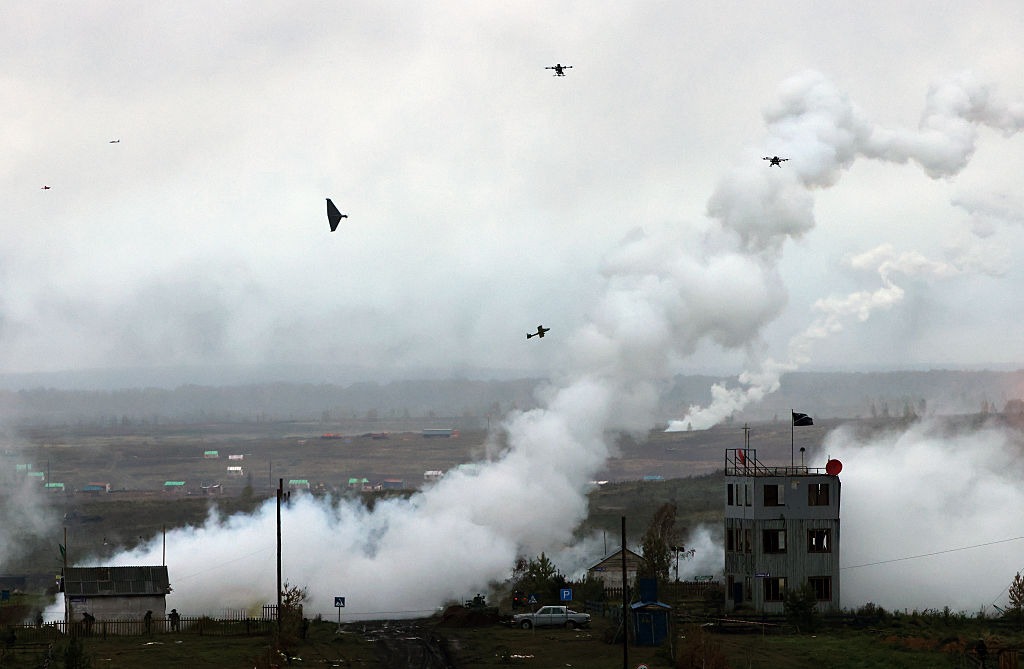
Drone warfare was, as you’d expect, a big part of it. The component of the exercise held at Chebarkul, in the southern Ural Mountains, involved some 6,000 of the 47,000 participating troops and appears to have used more than 600 aerial drones of various types. Chinese reporting indicates that the training area was mocked up with trenches, gullies, shell craters and underground fortifications – altogether, something that looked like a heavily fought-over, drone-saturated rural battlefield.
The lessons from the Ukraine conflict interest many countries, but few have put as much effort as Beijing has into translating Russia’s Ukraine experience into their own military capability. The Chinese combined-arms contingent from People’s Liberation Army Central Theater Command that took part in Tsentr this year wasn’t the first or the largest, but its predecessors certainly didn’t take part in anything modelled so closely on the Ukrainian combat environment.
News from abroad
- New satellite imagery indicates that construction of what’ll likely be a major North Korean naval base is progressing rapidly at Tapchon, about 20 kilometres north of the port at Wonsan on the Sea of Japan. Pyongyang is building bigger warships than it’s ever had, so it stands to reason it would like new infrastructure for them. The prospect of that mysterious new submarine Kim Jong Un inspected last year, which is still under construction but believed to be a ballistic missile submarine, also probably forms part of the business case. Either way, avoiding future ships sinking on launch, as happened to a North Korean destroyer in May 2025, will be front of mind.
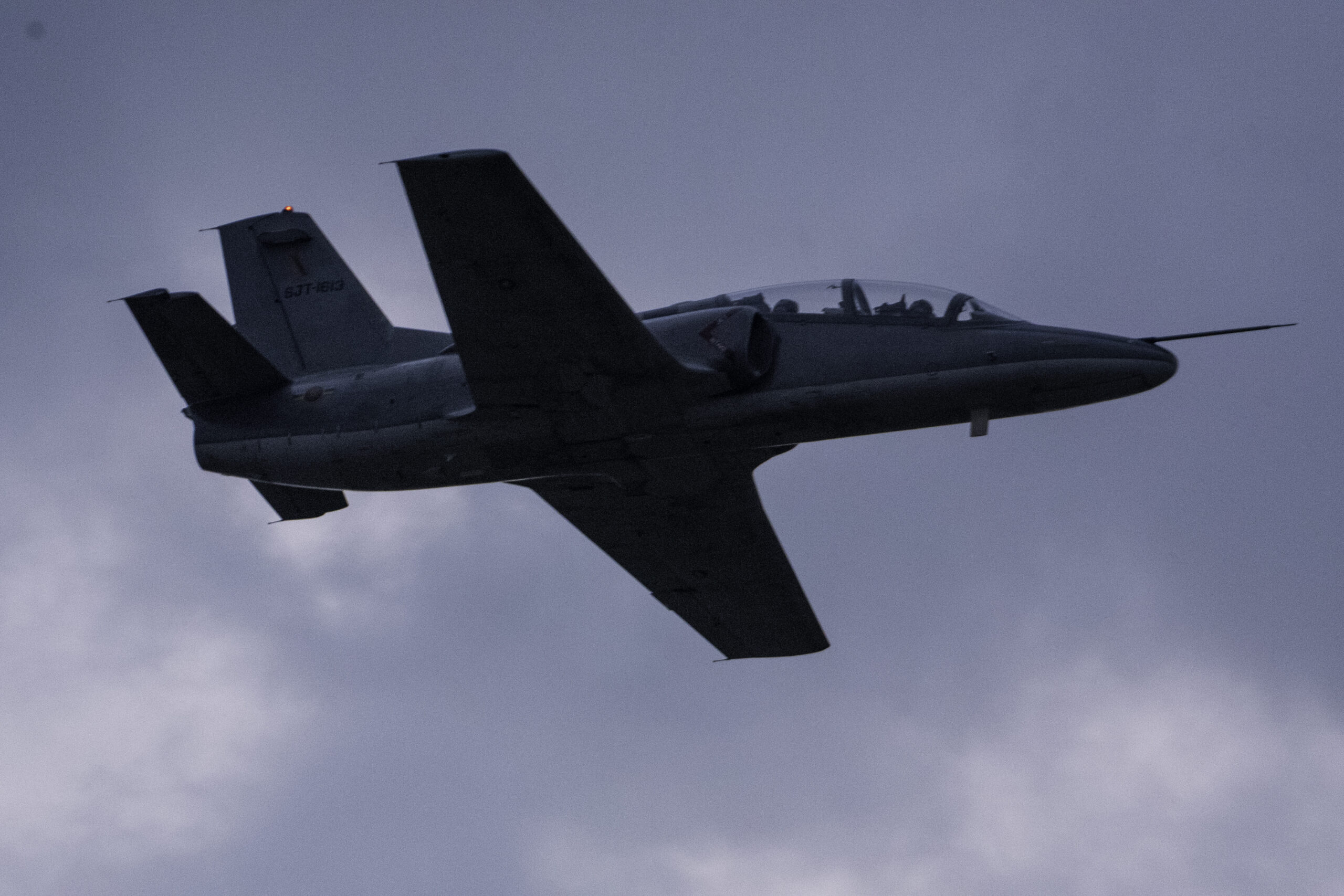
- Those F-16V fighter jets Taiwan ordered back in 2019 have finally arrived – two of them, anyway, with 64 still to come. They touched down at Chihhang Air Base on Taiwan’s east coast on 2 October. More are expected before the year’s out, but we don’t know how many. Those are factory-new F-16Vs. They were due for delivery in 2023, but Lockheed Martin shifted production to South Carolina in 2019, the transition wasn’t smooth and then the pandemic hit, so Taipei was left cooling its heels. Even as the United States’ next big arms sale to Taiwan remains up in the air, almost US$30 billion (A$43 billion) in sales approved by Congress remains undelivered.
- South Korea conducted its first test launch of a hypersonic glider on 8 October. It seems that it’s an indigenous design and build too, which isn’t something many countries can claim. North Korea, which has been testing hypersonics since 2021 (and did so a few days earlier, in fact), apparently can. A test vehicle that can hit a target is a long way from the fieldable weapons system that Seoul presumably wants, but it’s a lot closer than it was last week.
Southeast Asia
In from the cold
Myanmar’s pariah status is eroding. On 8 October, Reuters revealed that the US had opened direct talks with Myanmar’s military-backed government, reversing years of diplomatic isolation since the 2021 coup. US Assistant Secretary of State Michael Vance met coup leader-turned-president Min Aung Hlaing in September, seeking the release of a detained American businessman. Discussions have since expanded to tackling online scam operations and potentially accessing Myanmar’s rare-earth deposits. On 9 October, Washington also lifted sanctions on the daughter of a military-linked businessman, although any connection to the talks remains unclear.
Min Aung Hlaing’s isolation is also easing within Southeast Asia. On 8 October, he made a controversial visit to Malaysia, where Prime Minister Anwar Ibrahim pledged to do ‘whatever is possible’ to facilitate Myanmar’s reintegration into the Association of Southeast Asian Nations. The regional grouping has excluded Myanmar’s senior leaders from summits over the leaders’ failure to implement its peace plan, but this year individual members have taken steps to rebuild bilateral ties. Since April, Min Aung Hlaing has visited Thailand, Laos, Cambodia and Vietnam, with Indonesia and Brunei reportedly next. Remarkably for a leader presiding over Southeast Asia’s deadliest ongoing conflict, his diplomatic calendar is filling up quickly.

The good, the Batanes and the ugly
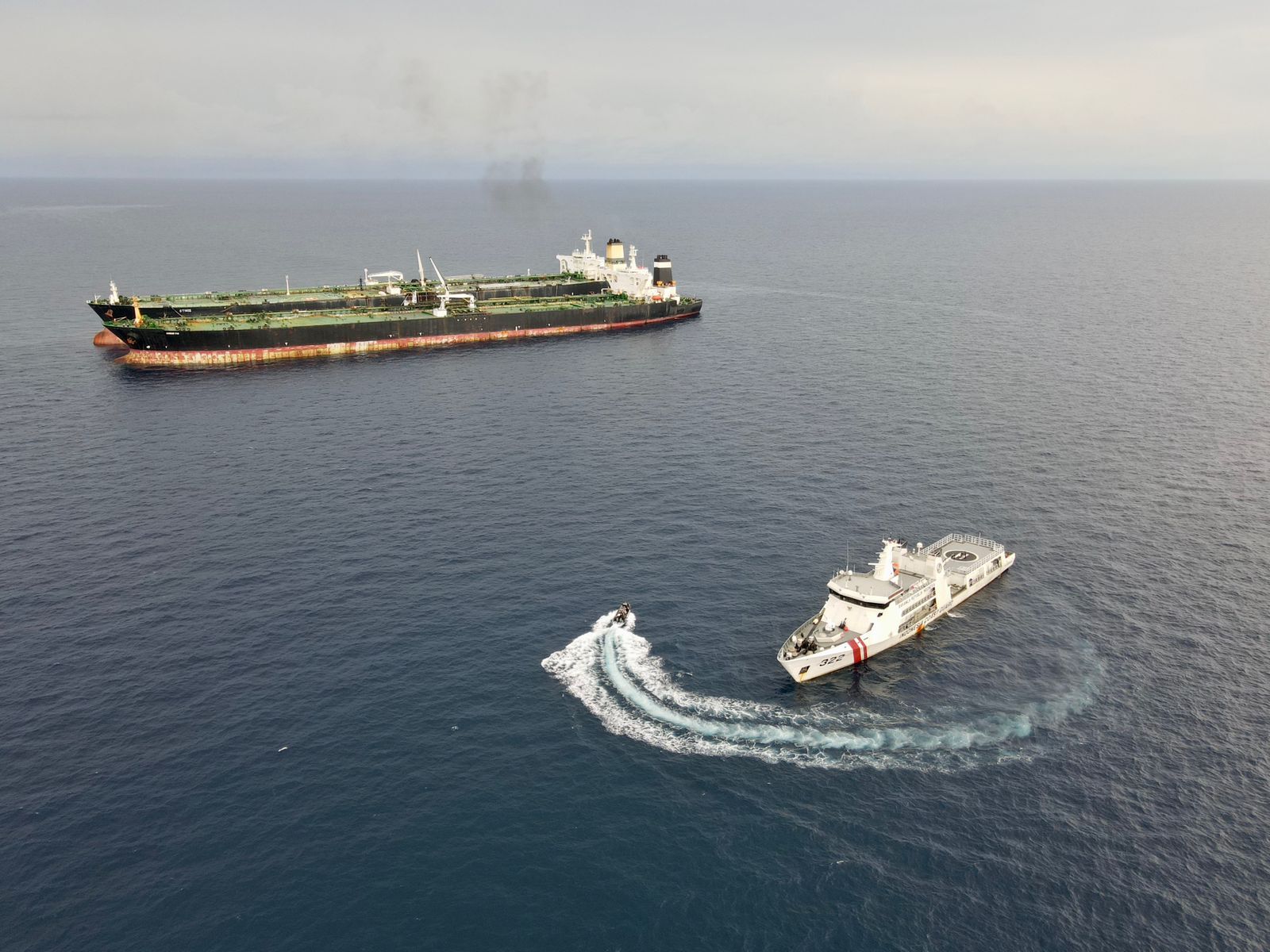
On 1 and 2 October, Philippine and Chinese coast guard vessels faced off (stop us if you’ve heard this one before) near the Philippines’ Batanes Islands. This happened after Manila challenged Chinese research ship Jia Hai Ke 7 about its suspected conduct of unauthorised marine research. Manila deployed its largest coast guard ship and an aircraft, while Beijing sent a coast guard vessel to escort the research ship. Batanes happens to be much closer to Taiwan than the usual bunch of rocks and shoals you see the Chinese and Philippine coast guards feud over down south. This standoff therefore had an unusual audience: three Taiwanese coast guard vessels monitored the Chinese ships as they approached Taiwan’s waters. Chinese scholars challenged Philippine sovereignty over Batanes earlier this year, although Beijing has made no formal claim. With the nearby Bashi Channel a critical passage in any Taiwan conflict, the location matters: a China–Philippines maritime standoff now has Taiwan watching from the sidelines – and sending ships.
Still, competition creeping northward doesn’t stop the wheels turning down south. On 8 October, Manila accused Chinese vessels of obstructing an emergency medical evacuation from Second Thomas Shoal, including by firing a water cannon near a Philippine coast guard ship. Manila said the interference had delayed the evacuation by nearly 10 hours. Beijing denied obstruction and claimed that it had facilitated the operation on humanitarian grounds. The incident echoed a violent July confrontation at the same shoal, which also involved a delayed medical evacuation.
News from the neighbourhood
- Australia and Indonesia kicked off Exercise Keris Woomera on 12 October in what will be the Australian Defence Force’s largest overseas training activity of 2026. The exercise involves about 2,200 people conducting amphibious landings, live-fire shooting and maritime operations in and around East Java. Coming eight months after Australia and Indonesia signed the Treaty on Common Security, otherwise known as the Jakarta Treaty, it’s a sign of modest but growing operational cooperation between the two countries’ armed forces.
- The members of the Five Power Defence Arrangements – Australia, Britain, Malaysia, New Zealand and Singapore – are taking part in Exercise Bersama Lima in Singapore and Malaysia from 1 to 19 October. Australia has deployed F-35A Lightning fighters, a P-8A Poseidon maritime patrol aircraft and replenishment ship HMAS Stalwart. The deployment shows how the 55-year-old defence arrangement is adapting to increasingly complex military operations and strengthening regional interoperability amid growing strategic competition.
- The Philippine Senate ratified a visiting forces agreement with France on 8 October, advancing implementation of the pact signed in March. Once in effect, the agreement will further expand Manila’s network of defence partners, reflecting efforts to institutionalise security relationships that could outlast Philippines President Ferdinand Marcos Jr’s administration.
Oceania
Old dogs, new tricks
On 7 October, the US Department of State barred prominent Fiji businessman and property developer Zhao Fugang from entering the US. The State Department’s press release alleges that Zhao (who is originally from mainland China) has been paying bribes to Fiji citizens ‘to advance China-based government, business, and criminal interests’. Zhao has denied these allegations, and both he and the Fijian government have called on Washington to substantiate them.
The US may do that, but it has no such obligation. Section 7031(c) designations – as these are called – aren’t criminal charges and in fact needn’t be published at all. They’re the legacy of an anti-kleptocracy policy that the US initiated in the mid-2000s. The administration of President George W Bush back then had an expansive concept of America’s global role. It also had a notion that doing something about foreign government officials who’d used public office to plunder their own countries would be useful in the war on terror. Most individuals affected by 7031(c) today, as far as is publicly disclosed, are the corrupt officials and human-rights violators that the law intended it to cover.

With Zhao, however, what you’re seeing is the State Department pick up the old anti-kleptocrat machinery and try to apply it to foreign interference in the context of great-power competition. Zhao has hosted high-level meetings on bilateral security cooperation with senior officials from China and Fiji and appears to have been a sometime friend to former prime minister Frank Bainimarama. In addition to the property development and tourism ventures he runs as a naturalised Fijian, Zhao manages an Overseas Chinese Service Centre from the hotel he owns in the heart of Suva. These are mundane institutions both on paper and, generally, in practice: they help Chinese citizens abroad renew drivers’ licences, run cultural events, provide legal aid and so on. They’re not formally part of the Chinese government, but they were created and sponsored by a program now managed by the United Front Work Department of the Chinese Communist Party Central Committee.
If Zhao is a public official, then he’s one in only a rather unusual sense, and he’s accused not of taking bribes but giving them. That’s atypical of 7031(c) designations. And, regardless of whether the US’s allegations are true, it’s certainly not the stereotypical ‘corrupt foreign politician who has assets and/or family in the US’ scenario that the law was designed around almost 20 years ago. As a means of disincentivising Zhao’s alleged activities, it’s hard to imagine a US visa ban doing much. But as a low-cost mechanism for putting Zhao’s name out there in connection with a clear statement that the US sees him as a foreign interference actor, the old tools may still be useful.
News from the family
- What Taiwan calls a friendship fleet – two coast guard patrol vessels of 5,000 tonnes total – docked in Palau on 6 October. It’s Taiwan’s second coast guard goodwill visit on record. The first occurred last year, also in Palau. In addition to joint patrols and drills between Taiwanese and Palauan law enforcement, the visit featured a meeting between Taiwanese coast guard Deputy Director General Hsu Ching-chih and Palauan President Surangel Whipps Jr. Palau is one of Taiwan’s staunchest diplomatic partners and is one of just 12 countries with which Taipei maintains formal relations.
- An Indonesian naval hospital ship docked in Fiji this week as part of a two-month tour that includes Vanuatu, Solomon Islands and Papua New Guinea. This kind of medical diplomacy – which the US and China have done around the Pacific for more than a decade – is relatively new for Indonesia, which got into the act only in 2024.
- The Northern Mariana Islands, a US territory, is requesting US$12.5 billion from the federal government to upgrade ageing infrastructure, and the US military is pursuing expanded military access as part of that. Unlike nearby Guam, also a US territory with a permanent military presence, the Marianas’ importance to US force posture in the Pacific comes largely through its dual-use infrastructure: airports, seaports, hospitals and so on. The full scope of expanded military access Washington envisions isn’t clear, though it’s unlikely it’ll go as far as asking the Marianas to host the ‘Next Great American Base’ that the Pentagon is contemplating – there’s not enough land for that.

This article was originally published in Fault Lines, ASPI’s fortnightly newsletter that monitors the actions and developments shaping the regional order and Australia’s security.
About Author