Fault Lines – China’s navy mobilises, Marines in Manila, PNG’s LNG

Welcome to the latest edition of ASPI’s Fault Lines.
Every fortnight, ASPI’s Defence Strategy Program monitors the actions and developments shaping the regional order and Australia’s security.
This edition covers the period 30 October 2026 to 12 November 2026. Subscribe here to receive every edition of Fault Lines direct to your inbox.
Northeast Asia
All hands on deck
Find a map and draw an arc that bends from the southern tip of Hainan, down into the South China Sea, out into the Pacific, halfway to Guam, up past Okinawa and back around into the Yellow Sea. You’ve now drawn an ambitious perimeter around Taiwan. You’ve also, not entirely by coincidence, roughly described the operational area of what looks to have been the largest Chinese naval exercise so far this year.
According to Joseph Wu, secretary-general of Taiwan’s national security council, as of 3 November, China’s navy and coast guard had more than 100 ships deployed across that arc. Those ships include four surface task groups drawn from the People’s Liberation Army (PLA) Eastern, Northern and Southern Theater Commands, among them the Liaoning carrier strike group. China’s newest carrier, the Fujian, was also active in the South China Sea. Taiwan’s immediate vicinity also saw a higher-than-usual buzz of surface combatants, coast guard ships and combat aircraft sorties.
In several respects, this was unusual. China’s coastal theatre commands have rarely coordinated major surface forces in a single operation beyond the first island chain. Historically they’ve had difficulty defining command arrangements for these sorts of activities, and when Beijing wants a show of force to express cross-strait displeasure it’s usually just the Eastern Theater Command that gets the call. For China’s carriers, sophisticated operations beyond the first island chain are still a relative novelty; they began doing them only a few years ago. The whole arrangement suggests a considerable maturation of Beijing’s ability to manage naval operations outside its immediate vicinity – and on a massive scale.
Scale is only part of the story. Out on the water were, among other things, two of China’s three carriers and at least four of its 10 Type 055 destroyers. That’s a considerable portion of Beijing’s naval combat power, and much of it – three task groups and the Liaoning – was east of Taiwan. (We don’t know whether it still is.) In most foreseeable scenarios that’s precisely where supplies from the United States and other key partners would need to travel during a cross-strait conflict.
So Beijing’s motive for showing off its ability to float a lot of heavily-armed steel there on relatively short notice isn’t hard to comprehend. It’s useful practice for what the Chinese navy would probably be doing in a serious fight anyway.
That this latest activity has apparently gone ahead without an official exercise announcement, let alone a Seagal-esque title like last December’s Justice Mission drills, is also suggestive. Much like the introduction of regular Chinese coast guard and civilian agency patrols in the waters east of Taiwan since June, the idea is not to conceal hard power but to make its persistent use look normal.
News from abroad
- A proposal to revise the mandate of the Cheonghae Unit – a rotating maritime-security detachment of South Korea’s navy, stationed in the Gulf of Aden since 2009 – was approved by President Lee Jae-myung’s cabinet on 10 November. It’s yet to pass the National Assembly, though. The proposal would see the unit’s authorised operating area almost double in size, extending eastward into international waters south of Oman, within 650 kilometres of the Strait of Hormuz. It’d also send a P-8A maritime patrol aircraft and explosive ordnance disposal specialists. Officially there’s no directive to do so, but this capability mix would position South Korea well to play a role in future mine-clearance operations when the strait reopens. While the Cheonghae Unit has long supported counter-piracy operations under the Combined Maritime Forces – particularly Combined Task Force 151 in the Gulf of Aden – Seoul has emphasised that the expanded mission would remain under South Korean command.
Southeast Asia
What goes around
The US Marine Corps’ rotational force in the Philippines departed at the end of October and was immediately replaced by another. That hasn’t been normal. Established in 2022, Marine Rotational Force – Southeast Asia (MRF-SEA) previously deployed for only six months of the year. It operated as a modest, scalable task force with a forward command element that moved between Southeast Asian countries to support exercises and other engagements. Since April 2026, however, successive rotations have maintained a continuous command presence in the Philippines, marking a shift from periodic regional engagement towards sustained cooperation with Philippine forces.
The shift began this year, when an MRF-SEA deployment was immediately followed by another tasked to lead a ‘focused effort’ in the Philippines at Manila’s invitation. That new rotation participated in Balikatan 2026 – the keystone US–Philippines bilateral exercise, held in April-May. Since then, MRF-SEA has taken part in combined exercises across the Philippine archipelago, with land-based maritime strike operations a notable focus. That deployment has now ended, but its mission will go on. The command element handover at Clark Air Base on or around 26 October shows that both the US and the Philippines intend to keep this more sustained presence around for a while yet – certainly through Balikatan 2027.

Same-day delivery
MRF-SEA’s conspicuous interest in combined training for maritime strike missions says as much about Manila’s priorities as Washington’s. The Philippines has been buying anti-ship cruise missiles at pace for the last few years. The country became the first foreign buyer of India’s BrahMos missile in 2022, and as of 5 November is presently in talks with Delhi to buy another five batteries and 60 missiles.
More such orders are likely. The procurement has a clear rationale. India’s sales pitch for BrahMos is its combination of speed and destructive power. Travelling at Mach 3, the 3-tonne missile carries a 300-kilogram payload, which, combined with its kinetic energy, could put most surface ships out of action or send them to Davy Jones. BrahMos’s export model is limited in range to 290 km, but that’s no problem here. It covers most of the Philippines’ disputed South China Sea claims when measured from its coastline, including flashpoints such as Second Thomas Shoal, Sabina Shoal and Scarborough Shoal. These are regular haunts for China’s coast guard and navy, which were conducting water-cannon drills and combat readiness patrols around the disputed features as recently as late October.
China’s considerable advantages in fleet size and resourcing have let it operate with relative impunity. For Manila, preventing that impunity from becoming an enduring position of strength is the name of the game. Matching China ship-for-ship is economically out of the question, but how about planting the thought of a trip to the ocean floor at six minutes’ notice in the mind of any passing Chinese captain? Well, the budget has room for that. Indonesia and Vietnam, which both ordered BrahMos missiles earlier this year, may well be thinking along similar lines.
That’s the theory, anyway. But missiles, however well advertised, are expensive lawn ornaments unless you also have a targeting enterprise: the whole suite of sensors, communication links, procedures and command structures that get you from a blip on the radar to a palpable hit. The Philippines hadn’t operated coastal anti-ship missiles at all before it bought the BrahMos system four years ago, so it’s had to build much of this at a cracking pace, and work is still ongoing. Help from the US on this is surely welcome in Manila. In August, for example, MRF-SEA trained alongside Philippine forces, using drones to track simulated PLA Navy ships and relay targeting data back to BrahMos missileers.
News from the neighbourhood
- The Association of Southeast Asian Nations (ASEAN) Defence Ministers’ Meeting-Plus came and went on 28 to 29 October, but much of the interesting stuff had to wait a while to come out. A meeting of the Squad – as the grouping of Australia, Japan, the Philippines and the US is informally called – on the sidelines produced a terse statement two weeks later. That included commitments to establish a Combined Coordination Center in the Philippines to support an expanded program of multinational exercises. The centre began in 2024 as a bilateral project, but will now bring in other partner states. The four countries also said that they would aim at ‘synchronizing defense investments to support the Philippines in defending its archipelago’. No details on that, nor on the broader US–ASEAN Framework for Defence Cooperation announced elsewhere, have so far materialised.
Oceania
Gradually and then suddenly
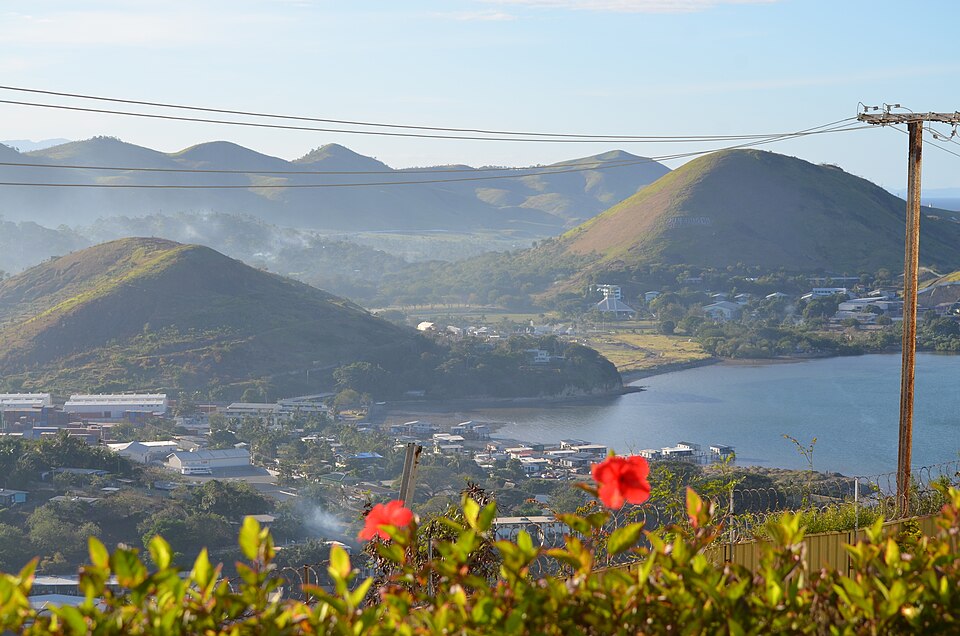
Taipei has agreed to Papua New Guinea’s calls to end its diplomatic presence in the country after nearly four months of trying not to. In July, PNG’s foreign minister, Justin Tkatchenko, said that Taiwan’s presence was not ‘recognised or required’ and requested that Taiwan close its local economic office – unofficial embassy, that is. Taipei wanted to talk things out, and to encourage Port Moresby to do so it suspended open market purchases of PNG’s liquefied natural gas (LNG). No small chunk of change, that: Taiwan’s bought about 500,000 tonnes of LNG at open market prices in the first half of this year alone, at a value of roughly A$800 million.
While we can’t know what conversations took place behind the scenes, on 6 November it became clear that Taiwan’s efforts had failed. The foreign ministry in Taipei released a statement that day agreeing to ‘close the office, withdraw all stationed personnel, and conduct a full review and adjustment of bilateral ties’ with PNG. Taiwan further said that the situation with PNG reflects ‘China’s continued use of political pressure and economic influence to interfere in the diplomatic decisions of other nations and suppress Taiwan’s international participation’. As a parting note, that temporary ban on open market LNG purchases has now been made permanent, although Taiwan’s long-term contract to import 1.2 million tons of LNG from PNG annually until 2030 seems to be still intact. Taiwan also ceased all foreign aid to Port Moresby, though that’s more a political gesture. According to our colleagues at the Lowy Institute, Taiwan provided only A$900,000 or so in aid to PNG in 2024 – less than a third of what Norway gave in the same year.
Through the open market or by contract, Taiwan buys roughly one-third of all the LNG that PNG exports, but that altogether comprises just 8 percent of Taiwan’s LNG imports. Taiwan says that it’s already found alternative sources of LNG, and given inflated oil and gas prices worldwide, it’s likely that PNG will be able to find other buyers – so who ends up hurting the most from this relationship breakdown remains to be seen. Back in July, Tkatchenko said that a key reason for ending Taipei’s diplomatic presence was to take PNG’s relationship with China ‘to unprecedented levels’ – a claim which met with fulsome praise from China’s foreign minister, Wang Yi. Taiwan’s economic heft as an LNG consumer clearly hasn’t provided the leverage over Port Moresby that it had hoped.
News from the family
- What Chinese officials described as a ‘wine bottle’ but PNG police described as an undetonated 130mm Chinese Type 59 artillery projectile was found in a commercial shipping container in Port Moresby. Four Chinese nationals were arrested on 30 October and the investigation is ongoing, although the Chinese embassy in Port Moresby maintains that ‘it is virtually impossible for an illegal military-grade artillery shell to be smuggled out of China to PNG’. And yet, the pictures seem to tell a different story. Although many countries across the world have guns compatible with the projectile, PNG is not one of them.
- Last week, Fiji’s parliament ratified the Vuvale Union and the Ocean of Peace Alliance with Australia in a 27–7 vote, although one member abstained and a further 18 didn’t show up. While the ratification passed comfortably, Fiji’s first ever alliance has not been without controversy. A few days prior to the ratification, the parliament’s Standing Committee on Foreign Affairs and Defence recommended deferring ratification on the grounds that the treaties lacked transparency, further stoking fears that the ratification would surrender Fijian sovereignty. Prominent Fijian Chief Tevita Mara expressed similar concerns in September.

This article was originally published in Fault Lines, ASPI’s fortnightly newsletter that monitors the actions and developments shaping the regional order and Australia’s security.
About Author