
Beijing picked 19,000 companies to win. Many are already in our supply chains
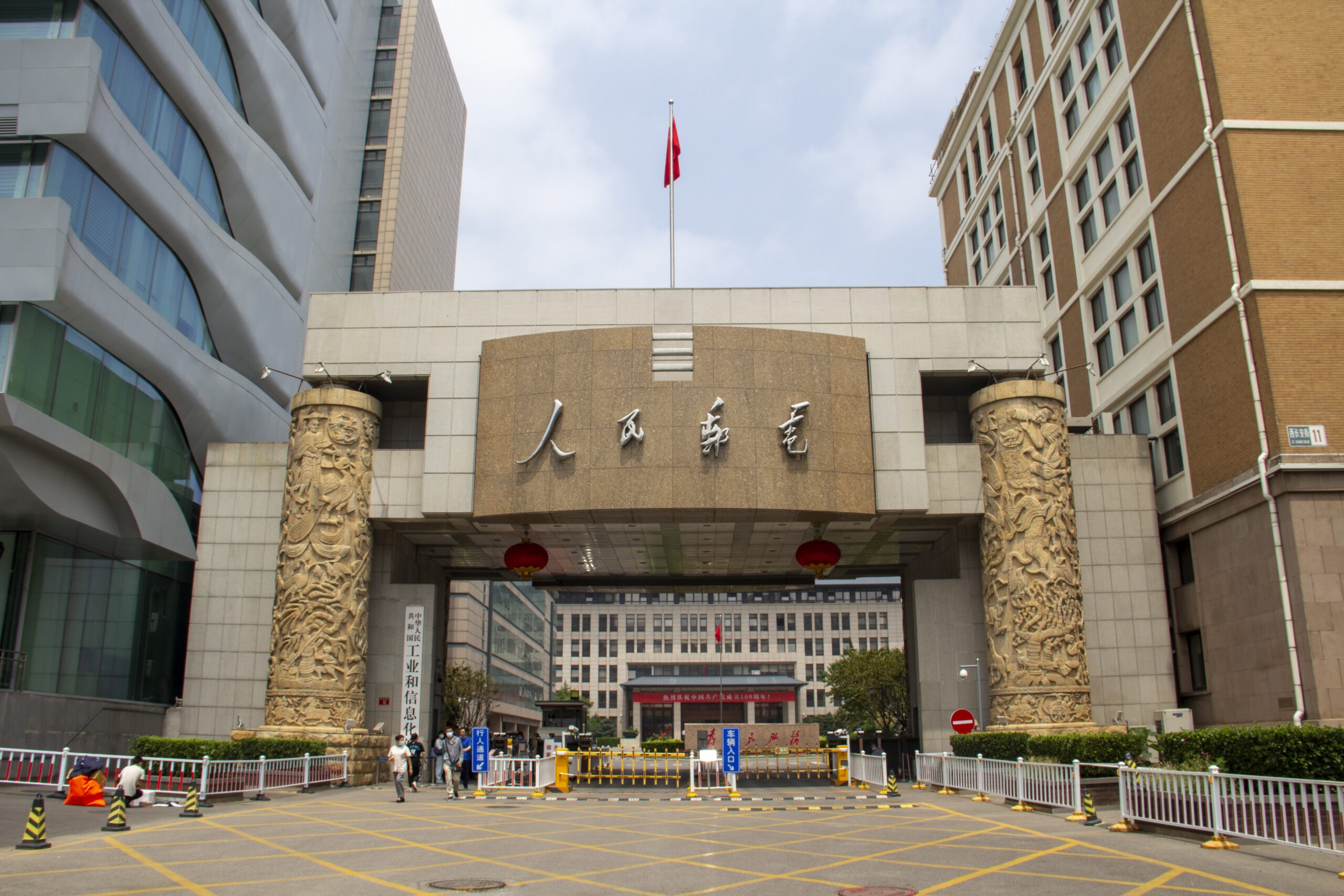
Today, ASPI is expanding its globally-recognised data offering by launching the China Little Giants Tracker – a searchable database of the high-tech small and medium enterprises (SMEs) that Beijing has identified as capable of taking leading positions in critical technologies and industries.
‘Little Giant’ (小巨人) is Beijing’s label, awarded under a state-directed program designed to reduce China’s dependency on Western technology while deepening the rest of the world’s dependence on China’s.
Less familiar than China’s national champions, such as Huawei, Little Giants operate across a wide range of industries and at different stages of maturity. Many are already in our supply chains and households. Some are directly involved in China’s military industry or use forced labour; others make components that have already turned up in Russia’s war against Ukraine.
All Little Giants share one thing: Beijing is actively backing their success. That is why tracking them should be standard practice for governments, private-sector competitors and researchers in democratic countries.
Western governments have been slow to respond to what Beijing told us plainly in 2015, when it announced its Made in China 2025 industrial development plan: that it intended to supplant US and European technological supremacy. It is succeeding in many fields, including telecommunications, batteries and electric vehicles. The Little Giants program pushes that ambition down into the SME layer of the economy.
Yet Western policy responses typically wait until it is too late and Chinese firms already dominate a market. The Little Giant designation offers a leading indicator of these strategically significant companies. It identifies the firms Beijing has decided to build up, sometimes years before they attract regulatory attention. For Little Giants clearly involved in military-civil fusion, the Tracker shows where scrutiny is warranted: under restricted-party regimes, in investment screening and in supply-chain due diligence.
Designation carries a package of support: tax concessions, credit support, smoother access to capital markets, introductions to local industry and research and development hubs, reduced certification fees and promotion at international trade fairs. These measures are administered mainly at provincial and municipal level and vary by jurisdiction. More than 19,000 companies have been designated since 2019 across seven national batches. Designation is valid for three years after conferral, after which the Ministry of Industry and Information Technology reviews it and it can lapse.
Governments across the democratic world fund domestic research, offer tax incentives and subsidise strategic sectors, and some have taken direct equity stakes in firms they judge critical. The global scale and objective of China’s Little Giants program is what makes it a unique industrial policy and one that carries risk for other nations and industries. Beijing is backing these companies to fill identified gaps in domestic and global supply chains. Each firm that succeeds converts a narrow market position into a point of leverage, potentially creating dependencies across Western critical infrastructure and technology supply chains that can be tightened, priced or withheld when Beijing judges it useful. But because these companies still go out into the marketplace to compete on price and performance, they can still reach Western markets without announcing themselves as instruments of Beijing’s strategic policy.
Systematically tracking Little Giants is difficult, but ASPI’s tracker helps the public, private and civil-society sectors undertake due diligence confidently. Since 2022, announcements have been decentralised, and official sources are often inaccessible to Western analysts. What can be found are bare lists of Chinese company names, frequently published as images rather than text, and sometimes containing transcription errors. Companies also frequently change names, compounding the difficulty of tracking any given firm over time. Moreover, a Little Giant designation tells us that Beijing sees strategic value in a firm and is backing it. But it doesn’t tell us what the firm actually builds.

ASPI’s China Little Giants Tracker closes that gap. We compiled more than 300 separate announcements to reconstruct the full list of more than 19,000 Little Giants. We then linked each company to corporate registry data and to the patents filed in its name, drawing on a dataset of more than 2 million patents. The result is a profile for every designated firm, mapped against the technology areas in ASPI’s globally recognised Critical Technology Tracker and, where identified, linked to institutions in ASPI’s China Defence Universities Tracker – a resource governments, universities and industry already use to strengthen due diligence.
But Little Giants are not a homogeneous group. They operate across many sectors, including green technology, consumer electronics, AI, biotech and manufacturing. Some are squarely focused on the Chinese domestic market. Others have built strong brand recognition in the West, selling directly to households and consumers globally. Some Little Giants are Chinese subsidiaries of Western companies including Bosch and Applied Optoelectronics. And some are majority-owned by entities already subject to US restricted-party lists or have close ties to China’s defence establishment, including its defence universities.
One such company with clear defence connections is Baoding Xuanyun Turbojet Power Equipment R&D – trading as Swiwin Turbojet – whose engines have been identified in Russian weapons used against Ukraine. The company was named a Little Giant in October 2025, five months after Ukrainian military intelligence publicly identified its engine in a Russian cruise missile. In the Tracker, Swiwin stands out for its work in advanced aircraft engines: the Tracker scores each firm by matching the classification codes on its patents – the codes describing what each invention covers – against the codes associated with each technology area. Swiwin says on its website that its products are intended solely for recreational and civilian use, and its promotional material plays to that, featuring jet-boosted scooters and Teslas.
That framing understates what these engines can do. The SW800Pro, for example, produces 785 newtons (176 lb) of thrust from a 207 mm diameter, 8.4 kg unit with a maximum fuel consumption of 1,850 grams per minute, corresponding to a specific fuel consumption of 0.14 kg per newton per hour at maximum thrust.
Engines in this performance class are the kind of hardware that export control regimes treat as relevant to defence. Item 9A101 of the dual-use list in Australia’s Defence and Strategic Goods List 2024 covers turbojet engines above defined thrust and below fuel consumption thresholds, and equivalent entries appear in the control lists of other Wassenaar and Missile Technology Control Regime participants. Whether a particular unit falls within those parameters is a technical determination for regulators, and not one that can be settled from a manufacturer’s published specifications. But the relevant point here is that a product marketed for recreational use sits in the performance band that controls lists have been written to capture.
But those lists don’t reach Swiwin’s own sales. Export controls regulate the outbound movement of specified goods and technology from the controlling jurisdiction; they place no restriction on what a Chinese manufacturer sell abroad, including to Russia. The measures that do reach a foreign firm – such as sanctions designations or the US Entity List – attach to companies rather than products, and only once a company has been designated. Swiwin has not been designated. It appears on no US restricted part list, nor on any Australian, European or British sanctions lists.
Yet the defence application of Swiwin’s engines isn’t theoretical. In May 2025, Ukrainian military intelligence identified the SW800Pro engine as powering Russia’s S8000 Banderol cruise missile. Open-source imagery taken in October 2025 by a Ukrainian electronic warfare specialist appears to show the SW800Pro-Y in Russia’s UMPB-5R glide bomb. Reporting by The Insider also suggests two smaller engines, the SW400Pro and SW240B, were acquired for study, potentially informing the design of the powerplant used in the jet-powered Shahed-238/Geran-3 drones.
None of this establishes that Swiwin supplied these engines to Russia or knew where they would end up. But that is precisely the concern. Engines of this capability move through ordinary commercial channels and are sold openly to civilian and hobbyist buyers. The manufacturer doesn’t need to do anything for them to arrive in a weapons program.
Swiwin’s ties also reach into China’s defence establishment. In 2024, Beihang University – one of the Seven Sons of National Defence, a group of Chinese universities closely tied to the Chinese military – bought two Swiwin SW300B engines. The university and Swiwin then collaborated on a hybrid-electric rotor uncrewed aerial vehicle. Swiwin was also a partner in a project with Northwestern Polytechnical University, another of the Seven Sons, developing electronic control units for micro-turbojet engines. The third partner was the 31st Research Institute of the China Aerospace Science and Industry Corporation’s Third Academy, which the US placed on the Bureau of Industry and Security (BIS) Entity List in 2001.
But Little Giants make more than defence hardware. Some are consumer brands selling directly into Western households, bought by people with no reason to connect an everyday appliance to Chinese industrial policy or its strategic ambitions.
Allpowers Industrial International, based in Guangzhou, was designated a Little Giant in 2024. It makes portable solar and energy-storage devices, including home backup and emergency power systems, and has a strong presence in Western markets, with localised operations serving the US, the European Union, Britain, Japan, Australia, Ukraine and Russia. It reaches consumers the same way many Western brands do: through an affiliate program that pays content creators on social media platforms a commission.
The devices connect to a cloud service which Allpowers operates and which the company’s manuals describe as supporting remote monitoring, control of output ports and firmware updates. There is nothing unusual about cloud-managed operation of this kind – every major brand in this product segment works the same way. But it does mean the manufacturer keeps a live channel into the device long after it’s sold. The software that tells a unit how to behave – how much power to draw, when to charge and when to shut down – is updated remotely, from servers the company controls. For units installed in Western homes, that path runs back to a firm Beijing has singled out.
In each instance, that is a limited exposure. Allpowers is not a dominant player. It sits near the bottom of the segment’s top suppliers. But it is on the list, with EcoFlow and Bluetti, both also Little Giants, sitting closer to the top. The exposure is therefore not just one company’s installed base, but what emerges as an accumulating feature of the segment: a distributed fleet of home backup systems in Western homes, each maintaining a live connection to a Chinese vendor that Beijing has identified as strategically valuable and is actively supporting.
Little Giants often sit inside complex corporate structures that defeat routine due-diligence checks. Beijing Leike Defense Technology, which makes sensing and communication technology for the defence sector, has five wholly owned subsidiaries that are Little Giants. In 2024, the US Department of Commerce added one of them, Xi’an Hengda Microwave Technology Development, to the BIS Entity List for supporting the high-altitude balloon that overflew the US in February 2023. Leike itself was listed in the same action for its links to companies supporting the balloon program.
Leike’s listing has implications for its other Little Giant subsidiaries, even those that aren’t explicitly named. Under the BIS ‘affiliates rule’ – due to take effect in November 2026 after a year-long suspension – Entity List restrictions extend automatically to any company at least 50 percent owned by a listed entity. This would capture Leike’s majority-owned subsidiaries.
One of them, Chengdu ACTi Science and Technology Development, has an international footprint. It was incubated at the University of Electronic Science and Technology of China before Leike acquired a majority stake in 2016. It supplies equipment for shipborne and ground-based meteorological stations used by the Chinese military and claims involvement in more than 80 percent of China’s satellite ground-station projects.
The company’s archived website describes its products as having been used in ‘major national military engineering projects’. Elsewhere, it names specific systems its equipment has gone into, including the FengYun-3 meteorological satellite reception system, Europe’s Galileo global navigation system, Nigeria’s NigComSat-1 and the China-Brazil Earth Resources Satellite Program. Leike’s founder, Han Zhouan, has said the company’s products were used in international cooperation projects in Australia, Chile and South Africa.
Chengdu ACTi is a case in point. It appears in the Tracker in its own right, as a designated Little Giant. But it also sells components – parts that go inside other companies’ products – so it can end up in infrastructure overseas without ever appearing on the purchase order. The buyer sees a brand it recognises, but the designated firm sits several steps behind it. This is why supply-chain security is so important.
Some Little Giants also raise human-rights concerns, with operations that reach into Western supply chains. Urumqi Yaou Rare Metal, a state-owned lithium producer also known as Urumqi Asia-Europe Rare Metal, was designated a Little Giant in 2023. Chinese state media has reported that it accounts for around a fifth of China’s lithium metal production capacity. A 2022 report by the Helena Kennedy Centre for International Justice identifies the company and its corporate group as implicated in state-sponsored labour-transfer programs.
Shipping records show that in 2018, chemical manufacturing company FMC’s lithium division, later spun off as Livent, was importing lithium from Urumqi Yaou. A New York Times investigation in 2022 indicated the commercial relationship between Livent and Xinjiang Nonferrous, Urumqi Yaou’s ultimate parent company, was still in place, although Livent said that it prohibited forced labour among its vendors. Across the same period, Livent supplied Tesla with lithium used for its batteries. In 2024, the US Department of Homeland Security added Xinjiang Nonferrous Metals Industry Group to its Uyghur Forced Labor Prevention Act Entity List.
Other Little Giants build tools that are designed for use inside China’s own information environment, and only later, in some cases, for sale abroad as identified by ASPI reporting. WiseWeb Technology Group shows why designation should be read in light of what a firm was selected for, not just what it sells. Formerly Beijing WiseWeb Technology, the company was designated in 2022. Its commercial business is public-opinion and reputation-risk monitoring for Chinese banks, insurers and financial regulators.
The same technology has a second application. WiseWeb’s core team come mainly from the National University of Defence Technology, the Chinese military’s leading engineering university. WiseWeb moved its registration from Beijing to Lhasa in 2017, a move local reporting attributed to ‘national strategic needs’. A 2018 Global Times article quoted WiseWeb’s deputy manager, Wang Sheng, saying that real-time monitoring of overseas tourists in Tibet could give the government early warning of social unrest. Since then, the company has filed patents on detecting sensitive words in Tibetan-language speech. In 2022, China’s Ministry of Industry and Information Technology selected WiseWeb’s multilingual ‘social governance’ platform for state support.
These are a handful of the more than 19,000 companies in ASPI’s China Little Giants Tracker. Each is easy to overlook: individually small, often commercially unremarkable outside China and largely absent from Western regulatory regimes until something goes wrong or dominance in the market is achieved. But this is the layer through which Beijing is, by design, converting ordinary commercial activity into strategic advantage. The Tracker makes that layer visible and accessible. It empowers policymakers, researchers and companies to ask and answer what are otherwise very hard, if not impossible, questions: is this supplier, partner or acquisition target one Beijing has chosen to build? If so, why? These questions are worth answering while a firm is still small enough for the answers to change a decision.
In an era in which monopolies or near-monopolies create supply-chain risks and national security threats, understanding the supply chain for the materials critical to your entity, industry and nation should be mandatory. ASPI’s trackers shed light on what are otherwise opaque links between the Chinese Communist Party and those companies specifically designated to achieve Beijing’s strategic objectives and potentially undermine our own. The China Little Giants Tracker, along with ASPI’s other trackers, does not provide a blacklist for automatic prohibition. They provide knowledge, and with that knowledge, the power to make informed decisions.
Learn more about how to purchase a licence to the China Little Giants Tracker here.
The authors thank ASPI colleagues whose earlier work on China’s Little Giants program identified this cohort as a priority for deeper analysis.
About Author





.jpg "Australian mid-market businesses to access deeper AI and security expertise with First Focus-Integris partnership")