Industry is building the capability and industrial base northern Australia needs
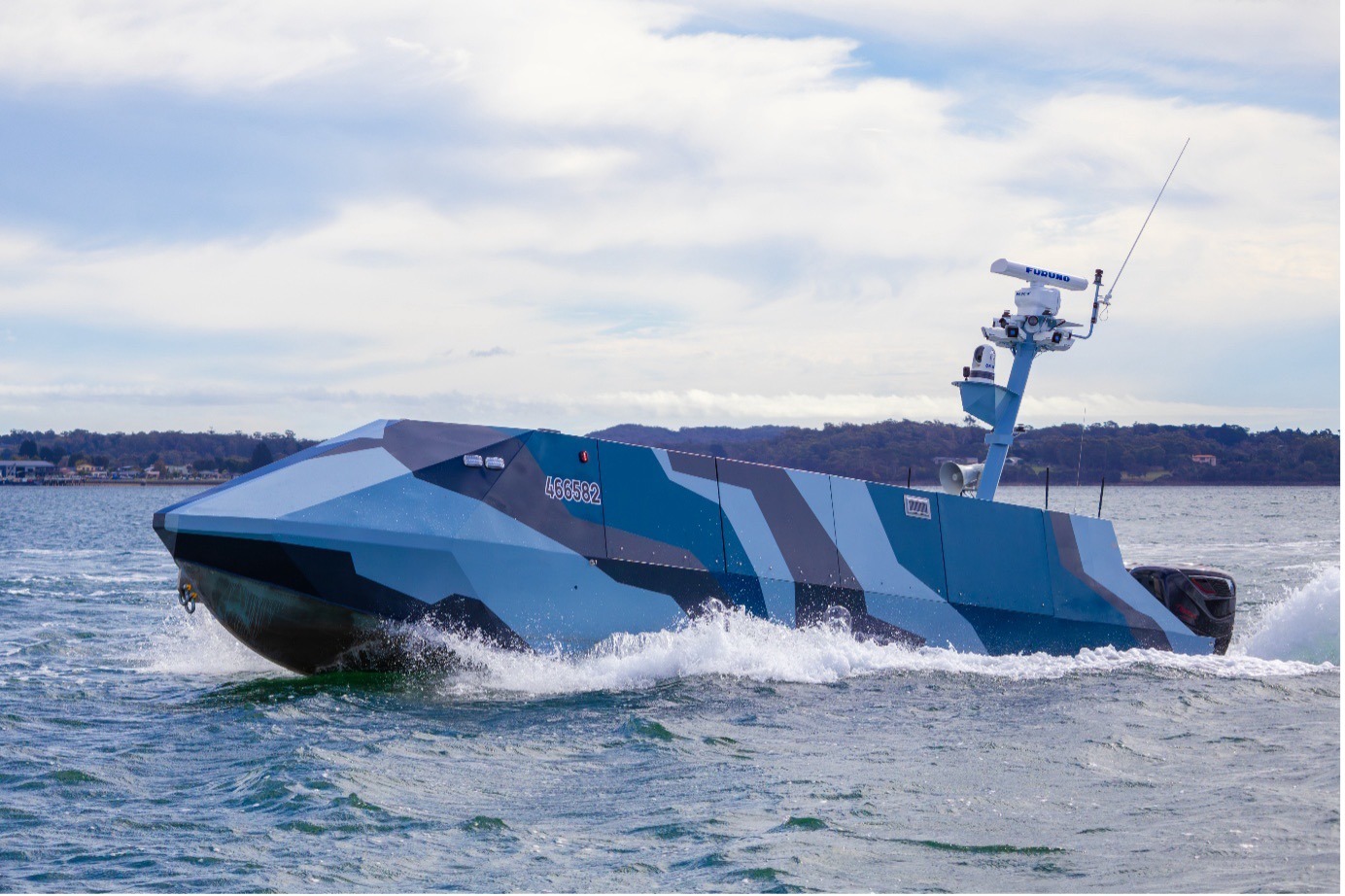
Last week in Darwin, I saw an example of what Australia needs more of: industry investing in sovereign capability before Defence has written the requirement or issued a tender. I watched Leidos’s Australian-built uncrewed surface vessel (USV), Sea Archer, operate on the water during its trials in Darwin’s East Arm. This demonstrated a different approach to capability development, in which industry identified a need, took the investment risk and developed a capability that governments could choose to use.
Australia’s 2026 National Defence Strategy places greater emphasis on self-reliance, domestic industrial capability, resilience and closer collaboration with Australian industry. The 2026 Defence Industry Development Strategy puts industry at the centre of national defence and economic security, including through faster and more agile approaches to capability development and contracting.
Sea Archer is an example of what that can look like in practice: industry anticipating future demand, investing ahead of government requirements and developing a commercially viable solution rather than waiting for Defence to define either the problem or the solution.
At just 11 metres long, the USV is small, but its capabilities are significant. It can travel at up to 40 knots (74 km per hour), has a range of 1,500 nautical miles (2,778 km) and can carry around 900 kg of payload. Its relatively small size also gives it unusual mobility: it can be transported in a standard 12-metre-long high-cube shipping container, moved by road or sea or strategically airlifted by a Boeing C-17 Globemaster. Rotary-wing sling-loaded delivery is a potential option into locations where conventional maritime access is difficult, though this method hasn’t been tested or certified.
Sea Archer joins an increasingly sophisticated Australian uncrewed maritime ecosystem. Ocius’s Bluebottle provides persistent, low-speed surveillance for the navy and can remain at sea for months. Sea Archer offers something different: speed, payload and mobility. At 40 knots, it is more than six times faster than the Bluebottle, with greater payload and range.
Its four proposed mission sets – strike; logistics resupply; intelligence, surveillance and reconnaissance; and electromagnetic warfare – make it particularly relevant to the army’s emerging northern littoral capability. It could provide surveillance ahead of crewed forces, move supplies into areas where putting military personnel at risk is undesirable, carry electronic-warfare payloads or, with appropriate integration, contribute to maritime strike.
But its value in Australia’s north goes well beyond Defence.
Australia’s maritime domain is enormous. Its Australian Fishing Zone covers more than 8 million square kilometres, while its Exclusive Economic Zone extends to just over 22 km from the coast. Monitoring such a vast area, particularly the remote waters of northern and north-western Australia, presents a significant surveillance and presence challenge.
The problem isn’t just detecting illegal activity; it’s maintaining a persistent presence across this area and having sufficient platforms to respond when needed.
Earlier this year, at least two of the Australian Border Force’s (ABF) eight Cape-class patrol boats were undergoing maintenance while there was an influx of foreign fishing vessels in Queensland waters. In such situations, uncrewed capability could become a force multiplier.
A USV wouldn’t replace a patrol boat but could supplement it, providing persistent surveillance across areas that are difficult and costly to cover with crewed vessels. Its speed, sensors and communications could detect and track vessels, rapidly reposition and communicate directly at sea. This has clear applications against illegal fishing and potentially illegal arrivals, providing a visible deterrent while freeing crewed vessels for interception and boarding.
Further, Defence has a finite pool of highly trained personnel. Every uniformed person operating a capability that industry could provide is unavailable for tasks only the Australian Defence Force can perform. The question is whether scarce military personnel are being used where they add most value.
Rather than purchasing, crewing, basing and sustaining every vessel itself, Defence could potentially contract a commercial operator to provide surveillance, logistics or other maritime effects as a service. That could be particularly attractive in the north, where vast distances, sparse infrastructure and limited population make it costly and difficult to maintain a persistent, crewed presence.
This isn’t an argument for Defence or ABF to stop buying equipment; rather, it’s an argument for the government to become a smarter customer.
The sovereign industrial dimension is equally important. Whether the government acquires the capability or leverages the commercial model, the Sea Archer production model is designed to support production across multiple Australian shipyards, including two in Darwin, without disrupting broader shipbuilding programs. This creates a pathway for sovereign manufacture, sustainment and scaling.
It is sovereign capability without waiting for a sovereign contract: industry identifying a gap, investing ahead of demand and developing a capability the government can choose to use.
For Defence, this could become a useful supplement to Australia’s emerging littoral capability. For the ABF, it could provide another layer of persistent maritime surveillance and deterrence. For other agencies, it could provide access to a capability without requiring each agency to build its own fleet.
Australia cannot afford to put a crewed vessel everywhere it needs to watch, but it also can’t leave its northern approaches uncovered.
The answer may not be more government-owned capability, but more Australian-built capability, commercially operated and available to the government when and where it’s needed.
About Author