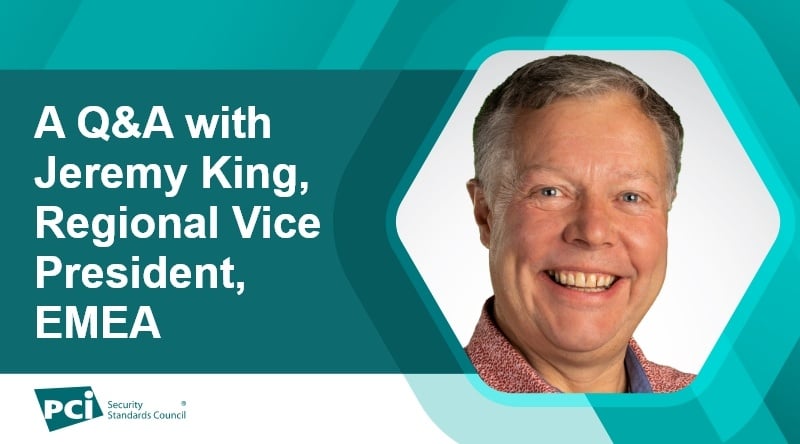
Jeremy King, Regional Vice President for EMEA, is set to retire from the PCI Security Standards Council (PCI SSC) after an extensive tenure of almost 15 years. In this article, we had the opportunity to sit down with Jeremy to discuss his journey within the Council and the payments sector, highlighting the fulfilling experiences he has encountered and the notable transformations observed in securing payment data over time.
Could you shed some light on your academic and professional background? What were the driving forces behind your decision to become a part of this field?
Jeremy King: Back in 1980, during my sixth form at a UK school, the introduction of the first computer left a lasting impression on me. I was captivated by the technology, leading me to pursue a degree in Electronics and Electrical Engineering. 
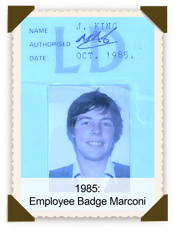
Upon graduating in 1984, I commenced my professional journey at Marconi Electronic Devices Limited (MEDL) as a product engineer in a bygone era where the UK prominently featured a thriving semiconductor industry. Through various roles within MEDL/GEC Plessey Semiconductors over 14 years, I evolved from a Failure Analysis Engineer to Assistant QA Manager and eventually to Production Manager, before embarking on the transition to the dynamic realm of chip-embedded bank cards.
In 1998, my career path led me to Mondex International, where I dedicated two years to the development of consumer-to-business chip cards, exposing me to the realms of payments and payment security.
In 2001, I made the transition to Mastercard, significantly contributing to the conceptualization of the pioneering Mastercard Card Production Logical Security Standard, the Over the Air Personalization Standard, and the Mastercard CAST Standard focusing on chip security. Subsequently, I played a crucial role in developing Mastercard’s POS PED Standard, which eventually integrated into the inaugural PCI POS PED Standard in 2005.
By 2010, the European progress of PCI SSC became evident, necessitating continual regional backing. Subsequently, I submitted my application, secured the position, and commenced my tenure with the Council, culminating in what can be described as a period of significant milestones.
You were part of the original team behind the inception of the initial standards for the Council back in 2004 and witnessed the formal establishment of the Council in 2006. How would you describe that period and the subsequent transformations ushered in by the Council and the industry?
Jeremy King: Being a part of the nascent stages of an endeavor that showcased promising potential to enhance payment security was both exhilarating and fulfilling. Conceiving the first POS PED Standard for the Council held a special significance for me. Little did I comprehend then that a singular standard would burgeon into 15 diverse standards, universally adopted by myriad payment security entities.
The advancements in payment security stand as a testament to the relentless dedication and perseverance of countless individuals globally. I am grateful for the privilege of participating in the genesis and having the unyielding support of remarkable personnel. Undoubtedly, the perpetual challenge lies in the ceaseless evolution characterizing payment security.
What aspect of your journey with the Council has been the most fulfilling for you?
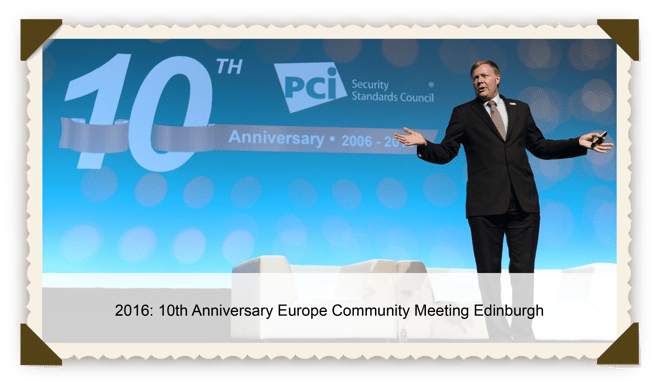
Jeremy King: Undoubtedly, the most gratifying facet of my time with the Council has been the opportunity to collaborate with exceptional individuals, both within the Council and across our global community. I have had the fortunI’ve had an incredible journey throughout my career, affording me the chance to connect with individuals from across the globe. Thanks to these extraordinary people, we’ve been able to make a significant impact on enhancing payment security, a feat that we should all take pride in. Witnessing the growth of our Participating Organization (PO) community, and subsequently our Board of Advisors (BOA), has been truly inspiring. From the inception of the Global Executive Assessor Roundtable (GEAR) by the Council to the establishment of a Regional Engagement Board (REB) in Brazil, each step has been a testament to progress. Yet, what has always resonated with me the most are the annual Community Meetings – a special time when industry professionals converge to network, learn, deliberate on various payment security aspects, and simply enjoy themselves.
Did you receive any memorable guidance during your professional journey? What counsel would you offer to others striving for success in the payment sector?
Jeremy King: I recall a former colleague advising me early on: “Always remember, this was your choice, this is what you aspired to do. No one twisted your arm.” This reminder to hold onto the ambition that drove us to this path is empowering when faced with challenges. It certainly bolstered my resolve. Another crucial recommendation is to cultivate a circle of trusted peers and mentors to lean on. Given the ever-evolving nature of this field, no individual can tackle payment security alone. The Council continues to adapt to industry demands, from emerging threats to novel technologies, paving the way for the next generation to propel us forward.
What aspect of your retirement are you most eagerly anticipating?
Jeremy King: I eagerly look forward to unwinding with my wife, Julie, and my two adult sons, Matthew and Thomas. There remain countless places in the UK for me to explore, a prospect I am genuinely excited about. Despite not always being graced with ideal weather, the UK boasts some of the finest beaches globally. I intend to refine my golfing skills, and of course, spend more time cycling while dodging sheep.
On behalf of all of us at PCI SSC, we express our gratitude to Jeremy for his significant contributions to the Council during the past 15 years; for his dedication and hard work that have been instrumental in shaping the Council into the remarkable organization it is today; for his valuable expertise and dedication; and the lasting partnerships cultivated over the years. We extend our best wishes to you in your retirement.
About Author