‘Worst defence decision ever’? AUKUS inquiry gets China wrong
The key verdict of the public inquiry into AUKUS lacks credibility.
The privately run exercise tells us that AUKUS is ‘the worst, riskiest and most costly defence decision ever made by an Australian government’. But this rests on false strategic premises: that China poses little threat to Australia, that war with China would never be strategically justified, and that the primary threat to Australian sovereignty is the United States.
The unofficial AUKUS Public Inquiry was launched this year to ‘assess the implications of AUKUS for Australia’s long-term peace and security.’ With chairs including former chief of the Australian Defence Force Chris Barrie and former environment minister Peter Garrett, the inquiry was framed as an opportunity to publicly scrutinise the case for AUKUS.
While the final report, released on 4 November, references genuine and widespread concerns about AUKUS, including submarine delivery timelines and nuclear waste disposal, these are lost in weak and partisan analysis that builds to a categorical refutation of AUKUS as the worst ever Australian defence decision. Credibly making such a claim requires a robust and nuanced understanding of the complex strategic requirements that brought about and sustain support for Australian nuclear-powered submarines. The AUKUS Public Inquiry final report demonstrates no such understanding.
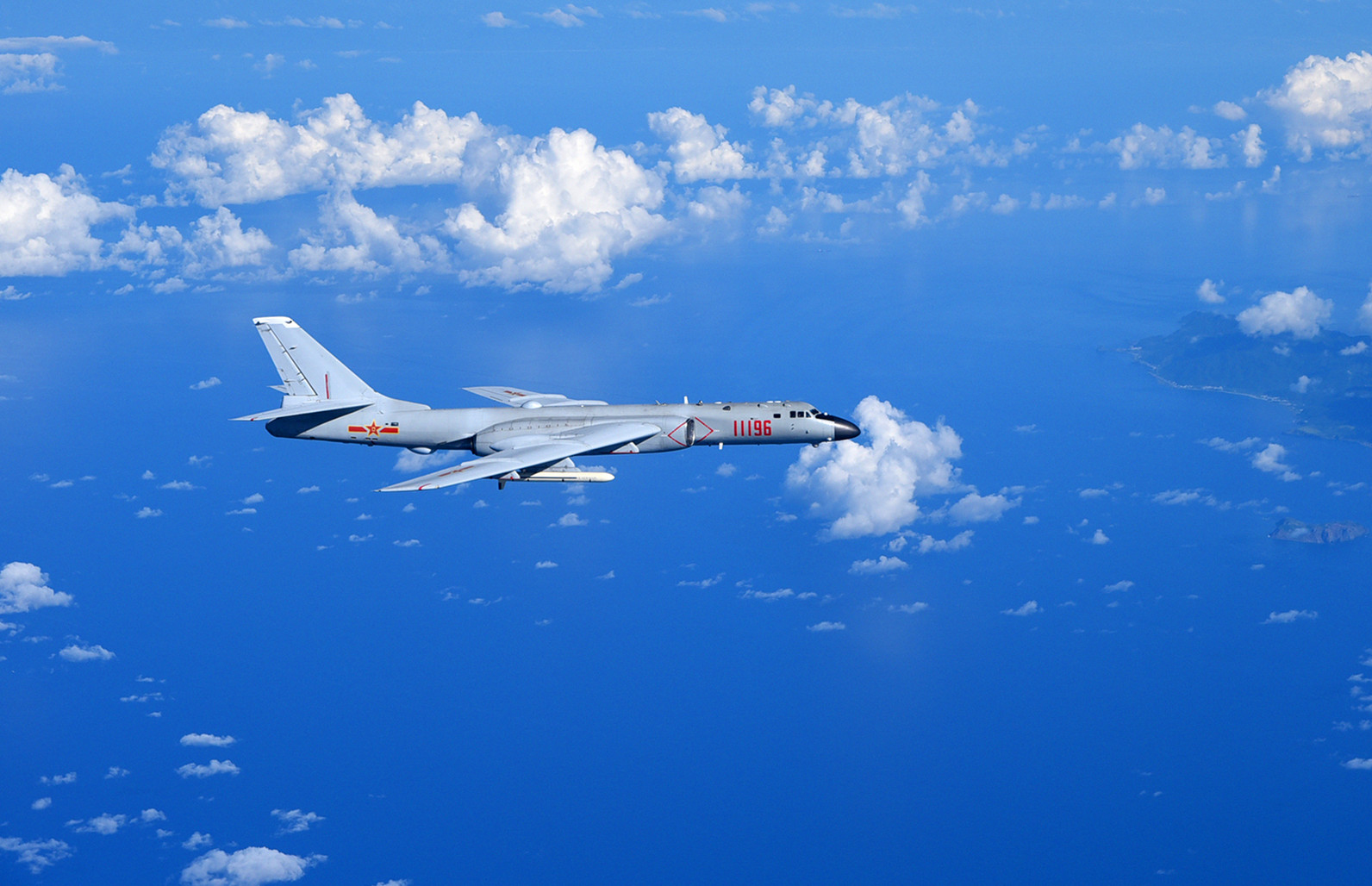
The report says, ‘It is clear the AUKUS decision was based on unsubstantiated threats from China’. This statement can only be sustained with a narrow view of the threat that China poses to Australia. The likelihood of a Chinese ground invasion, for example, seems remote. But Australian concerns around Chinese maritime interdiction, military adventures in the South and East China Seas and grey-zone coercion – all of which engage Australia’s strategic interests – are hardly unsubstantiated. Assuming that a state conducting naval circumnavigations and unsafe intercepts of Australian aircraft poses little threat to Australia seems foolhardy at best.
In an odd turn of phrase, the report further declares that ‘War against China is Australia’s nightmare that must be avoided’. Emphasising China’s status as ‘our largest trading partner’ and ‘a bona fide superpower’, the report asserts that ‘becoming involved in war with China’ is ‘the worst possible outcome for our nation’s future’.
While conflict with China would be immensely costly, presenting it as ‘the worst possible outcome’ implies that Australia could never have legitimate casus belli with respect to China. This is not the case. Australia must, for example, be able to respond proportionately to direct Chinese military aggression. It must keep the option to help others do so, including Taiwan, Japan and the Philippines. And it must be able to meet treaty obligations in coming to the defence of the US – a treaty ally – if China attacks it.
The report additionally highlights supposed sovereignty risks of closer defence integration with the US, asserting that AUKUS will cede decision-making authority on strategic assets to Washington and that it will make Australia a larger target for Chinese attacks, including Chinese nuclear weapons.
The claim that Australia, even with AUKUS, is a legitimate target for Chinese nuclear weapons sits uncomfortably with earlier claims that threats from China are overblown. But this analysis further misdirects the reader by framing risks to Australian sovereignty as arising exclusively from Australia’s defence relationship with the US. Leaving aside questions as to the validity of this claim, framing the US as a sovereignty risk while failing to address current, active Chinese efforts to subvert Australian sovereignty – for example in Australian defence policy, Australian trade and investment decisions and even Australian elections – is a glaring omission.
Having adopted those key premises – that China poses little threat to Australia, that war with China would never be strategically justified and that the primary threat to Australian sovereignty is the US – the report perhaps unsurprisingly arrives at such a negative assessment of AUKUS. But these premises do not match the facts on the ground.
By mischaracterising Australia’s strategic context, the report sidestepped the complex but critical trade-offs around sovereignty, deterrence, assurance and risk that form the real locus of Australian decision-making around AUKUS. It didn’t weigh, for example, whether closer integration with US defence planning and industry actually strengthens Australia’s agency by giving it more influence over US decision-making and access to advanced military technologies. Instead, it took the easier path of constructing an alternative reality of a strategically benign Indo-Pacific, a safe vantage point from which to dismiss the case for AUKUS.
While AUKUS is certainly not beyond scrutiny or criticism, the approach taken by the privately run inquiry is unlikely to move the needle for a defence establishment grappling with Australia’s challenging defence requirements in a contested Indo-Pacific or for a public that is increasingly concerned about Australia’s vulnerabilities to China.
About Author