
IAG's SAP migration brings process and data into sharp focus
Key points
- IAG shifted its SAP ECC to S/4HANA migration approach to focus on fixing finance processes and data first, with an eye on future AI applications.
- The insurer used SAP’s Signavio to map over 300 finance function processes and cleared off 40 percent of its company codes, cutting data migration needs and delivering faster close benefits.
- Executive manager of digital finance Prashant Shetty, who also leads AI enablement, says clean data and process foundations are essential before AI can drive value for the finance function.

IAG is taking a process- and data-driven approach to guide its move off SAP ECC to S/4HANA, groundwork that’s helping it move faster with the core migration while also shaping foundations for AI in its finance function.
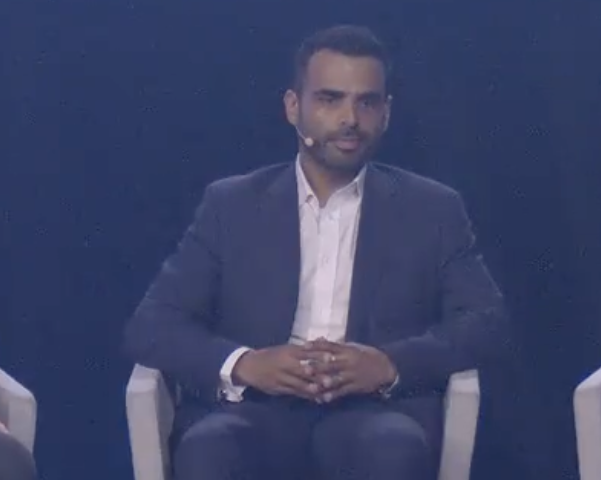
Executive manager of digital finance Prashant Shetty told the SAP NOW AI Tour in Sydney that the insurer has been migrating to S/4HANA “for a few years” with the work “ongoing”.
However, he said the company’s approach to the migration had changed partway through.
While the migration was initially linked to the end-of-life of ECC, coupled with a compliance goal of meeting the IFRS 17 accounting standard, the rise of AI and its potential finance function applications challenged the insurer’s approach and mindset.
“One of the key realisations for us was the tech is fast evolving, AI is coming up, so do we want to create a system and a process which is as of now or do we want to create it for the future?” Shetty said.
“That gave us an opportunity to take a pause and say, ‘Look. If we are building an ERP system which is centred around finance and driving value and benefits, what does that actually look like?”
How the redesign of the migration program manifested is as a focus on understanding underlying finance processes better, and tidying up its finance data estate.
“We said, “Let’s fix our process, let’s fix our data,” Shetty said.
The insurer used SAP’s Signavio to capture and map out “300-plus” finance function processes.
This insight became “a very critical data point that we have at hand to guide us through the [migration] journey,” Shetty said.
It meant the company wasn’t just theorising on what moving to S/4HANA would look like for certain processes.
Outside of the SAP upgrade, the process mapping exercise has created process intelligence opportunities for the insurer.
“You can actually see end-to-end how your process works, where the bottlenecks sit, how the data actually flows in your system, and that information gives you a much more insightful guidance to [identify] … big ticket improvement areas … [and] take a very targeted approach [to tackling them],” Shetty said.
On the data side, the insurer has effectively reduced the amount of data that needs to be migrated to S/4HANA, while also improving the efficiency of current operations.
“We cleared off 40 percent of our company codes, which meant we have significantly reduced that whole data migration aspect of moving to S/4HANA,” Shetty said.
“But more importantly, in the ongoing state of business as we are operating finance, it gave us a lot of immediate benefits as well in terms of faster close, or just reducing the risk of having [that] number of company codes.”
Combined, the focus on process mapping and data reduction has produced benefits for the SAP core migration program.
“In summary, what we have found is if we have the right data and the process, it gives much richer information for the management, and it gives us that value-driven approach where you’re not doing a big bang change to S/4 and then fixing things from that point onwards. “You’re actually going through that process in a manner where you’re deriving benefits and once you’re on the new system … you’re actually empowering the finance teams.
“We have laid the right foundations, and we are now in a position to move to HANA faster, … but more importantly, drive some immediate benefits.”
AI foundations
In addition to overseeing the S/4HANA migration, Shetty has an additional responsibility for “AI enablement”.
The foundation work around process mapping and data cleansing in the SAP environment has prepared the insurer well for AI opportunities arising as part of the work of the finance function.
“In my role as the AI lead within finance, we’re looking at a number of use cases.
“One of the key realisations is that AI cannot drive value in itself. You need to have the right data [and] to have the right process in place.”
Shetty said that within the IAG business there are “activators” – essentially “AI enthusiasts and champions” – and that he sees his role as “lead activator”.
“I’m just one of them, but it gives me a lot of opportunities to make some real impact,” he said.
“As a finance lead, I get a lot of insights from my peers and my colleagues across the CFO function, who are responsible to bring [forward] use cases.
“That’s where we are making some real changes and where we are looking at specific business problems to say, ‘What’s really slowing you down right now?’ and ‘How do we actually drive outcomes and impact here?’
“Whether it’s manual reconciliation, whether it’s data problems, we have identified a number of pain points across the value chain of finance, and my finance AI activators bring those use cases to us, and then we dissect it in a very sort of logical manner to [identify] potential solutions we can apply here.”
About Author