TfNSW's 'Project Guardian' senses rail corridor, highway incursions
Key points
- Transport for NSW has launched a year-long trial of real-time detection and sensing technology at three locations to spot risky behaviours like rail corridor incursions and basejumping.
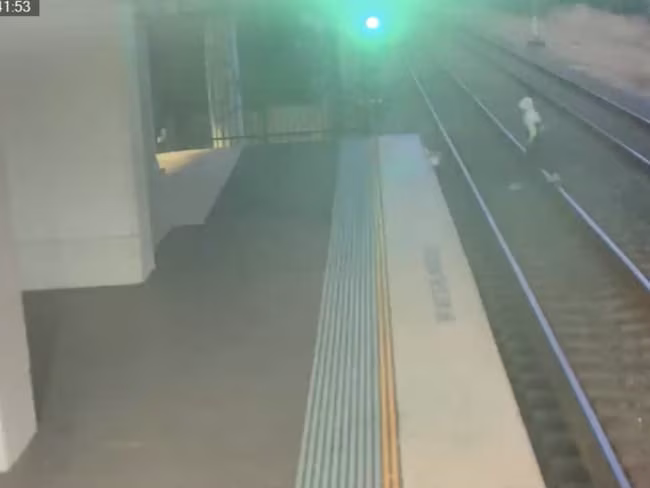
- The technology has already detected 350 cases of people crossing the rail corridor at Kingswood, three kangaroo instances, and 500 instances of dangerous pedestrian activity on the Hume Highway.
- Coordinator general Howard Collins said the trial, codenamed Project Guardian, is helping identify risks earlier so Transport for NSW can prevent harm and reduce network disruptions.

Image credit: 4Zero.
Transport for NSW has kicked off a year-long trial of real-time detection and sensing technology, aimed at identifying risky behaviours such as incursions into rail corridors and basejumping.
The agency said in a statement that it is using LiDAR, thermal imaging cameras, and wifi and bluetooth connectivity, in three locations.
These are Kingswood Station in Penrith, and the Douglas Park and Pheasants Nest bridges on the Hume Highway, south of Sydney.
So far, the technology has picked up 350 cases of people “crossing the rail corridor” at Kingswood.
The technology also detected “three instances of kangaroos in the [rail] corridor”, TfNSW said.
It also identified “some 500 instances of dangerous pedestrian activity along the [Hume] Highway that would have otherwise gone undetected.”
This included base jumpers “within 48 hours of thermal imaging cameras being installed.”
Transport’s coordinator general Howard Collins said in a statement that the agency’s challenge was that it “can’t prevent what we can’t see”.
“Too often, we only learn about dangerous behaviour after someone has placed themselves at serious risk and the worst has happened,” Collins said.
“This trial is giving us a clearer picture of where, when, and how people are putting themselves at risk across the transport network, and helping us identify potential interventions.
“The earlier we can identify a risk, the greater our opportunity to prevent harm and ensure fewer disruptions to the transport network.”
The trial is being run under the codename ‘Project Guardian’.
Technology company 4Zero has since claimed a role in it. The company said that the technology being used came from “Microsoft, Cisco, Converge Cloud and IPTEL”.
Transport for NSW indicated it could expand the technology to more locations once the initial trial period is up.
About Author