Cisco report flags organisational friction as a key barrier to AI-driven cyber defence in Australia
Cisco report flags organisational friction as a key barrier to AI-driven cyber defence in Australia
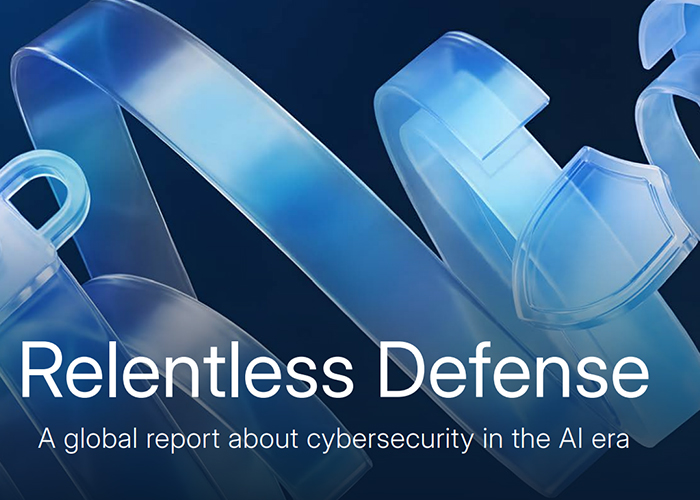
A new Cisco report suggests Australian organisations are struggling to keep pace with AI-driven cyber threats, not primarily because of missing technology but because internal processes and team structures slow down response.
Cisco’s Relentless Defence Report found 93% of Australian organisations experienced a “material, business-disrupting” cyber incident in the past 12 months, with more than 37% involving an AI-enhanced attack. Australia scored 62 out of 100 on the Cisco Defence Index, placing it in the report’s “Reactive” tier and slightly below the global average of 64.
The report argues that as autonomous AI agents can operate in seconds, delays in human-led decision-making—such as approvals, unclear ownership and fragmented data—create governance and security risks. Around 63% of Australian security practitioners surveyed said organisational friction would most improve their cyber defences, ahead of technology-related blockers.
Cisco’s data also points to a gap between increased spending and improved outcomes. While 89% of Australian enterprises increased security budgets over the past two years, 45% reported incidents either stayed the same (33%) or rose (12%).
Where security teams lose time
The report describes coordination and data access issues as recurring problems for security teams, with dependencies spread across IT, procurement and executive leadership.
Key findings for Australia include:
46% of organisations said security, networking and IT teams operate as one team with shared visibility and tooling.
40% said what they measure is too technical to persuade executives, 42% said they struggle to translate business metrics into decision-making information, and 30% said they have no consistent way to measure security performance.
40% said they spend more time collecting and correlating data across systems than addressing threats, while 42% said critical insights are missed because data is out of reach.
AI is improving detection and response, but adoption remains limited
More than 88% of Australian practitioners reported detection and response gains of at least 25%, and 35% said AI is significantly reducing operational burden. However, the report found fewer than half (39%) of organisations have extensively deployed AI-powered security capabilities.
Cisco said adoption is highest in network security and lowest in security operations and investigation. The report also found 40% of organisations have extensively deployed AI agents in security operations, with concerns including data exposure, compromised systems and third-party handling. Only 62% reported being very confident they could detect and respond to a compromised AI agent.
“AI adoption in the network was inevitable because human reaction time couldn’t keep pace with packet-level threats years ago. The network became machine-speed by necessity. Security operations are now hitting that exact same inflection point. The organisations pulling ahead aren’t treating AI as a separate chatbot in the SOC; they are treating the network fabric as the sensor and enforcement engine for the entire security stack,” said Carl Solder, Cisco Chief Technology Officer, Australia and New Zealand.
What Cisco calls ‘Relentless Defenders’
The report groups the top-performing organisations into a category Cisco calls “Relentless Defenders”, representing 8% of organisations globally and 5% in Australia, with a score of 80/100 on the Cisco Defence Index.
According to the report, these organisations were more likely to reduce friction by operating as a single coordinated team and applying consistent controls to AI agents and non-human identities. Among organisations that increased security spending, Cisco said “Relentless Defenders” were nearly twice as likely to see incidents fall (71% vs. 39%).
You can read the full report here.
About Author