Not like the old days: modern sea control will be episodic and local
A new combination of surveillance, drones and precision strike is eroding the old assumption that navies could generate sea control through superior ships, vessels, aircraft and operational skills alone. Geography still matters, but the new combination of systems exploits it to compress manoeuvre space, shorten warning time and make maritime operations more exposed and risky.
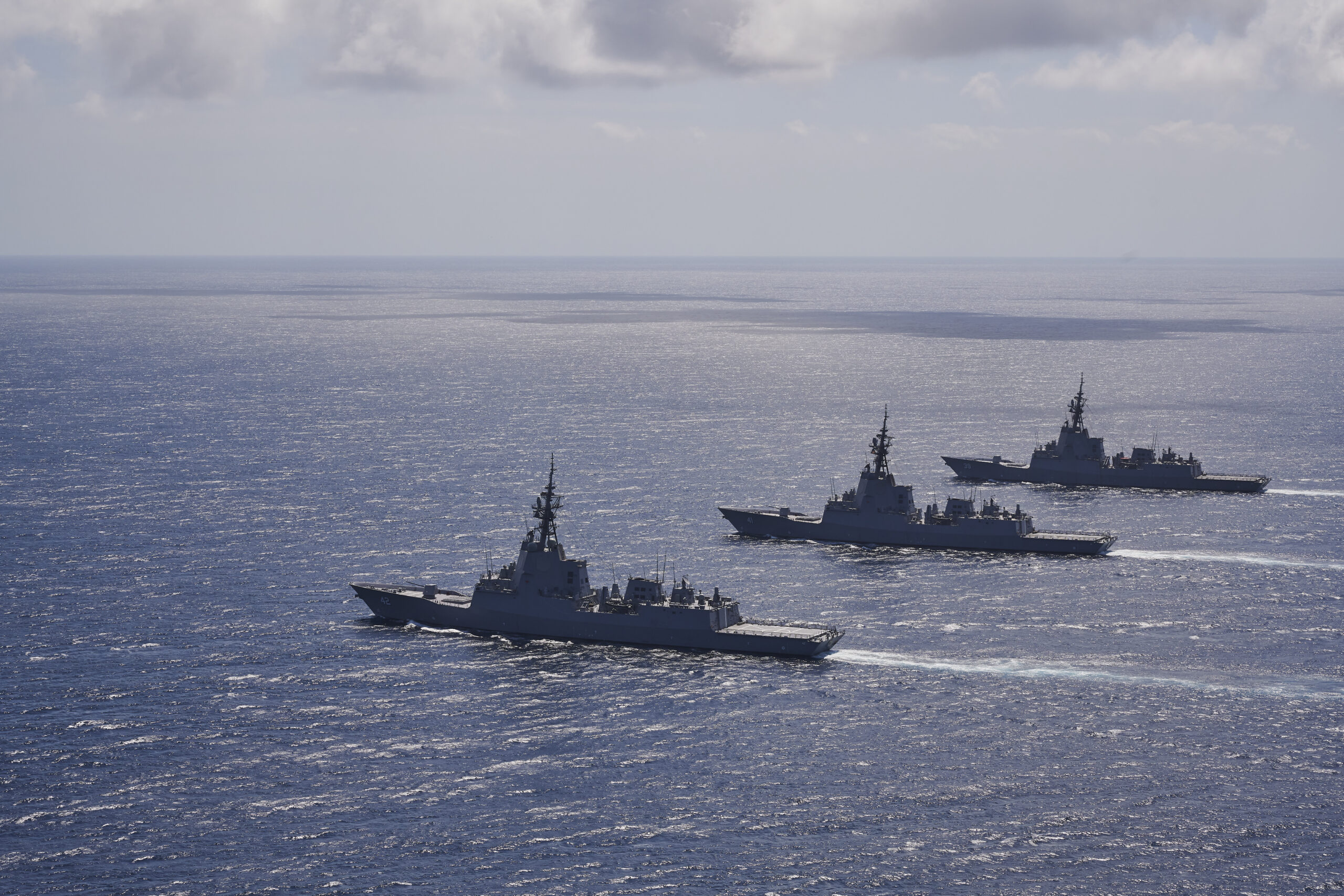
Increasingly, we will see not classic sea control – exerted by a largely unchallenged navy for long durations and over wide areas – but something far more intermittent, contested and geographically constrained.
Wide-area maritime surveillance is growing fast. Satellite constellations, analysis of ship transponder emissions, commercial synthetic-aperture radar, underwater microphones, seabed sensors and drones are making activity at sea easier to detect and track. Still, the ocean is not becoming thoroughly transparent: in the Indo-Pacific, vast distances, archipelagic terrain, weather and electromagnetic clutter mean the maritime picture remains spurious, contested and temporary.
That partial transparency is still enough to change fleet behaviour. Navies must increasingly assume they can be intermittently seen, classified and targeted, especially inside the first island chain, including the South China Sea and the sea and air corridors linking the western Pacific to the eastern Indian Ocean. That raises the importance of limiting electromagnetic signals that could reveal a ship’s location, deceiving adversaries, dispersing forces and making rapid command decisions.
The air littoral is also extending further offshore. Low-flying drones and loitering munitions are making nearby seas more difficult for concentrated fleets. In narrow seas, chokepoints and congested maritime routes where geography already channels movement, these systems help create maritime killing zones that favour the side operating from shore.
Affordable unmanned aerial and surface systems add another layer of pressure. Used in numbers and tied to shore-based precision weapons, they can create attrition belts that complicate amphibious operations, port access and logistics movement. This would matter in a war over Taiwan, but also in the Luzon Strait, the South China Sea and the Malacca–Singapore corridor, where congestion turns tactical friction into operational delay.
Countermeasures exist, but none offers a permanent fix. Electromagnetic warfare, decoys, short-range defensive guns and missiles, and laser or microwave weapons can disrupt drone attacks, but the contest will be iterative and unforgiving. The side that adapts faster, makes its forces harder to detect and integrates sensors, weapons and deception more effectively will gain only temporary advantages.
This is why sea control will often be local, brief and heavily contested. Fleets are likely to fight for short windows of superiority, long enough to move a convoy, resupply a task group, support a landing or cover a withdrawal. In the Indo-Pacific, positional advantage and timing may matter more than continuous dominance.
The same geography gives fleets an enduring economic function. The Indo-Pacific carries critical flows of fuel and goods by sea, and data through undersea cables. Any serious conflict would quickly become a struggle over commercial access, shipping security and maritime insurance risk. Protecting vital shipping routes, or threatening them, remains central to strategy even in the age of drones, long-range sensors and precision strikes.
Fleets also still shape what can happen on land. Most Indo-Pacific populations, infrastructure and military power lie on or near the coast, so maritime forces help determine whether troops, supplies and firepower can be moved, sustained or cut off. These operations do not require continuous control of entire seas: forces can secure particular routes or operating areas long enough to land troops, deliver supplies or strike targets ashore, repeating these windows of control as needed to sustain operations. New systems may change the methods, but the old strategic logic remains: events ashore will still depend heavily on who can use the sea where and when it matters and who cannot.
Surface combatants, such as destroyers and frigates, therefore are not finished, but they must be used differently. They will need to operate in more distributed formations, with reimagined deception, better networking and faster access to rearmament and repair. High-end missiles and crewed aircraft will remain vital, but from outside the areas most heavily threatened by drones and only if supported by resilient sensing, communications, industrial depth, basing access and ultimately political will.
About Author