iPhone Security Warning: Apple Says iOS 26 Flaw May Have Been Exploited
If your iPhone is still running iOS 26, Apple has given you another reason to update.
Apple released iOS 26.7.1 on Sept. 28 to fix CVE-2026-86950, a CoreGraphics vulnerability that could allow arbitrary code execution when a device processes a maliciously crafted file. Apple says it is aware of a report that the flaw “may have been exploited” in an extremely sophisticated attack targeting specific individuals on versions of iOS before iOS 27. Apple’s security advisory does not say who was targeted or identify the attackers.
The disclosure does not point to a widespread attack against ordinary iPhone users. But anyone still on iOS 26 should install the latest available update, especially since Apple has now acknowledged potential real-world exploitation.
What Apple fixed in iOS 26.7.1
CVE-2026-86950 is an out-of-bounds write vulnerability in CoreGraphics, a framework Apple uses to handle graphics across its operating systems.
According to Apple, processing a maliciously crafted file could trigger arbitrary code execution. The company addressed the vulnerability through improved bounds checking and credited Meta Product Security with discovering it.
The iOS 26.7.1 and iPadOS 26.7.1 fix is available for:
- iPhone 11 and later
- iPad Pro 12.9-inch, 3rd generation and later
- iPad Pro 11-inch, 1st generation and later
- iPad Air, 3rd generation and later
- iPad, 8th generation and later
- iPad mini, 5th generation and later
Apple also patched CVE-2026-86950 in macOS Tahoe 26.7.1 and macOS Sequoia 15.8.1. Apple’s macOS advisory describes the same arbitrary-code-execution risk and targeted exploitation report.
In short, Apple’s advisories establish three important points:
- The vulnerability can lead to arbitrary code execution through a maliciously crafted file.
- Apple says exploitation may already have occurred, although it describes the attacks as highly targeted.
- The vulnerability extends beyond iPhones, with fixes also released for affected iPads and Macs.
Apple’s exploitation warning specifically references attacks targeting versions of iOS prior to iOS 27.
Advertisement
Apple says the attacks were highly targeted
Apple’s wording is important.
The company did not say CVE-2026-86950 is being broadly exploited against iPhone users. Instead, it said the vulnerability may have been used in an “extremely sophisticated attack against specific targeted individuals.”
Apple has used similar language for vulnerabilities associated with highly targeted attacks in the past. TechRepublic reported in August that Apple sent mercenary spyware warnings to users in 110 countries. Those notifications similarly concerned targeted users rather than evidence of a mass compromise.
Several important details remain unknown:
- Apple has not identified who exploited the vulnerability.
- Apple has not disclosed how many people may have been targeted.
- The advisory does not identify the malicious file or describe how it was delivered.
- Apple has not attributed the reported attacks to a particular threat actor.
- Meta Product Security received credit for reporting the vulnerability, but that does not establish who was behind the attacks.
That distinction matters. There is currently no evidence in Apple’s disclosure that millions of iPhones have been compromised through this flaw.
The patch arrives alongside iOS 27.0.1
Apple released iOS 27 on Sept. 14, but it continues to provide security updates for the previous iOS 26 branch.
Its security-release list shows iOS 26.7.1 and iPadOS 26.7.1 arriving alongside iOS 27.0.1 and iPadOS 27.0.1 on Sept. 28. Apple lists CVE-2026-86950 for the iOS 26.7.1 branch, while the iOS 27.0.1 listing contains no published CVE entries.
The two updates address different problems:
- iOS 26.7.1: Patches CVE-2026-86950 for devices remaining on iOS 26.
- iOS 27.0.1: Addresses bugs affecting devices running Apple’s newest operating system.
- macOS Tahoe 26.7.1 and Sequoia 15.8.1: Patch the same CoreGraphics vulnerability documented for iOS 26.7.1.
TechRepublic reported this week that iOS 27.0.1 fixes three iPhone problems, including Face ID-related restarts, camera artifacts and an unresponsive touchscreen.
Apple has also released some security fixes outside larger operating-system updates. Earlier this year, TechRepublic reported that some iPhone security fixes were being delivered sooner rather than waiting for larger operating system releases.
Advertisement
The company also patched 194 unique security vulnerabilities across its devices in its July software updates. Apple said at the time it was not aware of those iPhone and iPad vulnerabilities being exploited. The acknowledgment of possible exploitation makes CVE-2026-86950 different.
Must-read security coverage
What iPhone users should do now
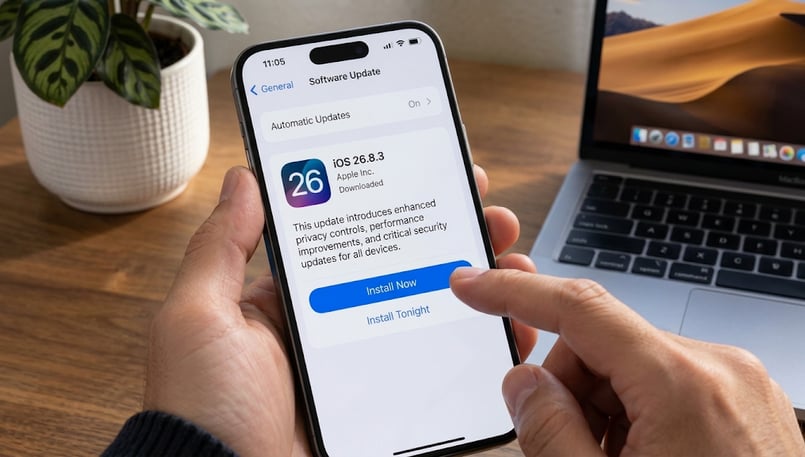
For people running iOS 26, the immediate action is straightforward: install iOS 26.7.1 if it is available for your device.
To check:
- Open Settings.
- Select General.
- Tap Software Update.
- Install the latest update offered for your device.
Apple’s exploitation warning specifically concerns versions before iOS 27.
The urgency is greater for people who may be attractive targets for sophisticated surveillance operations, including journalists, activists, government officials and others who have received an Apple threat notification.
Apple’s separate guidance for people who receive mercenary-spyware threat notifications recommends seeking expert assistance and enabling protections such as Lockdown Mode. That guidance is not specific to CVE-2026-86950.
For everyone else, Apple’s carefully worded disclosure is not evidence that ordinary iPhone users are facing a widespread attack. It is, however, another reminder that delaying operating-system security updates can leave known vulnerabilities open after fixes become available.
For individuals and organizations managing Apple devices, the practical takeaway is simple:
- Check the installed iOS version rather than assuming automatic updates have already run.
- Update iOS 26 devices to 26.7.1 where the update is available.
- Verify patch compliance on managed devices, particularly for higher-risk users.
- Take Apple threat notifications seriously and consider additional protections for targeted individuals.
Apple has not described CVE-2026-86950 as a mass-exploitation event. But once a vulnerability has a patch and a possible history of real-world exploitation, leaving an affected device unpatched creates an avoidable security risk.
Read more: Apple’s security challenges extend beyond this latest flaw, with TechRepublic’s 2026 Apple security roundup detailing the zero-days, iPhone exploits, and security changes that have shaped the year.
About Author