
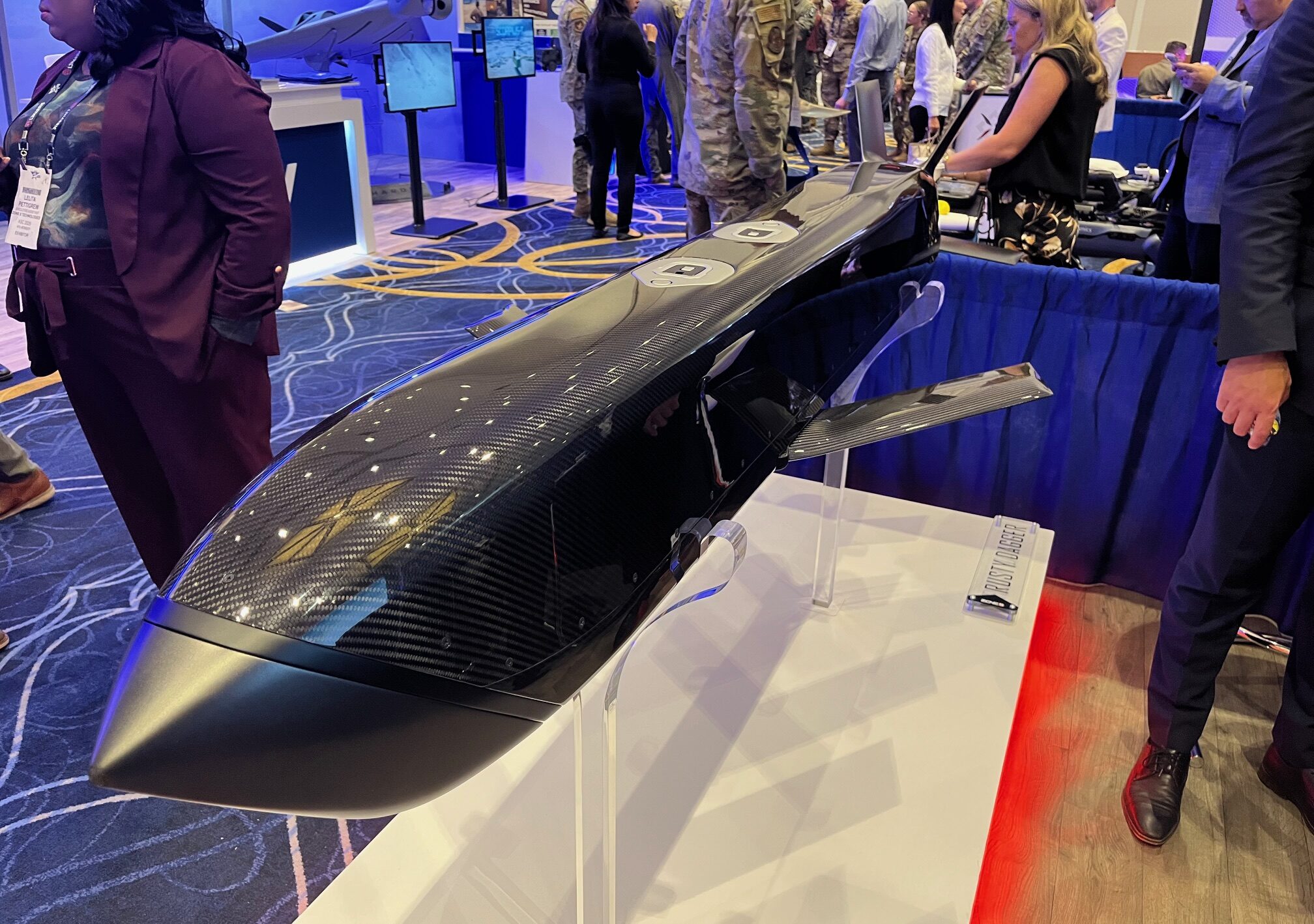
Destruction on a budget
‘There are weeks when decades happen’ has been a stock phrase to remember this summer. The missile wars between Ukraine and Russia and between Iran and the United States (and its nervous Middle Eastern allies) are teaching lessons that not everyone wants to learn.
But those who skip class shall learn in real life.
As Kyiv continues its deep-strike campaign against Russia’s oil refineries, Russia has ‘unfortunately lost control’ over its diesel production, Donald Trump said on September 21.
Ukraine was using slow, noisy but long-range FirePoint FP-1 propeller missiles to attack sprawling targets that could usually survive conventional missile attacks through size and redundancy. Small and deep in ground clutter, the missiles ambled hundreds of miles to their targets overnight, visually identified critical aimpoints, using simple cameras and commercial satellite imagery. Then they struck in high-angle Stuka dives, their extreme precision multiplying the effects of their small warheads.
The FP-1s acted as if they were following a plan, turning in unhurried circles over the targets. If one aimpoint were emitting infrared energy consistent with having been hit, a missile would keep flying and get the next one.
What was speculation two years ago is everyday knowledge: the key to both navigation and guidance is electro-optical navigation – comparing visual images of the terrain with map databases. Once an exotic superpower monopoly, this can now be done with consumer-grade sensors, ubiquitous terrain data and overhead imagery. ‘If you have an iPad, you have a guidance system,’ Israeli missile-defence guru Uzi Rubin said in 2015.
‘We’ve implemented map-matching on an inexpensive night-vision camera’, FirePoint chief engineer Denys Shtilierman said in June. This not only eliminated the need for a costly jam-resistant GPS receiver but took jamming out of the picture entirely, even for long overnight transits.
Uzi Rubin was not concerned in 2014 about Ukraine’s arms industry but took Iran’s technical capabilities more seriously than most. It seems that the Pentagon did not realistically assess Tehran’s ability to develop, produce, protect and regenerate its missile force. And while US and allied forces have taken expensive hits and have been forced in some cases to move to more distant bases, the US has been burning its inventory of long-range precision-strike weapons.
This problem was anticipated. The US Air Force’s Project Franklin (mentioned here in late 2024) has been the root of a range of projects that are now moving into production. To raise production rate and volume and to reduce cost, they exploit the guidance technologies that Ukraine and Iran have used.
In FY27 the Pentagon is funding the Family of Affordable Mass Munitions (FAMM), intended to deliver 28,000 guided weapons of 400 to 800 km range by 2033 (six funding years) at an average unit cost of around US$200,000 (A$285,000).
Contracts in FY27, under the initial stage of the program – called Low-Cost Containerized Missile (LCCM) – went to four companies of which only one, Leidos, is a long-established defence contractor. The others are Palmer Luckey’s ubiquitous Anduril and startups CoAspire and Zone5, delivering its Rusty Dagger missile. Norway’s Kongsberg bought Zone 5 in June.
Some FAMM weapons will be designed for fighters and have the same shape as standard Mk 82 bombs – eliminating many hours of flight testing, because they will predictably drop away from the aircraft much as the bombs do. Others are larger and resemble the Lockheed Martin AGM-158 Jassm strike missile, because that weapon is also qualified for use by many aircraft types.
The US Air Force intends to deploy weapons from containers that are dropped from transport aircraft. Zone 5’s Pac-Rat launch system can be delivered in multi-round versions carried on the Lockheed Martin C-130 and Boeing C-17 and has been tested in a single-round configuration released by the fast and lethal Shorts Skyvan.

Parachutes stabilise the pallets, which launch their weapons during descent. This turns airlifters into strike aircraft. They need no modifications and their crews, which already know how to push things out the back in flight, need no special training. With such weapons, C-130s can add a lot of volume to early attack pulses, launching as many weapons as several fighters, then go back to their usual transport missions.
The new weapons exploit Ukraine-style cheap guidance, but there are other technologies in play. CoAspire’s Rapidly Adaptable Affordable Cruise Missile (RAACM) has a body that arrives at the final assembly line in two parts – nose and main fuselage – produced using 3D printing by Divergent Technologies in Torrance, California.
The components, along with wings and other parts, emerge from an 8-metre-tall, in-house-developed 3D printer called Monolith One. Divergent’s new facility in Long Beach, California, will house 64 such printers. The company continues to improve its core skill, which is to design 3D-printed structures around load paths and internal components, with minimised weight, cost and results that look biological rather than mechanical.
Zone5, Raytheon, General Atomics and others are among Divergent’s customers. And many of the companies that are offering small, cheap engines – also essential for inexpensive strike missiles – use 3D printing to replace multi-part sheet metal assemblies. The engines are assembled from a handful of pieces.
We’ve seen revolutions in the cost of cruise missiles before. Jassm was born in the 1990s after Cold War programs had been cancelled because of costs barrelling past a million (then-year) dollars per round. So far, that has not happened to the new weapons.
That’s important, because another argument from the 1990s concerns the need for mindbogglingly expensive combat aircraft that can penetrate the toughest air defences. Conventional thinking is that missiles are cheaper in a short campaign but that as the number of targets increases it’s most economical to deliver (inexpensive) bombs from (expensive but reusable) bombers and fighters.
The great expenditure of cruise missiles in the Iran campaign seems to illustrate that. But if we can cut guided-weapon cost by an order of magnitude, using machinery that can be accelerated into three-shift production overnight, the line of missile cost gets much flatter. Which changes everything.
And meanwhile, Russia continues to have problems with its diesel supply, unfortunate as some may find it.
About Author





.jpg "Australia Post signs three-year deal with Telstra")