Teen researcher with AI hackbot cracks Microsoft’s Titan analytics

Teen researcher with AI hackbot cracks Microsoft's Titan analytics
A 16-year-old security researcher has earnt a US$5000 ($7126) bug bounty from Microsoft, after getting through authentication checks on the tech giant’s internal Titan analytics platform, using an artificial intelligence (AI) bot followed by human intuition.
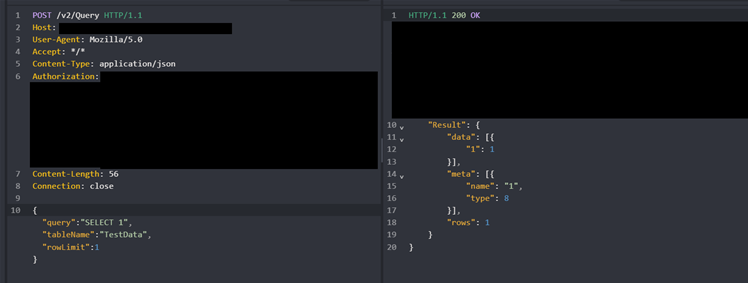
The researcher, who goes by Faav, spent 10 days watching his self-built Antares AI hacking tool grind through authentication checks, after finding a public API that bypassed Titan’s frontend that was accessible via a virtual private network (VPN) only.
Three of the API’s four routes required Azure Active Directory authentication, but the fourth, which accepted raw SQL database queries, needed only a valid-looking token.
That token was a JSON Web Token (JWT), a widely used format for proving who a user is and what they’re allowed to do.
A JWT has three parts: a header, a payload of claims such as the user’s identity and permissions, and a signature that proves the first two parts came from a trusted source and haven’t been altered.
The header and payload are simply encoded, not encrypted, so anyone can read or edit them, which means the signature is the only part meant to stop a forged token being accepted as genuine.
To give Antares a starting point for queries, Faav then recovered 56 archived table names from a 2023 snapshot of Titan’s login pages on the Wayback Machine internet archival site.
Over the following 10 days, Antares worked through Titan’s JWT checks one failure at a time: a tenant mismatch, then an audience mismatch, then an application allowlist rejection, before finally reaching a user lookup step.
However, the signature on the token never actually mattered, Faav found, because Titan accepted whatever claims sat in the payload as long as the structure looked right.
“The payload kept changing while the signature stayed exactly the same, and Titan kept accepting the new claims, like a bouncer checking the name on every ID but never looking at the photo,” Faav wrote in a post detailing the find.
After trying logins formatted as Microsoft-style email addresses that were not accepted, Faav simply tried “admin” and hit paydirt with that local username.
Titan resolved “admin” to its own local user ID 1, which carried full administrator rights, and the next SQL query executed successfully.
Armed with admin access to Titan, Faav then found a test database, which held only fake data.
A broader database search turned up Titan’s platform metadata, including a listing of its own application users.
By testing archived routing values, Faav found a path to 17 connected analytics databases on Titan.
He summed up the table row counts across the databases, and got roughly 17 trillion rows of information that could technically be reachable through the authentication flaw.
Faav did not attempt to extract data at that scale, limiting testing within the metadata database to a directory of roughly 25,000 application accounts and 17,990 Microsoft employee email records, and confirming access to a separate Bing analytics dataset with two single-row samples rather than a bulk query.
AI augmented security research earns bounty
The researcher reported the findings to the bug bounty program run by Microsoft Security Response Centre (MSRC) in early September, and was asked to stop testing.
Microsoft acknowledged the bug just days after the report, and awarded Faav a bug bounty of US$5000 about two weeks after.
Faav said Microsoft had editorial input into his published account of the vulnerability, which included cuts to sections, redactions to images and changes to the description of the impact.
On his part, Faav recognised that while the AI bot Antares couldn’t have broken through the authentication by itself, neither could he.
“Antares wouldn’t have gotten here alone, and neither would I. Its persistence, plus one human hunch, is what made this find possible,” Faav wrote.
About Author

.jpg "The AI era demands a new kind of network")