Japan and Australia can be a model for middle-power cooperation
The Australia–Japan partnership stands out because the two countries bring complementary strengths across the economic, political and security spheres. As leading Indo-Pacific democracies, the two are among the middle powers best placed to drive cooperation and build regional institutions together. This is a case that Japan’s Ambassador to Australia, Kazuhiro Suzuki, made at ASPI’s Defence Conference on 25 June.
Suzuki set that case within a longer arc. The Free and Open Indo-Pacific concept originated with former Japanese prime minister Shinzo Abe, whose 2007 Confluence of the Two Seas speech connected the Indian and Pacific Oceans into a single strategic theatre. Current Prime Minister Sanae Takaichi has since updated that vision, arguing in a speech in Hanoi last May that a more contested environment required a Free and Open Indo-Pacific built around resilience, autonomy and practical cooperation. Suzuki was clear about what that demanded:
We must protect our principles: rule of law, open markets, and freedom from coercion. To achieve this, we must have the capacity to determine our own path. We must avoid excessive dependence on any single country. We must diversify in all areas and strengthen our resilience.
The Comprehensive and Progressive Agreement for Trans-Pacific Partnership (CPTPP) is the clearest precedent for what Australia and Japan’s complementary strengths can produce. When Washington walked away from the Trans-Pacific Partnership (TPP) in 2017, Japan and Australia persuaded the remaining members to proceed, building an 11-country trade framework out of an agreement the United States had abandoned. Suzuki pointed to it as the clearest example of middle power leadership in practice:
The TPP was initiated by the United States, but the United States withdrew. And then Japan and Australia jointly, we saved it from collapsing and created the CPTPP. This is a really clear example of how like-minded countries can take the leadership in building regional order.
Japan’s launch of POWERR Asia in April 2026 provides a more recent test of that proposition. The most significant regional energy security initiative in a generation, it is backed by US$10 billion (A$14 billion) and brings together 16 Asian countries to strengthen emergency fuel procurement, strategic stockpiles and long-term supply diversification. Australia reinforced that effort through the Joint Declaration on Economic Security Cooperation, signed during Takaichi’s Canberra visit, which committed both countries to closer cooperation on energy security and critical minerals. The Mogami-class frigate agreement, concluded during the same visit and worth up to eleven ships, showed that the partnership is increasingly built on concrete deliverables rather than declarations alone.
Critical minerals are another area where complementarity is concrete, and another area that Suzuki acknowledged at the conference. Critical minerals are not iron ore: the deposits are small, the technology timelines uncertain and the investment case hard to make without sustained government support. The bilateral architecture to address this has been taking shape. The Australia–Japan Critical Minerals Partnership, launched in 2022, established co-financing mechanisms and working groups. Meanwhile the Joint Statement on Elevated Critical Minerals Cooperation, signed during Takaichi’s visit, committed up to A$1.3 billion through Australia’s Critical Minerals Facility and Export Finance Australia to projects with Japanese involvement. The Lynas rare earths investment and the Alcoa gallium recovery project in Western Australia are examples of what that cooperation can deliver. The challenge now is to move from project-by-project financing to more long-term strategic coordination.
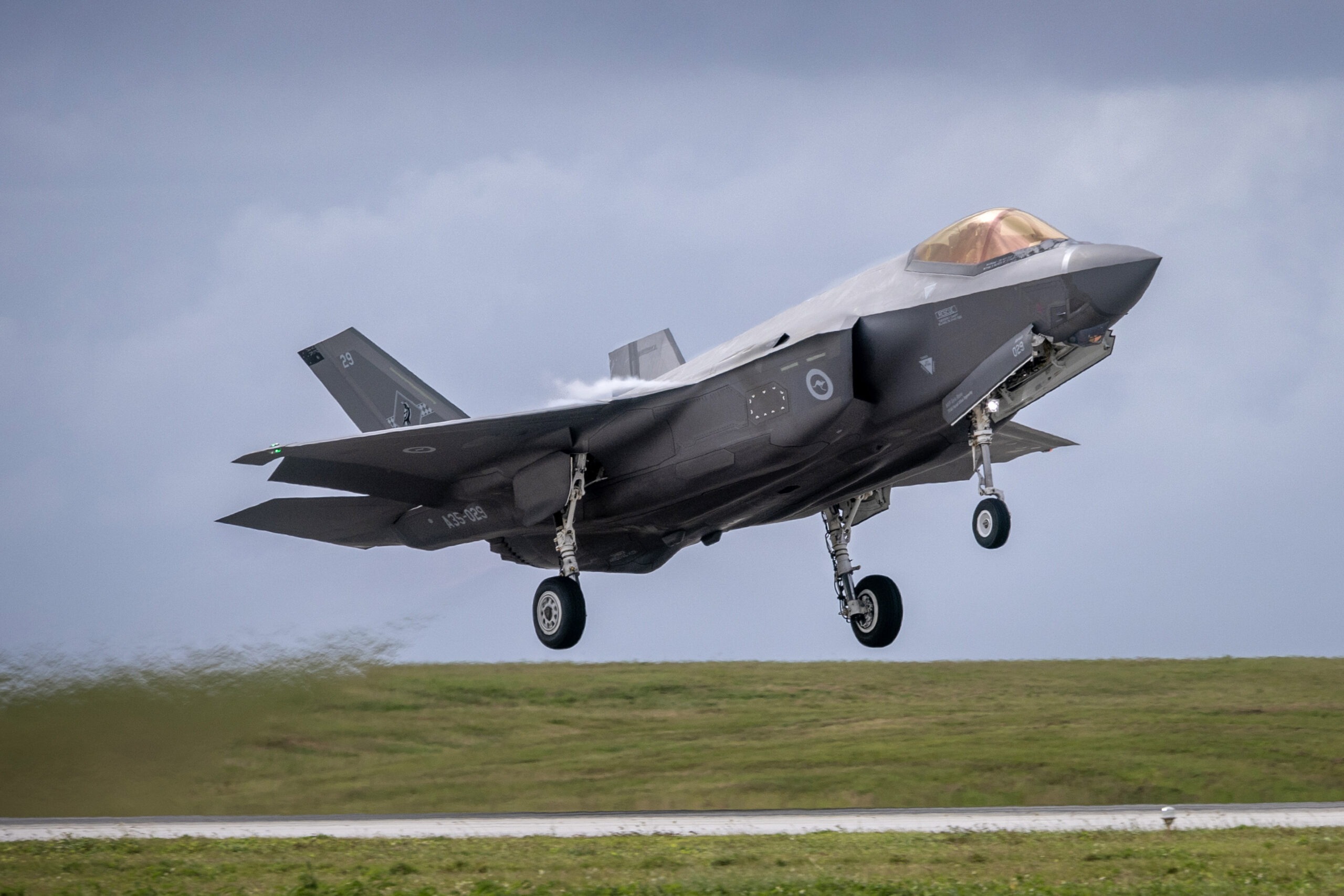
Defence is where the relationship has moved fastest. Australia’s decision to acquire up to 11 Upgraded Mogami-class frigates, the first three contracted during Japanese Defence Minister Shinjiro Koizumi’s April visit, is the clearest marker, and Perth could become a sustainment hub for other regional operators of Japanese equipment. A reciprocal access agreement now lets the two militaries operate from each other’s facilities, and Defence Minister Richard Marles has said that no country has greater strategic alignment with Australia than Japan. As ASPI’s Alex Bristow and Justin Bassi have argued, the partnership has moved close enough to warrant calling Japan an ally, treaty or not.
Another domain for cooperation is the Gulf. Around 82 percent of the crude oil passing through the Strait of Hormuz is destined for Asia, giving Gulf producers a direct interest in reliable maritime trade and security arrangements. Australia and Japan each have deep ties in the region: Australia through expanding partnerships with the United Arab Emirates, Saudi Arabia and Qatar; Japan through decades of cooperation across the Gulf Cooperation Council.
The Gulf is the western flank of the Indo-Pacific, yet Gulf producers and Indo-Pacific consumers have no dedicated forum to align their interests. A structured Australia–Japan–GCC dialogue, extendable in time to middle powers such as South Korea and India, would help close a gap the past year’s disruptions have exposed. This is precisely the kind of institution-building that Australia and Japan have shown they can do.
Suzuki concluded that frameworks mattered but real projects mattered more. The CPTPP, POWERR Asia and deeper defence cooperation show what the two can achieve when strategic alignment translates to practical cooperation. Critical minerals and the Gulf are where that approach should go next. There, two complementary middle powers can show what the model delivers in an increasingly uncertain global order.
About Author