Cisco Live 2026: New Security Tools Target AI Threats
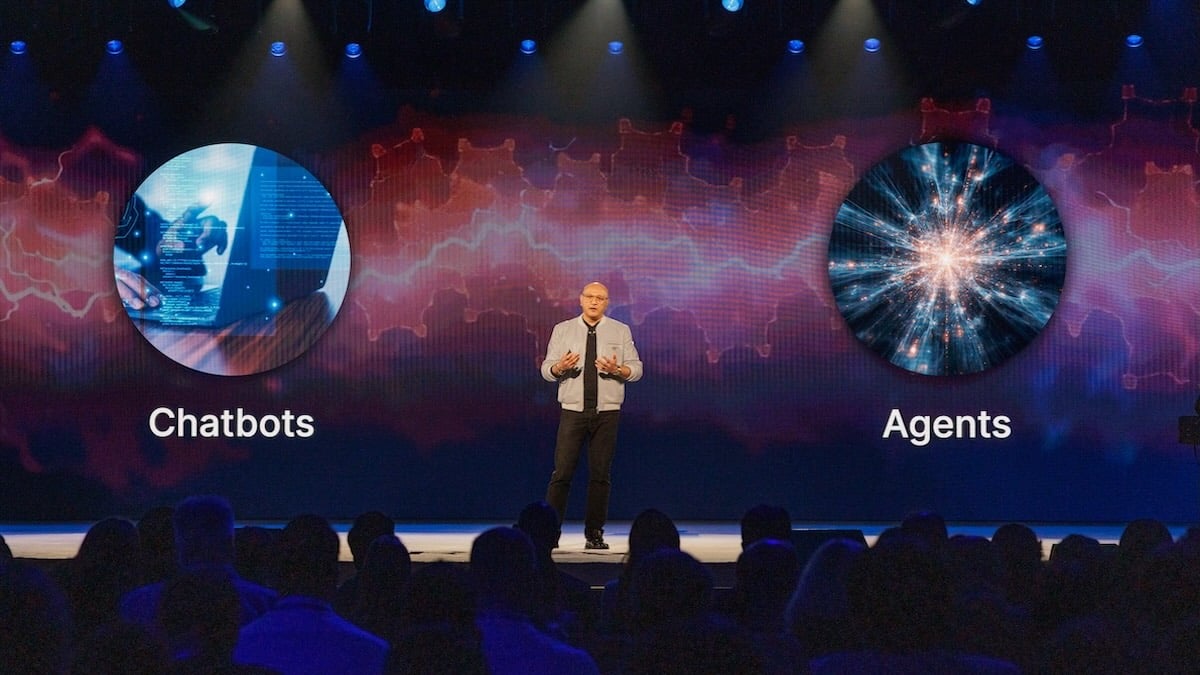
This week’s Cisco Live event in Las Vegas featured a raft of product announcements as the company prepares its portfolio for the agentic AI era.
The aim is to enable enterprises to operate and defend at machine speed and at AI scale. Central to these announcements is an overarching platform known as Cisco Cloud Control. It is designed to manage, monitor, and defend critical IT infrastructure while providing a foundation for Cisco’s AgenticOps operating model.
Cisco Cloud Control brings together the breadth of the company’s offerings across networking, security, compute, observability, and collaboration, providing a way to manage and secure them within a single environment. No more hopping from console to console.
Additionally, Cisco Cloud Control allows users to build applications and create agents using natural language directly within the platform. To facilitate interaction with platforms such as AWS, Linear, ServiceNow, and Slack, Cisco Cloud Control can connect to more than 50 third-party platforms and tools through native connectors or the open ModelContext Protocol (MCP).
“Cisco Cloud Control is a platform where humans and AI agents work together in one environment on the same information, while enabling humans to remain in control,” Jeetu Patel, president and chief product officer at Cisco, said during the keynote at Cisco Live.
Another feature of the new platform is cross-domain telemetry.
Data flowing across any connected system is compiled and viewable within Cloud Control, so people and agents can act on coordinated, contextual information to address issues such as improving uptime, controlling agent behavior, and managing token usage to prevent overspend.
To enhance agent trust and enable them to work with greater autonomy, guardrails have been put in place to detect potential issues, identify causes, fix problems, and ensure that responses, actions, and the user experience are accurate and dependable.
Cisco’s response to Anthropic’s Mythos
As Patel explained, security technology has been upended by the advent of Mythos.
“The window between vulnerability and exploit has collapsed from weeks to minutes or even seconds,” he said.
Cisco’s response is to build security directly into its infrastructure. Before releasing products broadly, the company said it stress tests them with the latest AI models to identify weaknesses before attackers can exploit them.
Cisco is also involved in Anthropic’s Project Glasswing and OpenAI’s Daybreak, and it has open-sourced its Foundry Security Spec. The spec provides a model-agnostic blueprint for evaluating agentic AI security. Together, these efforts position Cisco Cloud Control as an always-on security command center for enterprise infrastructure.
“We had to accept that in the AI era, you can’t expect customers to only operate Cisco equipment and systems,” said Patel. “That’s why we decided to make The Foundry Security Spec open and allow systems to be tightly integrated but loosely coupled.”
New security products aim to contain AI risks
Cisco Live included several more security product releases:
Live Protect is said to act as a digital immune system for Cisco products, shielding them from newly discovered and prioritized vulnerabilities without requiring reboots, upgrades, or maintenance windows. It is currently only available on Cisco N9000 series switches, but will be steadily introduced into more products, starting with campus and branch smart switches this summer, followed by secure routers later in the year.
Hybrid Mesh Firewall is a new firewall release that extends unified protection across networks, applications, and Cisco and third-party firewalls. The goal is to limit the blast radius when something goes wrong. This is particularly important given the number of AI agents being introduced into the workforce. Their presence greatly extends the security perimeter and has the potential to introduce new attack vectors at machine speed
“It is all about protecting agents from the world and the world from any incorrect actions that agents might take,” said Patel. “Hybrid Mesh Firewall’s exploit containment features prevent lateral movement across the enterprise in the event of an incursion. It can detect and respond at machine speed.”
Cisco’s announcements point to a larger shift in enterprise infrastructure: AI agents are becoming part of the operating environment, not just tools layered on top of it. That makes visibility, control, and containment more important than ever, especially as security teams are asked to respond at the same speed as automated threats.
As Cisco pushes enterprises toward faster, AI-driven security operations, another reminder of today’s pace of threats comes from Google’s June Android security update, which patched a zero-day vulnerability that may already be under attack.
About Author