Ready to Move On: How to Evaluate, Select, and Deploy Modern Email Security
Part 4 of a 4-Part Series: The SEG Breakup Guide for MSPs
Take a deep breath. You’ve done the hard part.
You looked at the data in Part 2 and saw what’s getting through your SEG every month.

Apple’s enterprise partners evolve their channel approach
Part 4 of a 4-Part Series: The SEG Breakup Guide for MSPs
Take a deep breath. You’ve done the hard part.
You looked at the data in Part 2 and saw what’s getting through your SEG every month. You ran the numbers in Part 3 and accepted what staying is actually costing you. Now comes the part that changes something.
This final post is a practical guide to evaluating modern email security, asking the right questions, and making a transition that holds up under pressure.
What You’re Actually Evaluating
The goal isn’t to replace one vendor with another. The goal is to replace a fundamentally flawed architectural approach with one that’s built for how attacks work now.
A solution that sits at the perimeter and filters based on rules and signatures carries the same structural limitations as your current SEG, regardless of the vendor name. Static filtering can’t catch behavioral threats. It can’t learn. It can’t adapt.
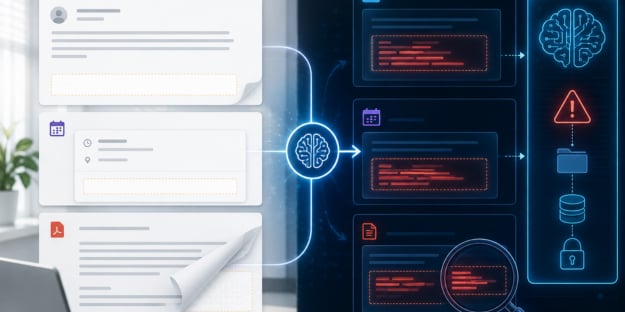
What you’re looking for is a solution that operates inside your clients’ email environments, not upstream of them. One that builds behavioral baselines for every mailbox, detects anomalies in communication patterns and sender intent, and remediates threats automatically without your team hunting them down manually.
That’s the architectural shift. Everything else follows from it.
The Questions to Ask Every Vendor
How does the platform detect threats it hasn’t seen before?
Signature-based detection catches known threats. It fails against novel attacks, impersonation emails, and socially engineered messages with no malicious payload. If a vendor’s answer involves rules, signatures, or policy updates, you’re still looking at a SEG-based model.
Does deployment require MX record changes?
True API-based cloud email security integrates directly inside Microsoft 365 and Google Workspace without rerouting mail flow. If a vendor requires MX changes, factor in the deployment complexity, the cutover risk, and the client communication burden that creates.
How does the platform handle remediation across multiple client tenants?
You manage email security across dozens or hundreds of client environments. Ask specifically how the platform identifies a threat in one client environment and automatically removes it from all affected mailboxes across your entire client base. Ask what that looks like when you’re managing 50 tenants simultaneously.
How much manual intervention does your team require week-over-week?
Get a real answer. Ask vendors to walk you through a typical week: alerts requiring human review, quarantine decisions, policy updates. If the answer sounds like your current SEG management overhead, the economics don’t improve.
How do you support MSPs specifically?
Ask about multi-tenant management capabilities, per-seat pricing flexibility across client sizes, and what enablement resources exist specifically for MSP partners. Vendors who treat MSPs as an afterthought will operate like one.
Why IRONSCALES Is the Right Answer for MSPs
The IRONSCALES platform answers each of the questions above.
IRONSCALES is an API-native Integrated Cloud Email Security (ICES) platform built to catch what SEGs consistently miss: vendor scams, credential theft, BEC, account takeover, and AI-generated phishing. It deploys directly inside Microsoft 365 and Google Workspace with no MX record changes, no rerouting, and no disruption to client email delivery. Setup takes minutes.
From day one, IRONSCALES builds an individualized behavioral baseline for every mailbox across every client tenant. It learns who communicates with whom, how they write, and what normal looks like for that organization. When something deviates from that baseline, whether a spoofed vendor, an impersonated executive, or a compromised internal account, the platform flags it and acts.
Themis, the IRONSCALES agentic AI virtual SOC, handles more than 99% of detection and response autonomously. When a threat hits one mailbox, Themis clusters similar emails across all affected inboxes and removes them automatically. Your team doesn’t hunt the threat down. The threat is gone before most users know it existed.
What separates IRONSCALES from other ICES vendors is the combination of Adaptive AI and human intelligence. Our platform draws on real-time feedback from a global community of over 30,000 security professionals across 3,000 MSPs. Every detection decision, every analyst action, and every user-reported email feeds back into the AI and improves detection for every customer on the platform.
For MSPs, IRONSCALES provides centralized multi-tenant visibility and granular policy control from a single console. You see what’s happening across every client environment without toggling between systems. Reporting gives you the data you need for every QBR conversation without custom queries. And the program is built for MSP economics: no quotas, no minimums, no long-term commitments before you’ve proven the value.
What Good Migration Looks Like
Week one. Connect the platform to your first client tenant via API. The platform starts analyzing existing email history and building behavioral baselines immediately. No mail is rerouted. No delivery is affected.
Weeks two and three. Monitor detection in audit mode before enabling automated remediation. Validate that the platform is accurately identifying threats. Most MSPs find that detection quality is immediately evident, catching threats already sitting in client inboxes.
Week four onward. Enable automated remediation and set your automation thresholds. The platform handles the work from there. You maintain full control at every stage, and your clients experience no disruption throughout.
What to Measure After You Switch
Set your benchmarks before you migrate and measure consistently. Track threats flagged per 100 mailboxes monthly against your SEG’s historical miss rate. Track technician hours spent on email security management per client per week. Track client-reported phishing incidents that required remediation. Track time to identify and remove a threat across all affected mailboxes.
These numbers give you what you need for internal P&L conversations and client QBRs. When you show a client that your platform detected and removed 47 threats last month that their previous security would have missed, that’s a retention conversation, not a sales pitch.
The Decision in Front of You
You understand the architectural problem with legacy SEGs. You’ve seen what’s getting through. You know what staying is costing you. And now you have a framework for making a migration decision that holds up.
MSPs who hold onto their SEGs don’t do it because they’ve evaluated the options and decided to stay. They do it because change feels harder than staying put.
You’ve already done the work that makes staying feel harder than changing. The case is complete. The next move is yours.
See how many threats your current SEG misses: Security Gateway Missed Attacks Calculator
Download the complete SEG Breakup Guide: The SEG Breakup Guide: Why MSPs Are Moving On
Talk to an MSP specialist: Speak with the IRONSCALES MSP team
Catch up on the full series: Part 1 | Part 2 | Part 3
*** This is a Security Bloggers Network syndicated blog from Blog authored by James Savard. Read the original post at: https://ironscales.com/blog/ready-to-move-on-how-to-evaluate-select-and-deploy-modern-email-security
About Author