The Future of Single Sign-on: Insights for 2025
The Shift Toward Passwordless and FIDO2 Standards
Ever tried explaining to a frantic ceo why they can’t just use “Password123” for the main admin portal?

By whatever name — Moltbolt, Clawd, OpenClaw — this uber AI assistant is a security nightmare
The Shift Toward Passwordless and FIDO2 Standards
Ever tried explaining to a frantic ceo why they can’t just use “Password123” for the main admin portal? It’s a losing battle, honestly, but 2025 is finally looking like the year we might actually kill the password for good. (The 2025 Hangover – The 4 Hacks That Changed Everything)
The move to passkeys isn’t just some trend; it’s a fundamental shift in how we handle identity at the protocol level. By using FIDO2 and WebAuthn, we’re basically moving the “secret” from a database (where it can be leaked) to the user’s physical device. For the non-tech folks, WebAuthn is just the browser api that lets your computer talk to the hardware—like your phone or a security key—to prove it’s really you.
Phishing is basically dead: Since there’s no password to type into a fake site, hackers have nothing to steal. The browser won’t even offer the credential if the domain doesn’t match the public key. (Error: Public Key Certificate and Private Key doesn’t match [closed])
Biometrics everywhere: Whether it’s FaceID on a macbook or a fingerprint on an android phone, users are already comfortable with this. It’s way faster than waiting for a buggy sms code.
Enterprise Ready by default: Most modern CIAM (Customer Identity and Access Management) providers now treat fido2 as a first-class citizen. (Unlocking Passwordless Future: A Deep Dive into FIDO2 for CIAM) If you’re building a B2B SaaS, you’re expected to support this out of the box now.
I’ve seen this play out in high-stakes environments like healthcare, where doctors need to log in fifty times a day. Typing a long password every time is a productivity killer, but a quick touch on a yubikey or a phone screen saves hours. In retail, it’s reducing cart abandonment because nobody remembers their account password anymore.
A 2024 report by the FIDO Alliance indicates that service providers are seeing significantly faster sign-in times and higher success rates when moving to passkeys compared to traditional passwords.
Implementing this requires a bit of a mindset shift for your engineering team. You aren’t just storing a hash anymore; you’re managing public keys and device registrations. But the payoff in security and user experience is massive.
Anyway, it’s not just about how people log in, but how we manage those identities across the whole ecosystem. Next, we’ll look at how ai is helping us spot the bad guys before they even get in.
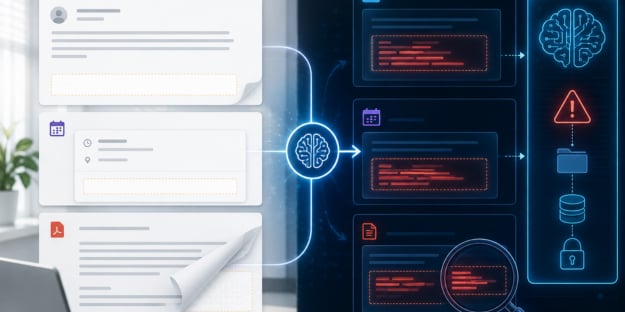
The Role of AI in Identity Threat Detection
Ever noticed how some login attempts just feel… wrong? Like when a dev who usually logs in from San Francisco suddenly pings the auth server from a data center in Eastern Europe at 3 AM.
In the old days, we just wrote static rules. If IP is not in whitelist, then block. But that breaks everything for your sales team traveling on hotel wifi. Now, we’re using ai to build a baseline of “normal” behavior for every single identity.
Behavioral signals: We aren’t just looking at the password. The system tracks typing cadence, mouse movements, and even how someone holds their phone.
The risk engine: Every login gets a score from 0 to 100. The engine factors in those behavioral signals—so if your typing speed suddenly doubles or your mouse movements look like a bot, the risk score spikes instantly. If the score is low, they go right in. If it’s medium because they’re on a new device, we trigger a push notification.
Automated lockout: If the ai sees a credential stuffing attack hitting your api at 1,000 requests per second, it kills the session before your on-call engineer even gets the Slack alert.
I saw this save a fintech startup last month. A botnet got hold of some leaked creds, but because the ai noticed the “users” weren’t interacting with the UI like humans usually do, it bumped the risk score and forced a hardware key check. The attackers couldn’t bypass it.
According to a 2023 report by IBM Security, organizations using AI and automation in security saved nearly $1.8 million in breach costs compared to those that didn’t.
It’s about being proactive rather than reactive. Anyway, once you’ve secured the front door with ai, you still gotta manage where those users actually go. We’ll talk about how SCIM handles the messy business of provisioning in this next part.
Enterprise Readiness: More Than Just a Login
Ever tried closing a six-figure deal only to have the prospect’s IT director kill the vibe because you don’t support “enterprise standards”? It’s a gut punch, but honestly, in 2025, just having a login button isn’t enough to play in the big leagues.
If you’re selling to big companies, they won’t even look at you without SAML (Security Assertion Markup Language) or OIDC (OpenID Connect). They want to manage their employees in one place—usually Okta or Microsoft Entra ID—and they expect your app to just plug in.
Centralized Control: When an employee leaves a big firm, the IT team disables their main account. If your app doesn’t support SSO, that ex-employee might still have access to sensitive data because nobody remembered to delete their local account in your system.
Reduced Friction: Users hate managing fifteen different passwords. Supporting enterprise identity providers (idp) means they’re logged in automatically, which actually drives up your app’s engagement metrics.
Security Compliance: Most auditors for SOC2 or ISO 27001 will flag you if you’re manually managing user creds for enterprise clients.
Provisioning is usually where the real headache starts. You can have sso working, but if the client has to manually invite 5,000 users to your platform, they’re gonna hate you. This is why SCIM (System for Cross-domain Identity Management) is a lifesaver.
It’s basically an api that lets the client’s identity provider talk directly to your database. When they add a user to a “Marketing” group in their dashboard, that user is automatically created in your app with the right permissions. No manual invites, no “hey can you add Dave to the project” emails.
I’ve seen dev teams spend six months trying to build a custom SAML integration. It’s a nightmare because every enterprise client has a slightly different, “special” configuration. Using an api-first platform like SSOJet lets you outsource that complexity.
You get a clean interface to handle the messy xml of saml and the json of oidc without losing sleep. According to a 2024 report by Gartner, organizations that use specialized identity services reduce their time-to-market for enterprise features by nearly 40%.
Anyway, once you’ve got the enterprise pipes connected, you still need to make sure the data flowing through them is actually secure. Next, we’ll dive into the evolution of ciam and how to handle unified profiles so you don’t end up with a mess of identity debt.
The Evolution of CIAM for Modern SaaS
So, we’ve covered the front door and the pipes, but the real headache starts when you have five different product lines that don’t talk to each other. It’s a mess for the user and a nightmare for your data team.
Most of us build things fast, which means we end up with “identity debt.” You might have a legacy app using a local database and a new microservice using oidc. When a user updates their email in one, it doesn’t sync to the other.
Unified User Profiles: You need a single source of truth. Modern ciam lets you link multiple identities—like a social login and an enterprise saml account—under one internal UUID.
Global scale without the lag: If you’re hitting millions of users, you can’t have your auth server sitting in a single region. You need edge-cached identity metadata so a login in Tokyo doesn’t wait on a database in Virginia.
Privacy by design: With gdpr and ccpa, you can’t just spray user data everywhere. A centralized ciam system handles consent flags globally, so if someone “unsubscribes” in the mobile app, your marketing api knows about it instantly.
I once worked on a project where we had 2 million users, and every time we ran a marketing campaign, the auth service would just… fall over. It wasn’t the login that failed, it was the “profile fetch” because the schema was too bloated.
You gotta keep your identity tokens lean. Don’t shove every user preference into a JWT. Use the token for the “who” and an api call for the “what.” This keeps your headers small and your apps fast.
According to a 2024 report by Okta, 75% of consumers say they’ll abandon a brand if the sign-in process is too clunky or takes more than a few seconds.
The future of ciam isn’t just about security; it’s about being invisible. If your identity system is doing its job, nobody even notices it’s there. You’ve got the enterprise readiness, the ai-driven protection, and a unified flow that just works. Honestly, that’s the goal for 2025—stop worrying about the login and start focusing on the actual product.
*** This is a Security Bloggers Network syndicated blog from SSOJet – Enterprise SSO & Identity Solutions authored by SSOJet – Enterprise SSO & Identity Solutions. Read the original post at: https://ssojet.com/blog/future-of-single-sign-on-insights-2025
About Author