Hackers Disable Windows Security With New Malware Attack
A sophisticated new malware campaign is systematically dismantling Windows security defenses with alarming success—and it requires no security vulnerabilities to work.
Unlike traditional attacks that rely on complex exploits, this campaign succeeds through pure social engineering combined with sophisticated abuse of Windows’ own security architecture. Attackers are using business-themed documents to completely neutralize Microsoft Defender and other security tools before deploying payloads that can destroy everything from your personal files to your cryptocurrency wallets.
The campaign was discovered by FortiGuard Labs. What makes this threat especially concerning is how it hides in plain sight. The malware distributes components across GitHub and Dropbox, blending seamlessly into legitimate network traffic while systematically disabling recovery options entirely. By the time victims realize what’s happening, their security tools are already dead—and their files are being encrypted.
The elegant attack
Security researchers are calling this approach “unprecedented” because of how perfectly it exploits human behavior rather than software flaws. Victims receive what appears to be routine accounting documents delivered via compressed archives—files that look exactly like standard business communications you might receive from colleagues or clients.
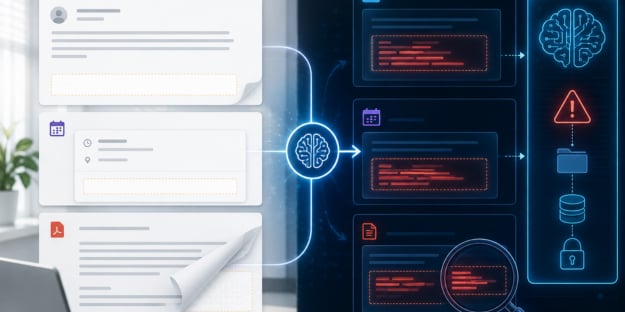
But here’s where it gets sophisticated: these archives contain malicious shortcuts designed to mimic text files. When executed, the payload launches PowerShell with execution policy bypasses, immediately downloading a first-stage loader from GitHub while generating decoy documents to keep users distracted. Most users never suspect anything is wrong because they see exactly what they expected—a legitimate-looking document.
The real breakthrough lies in how attackers neutralize Windows security without triggering alarms. Rather than forcefully attacking Defender, the malware tricks Windows into automatically disabling its own protection by registering a fake antivirus product and injecting code into trusted processes like Task Manager. Windows actually helps the attackers by shutting down its own defenses to prevent conflicts—exactly as designed.
Meanwhile, an orchestrator systematically dismantles every security layer through carefully crafted registry modifications. Real-time monitoring gets disabled, behavior analysis stops working, and filesystem exclusions are added for common staging directories including ProgramData, Program Files, and Downloads. The attack employs multiple layers of encryption, with payload reconstruction happening entirely in memory to prevent traditional detection methods from working.
Why your security software can’t see this coming
Traditional security solutions are failing against this threat because it operates entirely within the boundaries of legitimate Windows functionality. Since the analysis reveals the encoded script bears no resemblance to readable code when stored, signature-based detection becomes useless. Security tools are literally looking for the wrong thing.
But the attackers don’t stop at disabling antivirus. Once inside, they implement comprehensive system lockdown that makes recovery nearly impossible. Task Manager, Registry Editor, Run dialog, and System Settings all get disabled through registry policies. Windows Recovery Environment gets neutralized using built-in administrative commands, backup catalogs disappear, and every Volume Shadow Copy snapshot gets deleted.
What happens next reads like a cybercriminal’s dream scenario. Multiple devastating payloads deploy simultaneously: Amnesia RAT begins stealing browser data, passwords, and cryptocurrency wallet information. Hakuna Matata ransomware encrypts files with @NeverMind12F extensions. WinLocker components enforce complete desktop lockout with Russian-language ransom demands. Even clipboard hijacking functionality ensures financial extraction remains viable by replacing cryptocurrency addresses with attacker-controlled values.
What this means for Windows users
Organizations need to immediately reassess their security strategies beyond traditional antivirus solutions. Since the attack succeeds entirely through user interaction, security awareness training becomes more critical than survival itself. Employees need to understand that legitimate-looking documents can contain sophisticated attack chains that render traditional security tools completely ineffective.
The distributed hosting across legitimate cloud services reveals how attackers are evolving to maintain operational resilience against security teams. Expect similar campaigns that use trusted platforms and legitimate Windows features to achieve malicious objectives while remaining virtually invisible to traditional detection methods.
The Everest ransomware gang has struck again, this time targeting sportswear giant Under Armour in a cyberattack that exposed sensitive information from millions of customers worldwide.
About Author