Mistral AI Wins French Military Deal
Atten-shun! Mistral AI has secured a victory in France. Shoulders straight, eyes down, and read on.
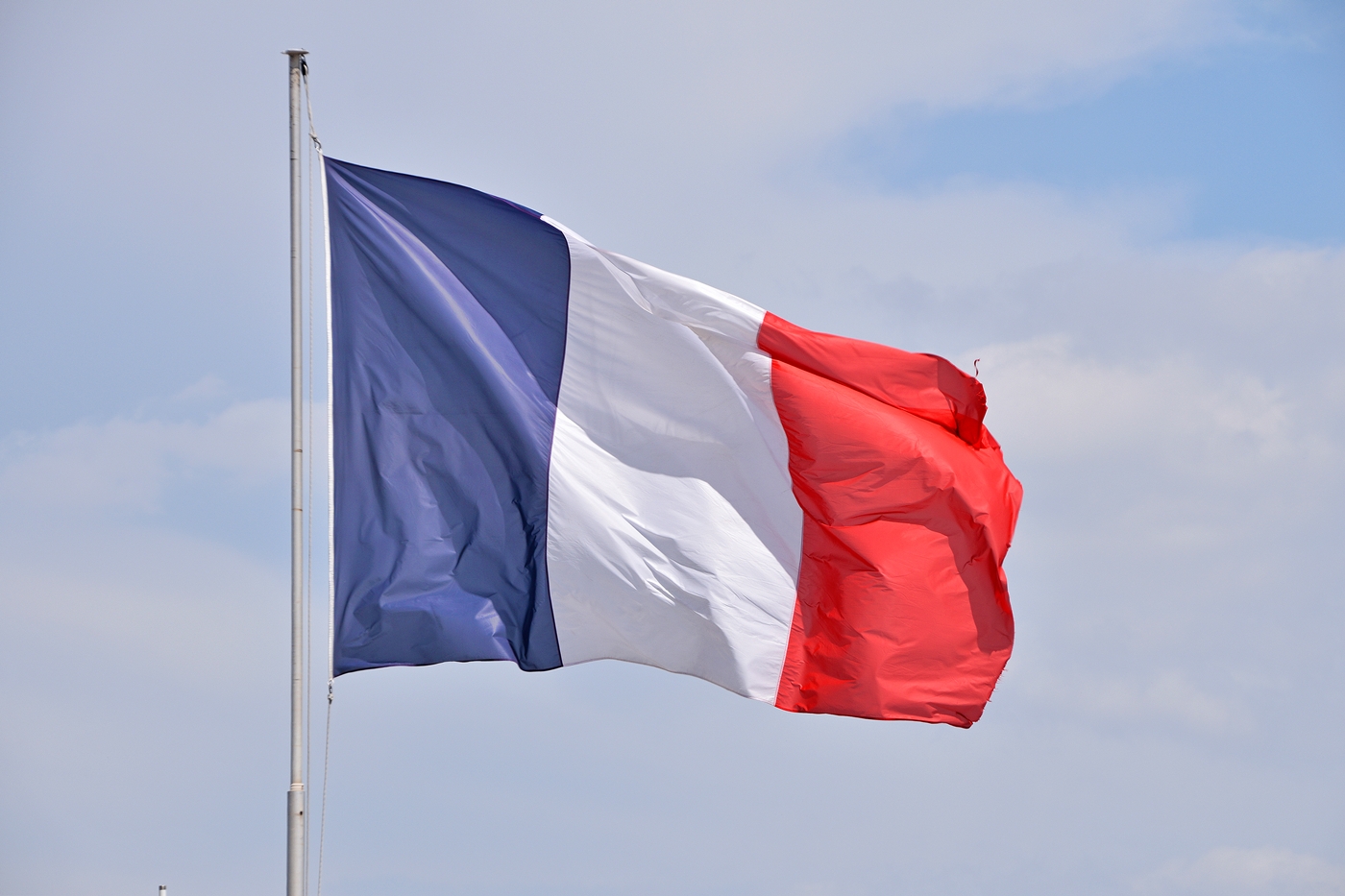
France’s Ministry of the Armed Forces has taken a significant step to deepen its use of AI by awarding a framework agreement to French firm Mistral AI.
The move reflects France’s broader effort to integrate advanced digital technologies into national defence while retaining sovereignty over sensitive data and systems. It’s a move that shows a certain savoir-faire as the world appears to be descending into complete chaos and total war.
Under the agreement, the ministry’s armed forces, internal directorates, and services will be able to use AI models, software, and services developed by Mistral AI. The framework also extends to a range of affiliated public entities, including the Atomic Energy Commission, the National Office for Aerospace Studies and Research, and the Navy’s Hydrographic and Oceanographic Service, expanding the potential scope of AI applications across defence, research, and strategic planning.
Scope and oversight of the agreement
The arrangement will be overseen by the Ministry Agency for Defense Artificial Intelligence, known by its French acronym AMIAD. Created to coordinate and accelerate the use of AI across the armed forces, AMIAD plays a central role in aligning technological innovation with operational and ethical requirements.
By establishing a framework agreement rather than a single-use contract, the ministry has given itself flexibility to deploy multiple AI tools over time, adapt them to evolving needs, and scale their use across different branches and agencies. This approach is designed to avoid reliance on a single bespoke system while still ensuring consistency and security in how AI is integrated into defence operations.
Data sovereignty and national infrastructure
A central feature of the agreement is the emphasis on national control of data and infrastructure. Mistral AI said its technology would be deployed entirely on France’s own systems rather than on foreign or commercial cloud platforms.
“Our solutions will be deployed on France’s own infrastructure, ensuring full control over critical data and technologies,” Mistral AI said in a statement on LinkedIn.
This focus on sovereignty addresses longstanding concerns among European governments about dependence on non-European technology providers, particularly in sensitive areas such as defence and intelligence. By keeping AI models and data on national infrastructure, France aims to reduce exposure to foreign jurisdictions, regulatory risks, and potential security vulnerabilities.
Mistral AI added that it would fine-tune its models using defence-specific data to deliver tools tailored to operational needs. Such customisation could support a wide range of activities, from logistics and maintenance planning to intelligence analysis, decision support, and simulation.
Building on earlier cooperation
The framework agreement builds on a cooperation pact between the Ministry of the Armed Forces and Mistral AI announced in March 2025. That earlier agreement laid the groundwork for collaboration and testing, while the new framework formalises and expands the relationship.
Since its founding, Mistral AI has positioned itself as a leading European alternative to large US-based AI developers, emphasising openness, performance, and alignment with European regulatory and strategic priorities. Its growing role in defence reflects a broader trend in which governments are increasingly turning to domestic AI champions for critical applications.
Implications for the armed forces
Officials framed the deal as a way to strengthen France’s military readiness in an era of rapid technological change. AI is increasingly viewed as a force multiplier in modern defence, with potential to enhance speed, accuracy, and coordination across complex operations.
While details of specific use cases were not disclosed, defence analysts note that AI can support everything from analysing large volumes of sensor data to improving cyber defence and enabling more efficient resource allocation. At the same time, the use of AI in military contexts raises questions about reliability, accountability, and ethical oversight, making governance structures like AMIAD critical.
Wind in its sails
While OpenAI and Google lock their AI models behind proprietary APIs, Mistral has turned transparency into a competitive weapon. The company releases its model weights under permissive Apache 2.0 licenses, enabling organizations to download, modify, and self-host their AI systems without external dependencies.
This approach has proven attractive to enterprises grappling with data sovereignty concerns and regulatory compliance requirements. Mistral’s latest Ministral 3 models can run on a single GPU, reducing operational costs compared to cloud-based alternatives.
In June, it introduced Mistral Code, its new AI-powered coding assistant tailored for large enterprises.
Mistral has signed contracts worth hundreds of millions of dollars with major corporations, including a deal with HSBC announced over a month ago for financial analysis and translation services. The company’s Le Chat assistant achieved over one million downloads in its first two weeks, signaling strong consumer adoption across European markets.
It’s got an alliance with German defense startup Helsing, valued at €5 billion nine months ago. Mistral has also secured partnerships with Singapore’s Home Team Science and Technology Agency for specialized robotics and cybersecurity systems, according to recent industry reports.
The crown jewel came seven weeks ago when France and Germany announced their intention to establish a public-private partnership with Mistral AI and SAP SE. This sovereign AI initiative will deploy solutions across public administration, with binding framework agreements expected by mid-2026 and full deployment rolling out between 2026 and 2030. For Europe’s political elite, this represents validation of their digital sovereignty ambitions.
On top of all that, Mistral AI has an impressive valuation of $14 billion.
The chess pieces are moving on the global AI board, and Mistral AI is playing well.
There’s no conflict here. US fintech firm Fiserv has teamed with Microsoft to embed AI more deeply across its development platforms and global workforce.
About Author