UN Resolution 2758: when interpretation becomes institutional power
At the Pacific Islands Forum in Palau last week, Australian Prime Minister Anthony Albanese was asked whether it was appropriate for China to warn of ‘consequences’ over Taiwan’s presence.
‘The Pacific Islands Forum determines what happens here, not any other country,’ he answered.
The immediate issue was Pacific agency. But the principle reaches further. Institutions are resilient only if they retain control over how their own rules, procedures and participation arrangements are applied.
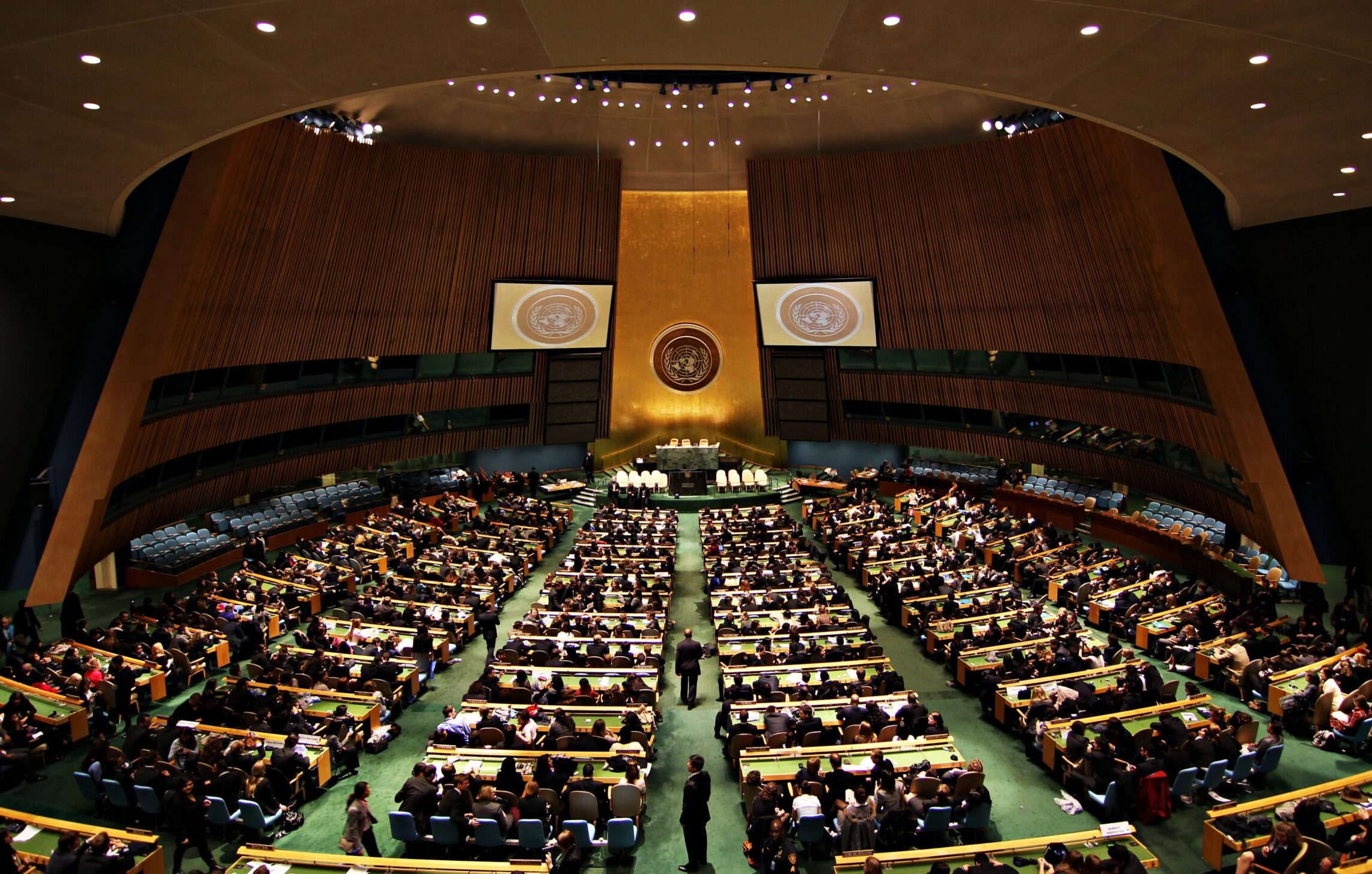
That principle is about to matter in New York. The 81st session of the United Nations General Assembly opens on 8 September under the theme of restoring trust and managing transformation. Restoring trust is usually discussed in terms of whether states respect international rules. There is another dimension: whether institutions themselves remain disciplined about what those rules actually authorise.
UN General Assembly Resolution 2758 is a useful test. Adopted in 1971, it restored the rights of the People’s Republic of China at the UN, recognised its representatives as the only lawful representatives of China and expelled the representatives of Chiang Kai-shek. It settled a question of representation but did not mention Taiwan.
Canberra has drawn the relevant distinction. In August 2024, the Senate passed a bipartisan motion saying Resolution 2758 didn’t establish PRC sovereignty over Taiwan, determine Taiwan’s future status in the UN or determine Taiwan’s participation in UN agencies or other international organisations.
Beijing has long promoted a broader, unfounded reading of Resolution 2758 – that it declares Taiwan to be part of China. This is an attempt at normalisation. Repeated often enough, an interpretation can harden into an administrative assumption, shaping who is admitted to meetings, whose information enters official channels and how international bodies define the limits of their own mandates.
Interpretation becomes power. International organisations decide who gets access, whose data moves first and which technical standards apply internationally. Once a political interpretation shapes those decisions, it becomes operational.
Consider civil aviation and public health. The International Civil Aviation Organization (ICAO) keeps global aviation safe and predictable; the World Health Organization (WHO) depends on timely information and professional coordination across jurisdictions. Political decisions about participation can therefore have consequences beyond diplomacy.
At ICAO, the gap is institutional. Taiwan has not returned to a triennial ICAO assembly since attending as a guest in 2013, despite renewed diplomatic support ahead of last September’s 42nd Assembly in Montreal. Its civil aviation authority nonetheless continues to manage the Taipei Flight Information Region while operating in accordance with ICAO standards.
Technical contact may continue when formal participation is restricted, but political assumptions can determine the terms on which it is granted, even where the underlying resolution never addressed that question.
Australia has recognised the stakes of that kind of exclusion before. In 2024, senators from both sides supported Taiwan’s meaningful participation in bodies such as ICAO and WHO, pointing to the risks that exclusion poses for the international community’s ability to manage transnational challenges.
That matters strategically because the rules-based order can be weakened below the threshold of formal change. On paper all is the same: the institution remains, the resolution remains, the wording remains. What shifts is quieter: who gets invited, whose information is shared first and which assumptions become defaults.
Institutions become less predictable. Technical gaps grow easier to exploit. Political claims start to look like institutional fact.
For Australia, none of this should require a new Taiwan policy. Canberra has already made clear that its one-China policy is distinct from Beijing’s one-China principle. Australia maintains a strong unofficial relationship with Taiwan and supports its meaningful participation in international organisations. None of that alters Australia’s diplomatic recognition of the PRC.
The issue is therefore not whether Australia should overturn a settled policy. It is whether Australia should apply the same precision to international institutions that it applies to its own policy.
The Pacific Islands Forum and the UN are different institutions, governed by different rules. But Albanese’s answer in Palau points to the same underlying requirement: external political claims should not quietly reshape how an institution applies its own procedures. Australia relies on predictable rules to manage trade, aviation, health, maritime security and regional stability. Interpretive discipline is part of strategic risk management.
If repetition and political pressure are allowed to substitute for textual authority, a gap can emerge between what institutions were mandated to do and what they come to assume they must do.
As governments gather in New York to discuss restoring trust in the UN, that gap deserves more attention.
A resilient rules-based order requires more than defending institutions from those who would bypass or replace them. It also requires protecting the integrity of the institutions already in place, by ensuring that political interpretation does not acquire powers the rules themselves never granted.
About Author