Taiwan’s parliament finally passes drone bill to back hedgehog strategy
Belated parliamentary funding for Taiwan’s drone program isn’t likely to satisfy President Lai Ching-te. Nonetheless, pressure from Washington has evidently helped achieve spending authorisation for this key part of the government’s effort to adopt a hedgehog defence strategy.
The T$240 billion (US$7.57 billion or A$10.5 billion) bill that the opposition-controlled parliament passed on 27 August replaces the T$210 billion special budget which Lai had sought and which would have given the government an immediate lump sum and more flexibility in deciding allocation. The special budget would have bought roughly 210,000 drones and uncrewed vessels by 2031. Instead, the authorised funding, folded into the regular annual budget, is capped at T$40 billion per year for six years.
With a special budget, the money would have become available immediately and could be spent according to annual needs. The parliament’s bill takes only a first step by authorising funding. The government still needs to appropriate the money through regular annual budgets before it can be spent.
This means it will be subject to the usual annual budget negotiations and may be crowded out by other budget priorities over time. Analyst William Yang criticised the bill for ‘inject[ing] uncertainties for Taiwan’s domestic drone manufacturers who are seeking clarity in the budget.’
It also means spending can only begin once the 2027 budget is passed. This can take some time. After a record delay, the 2026 budget was not accepted until 14 August of this year.
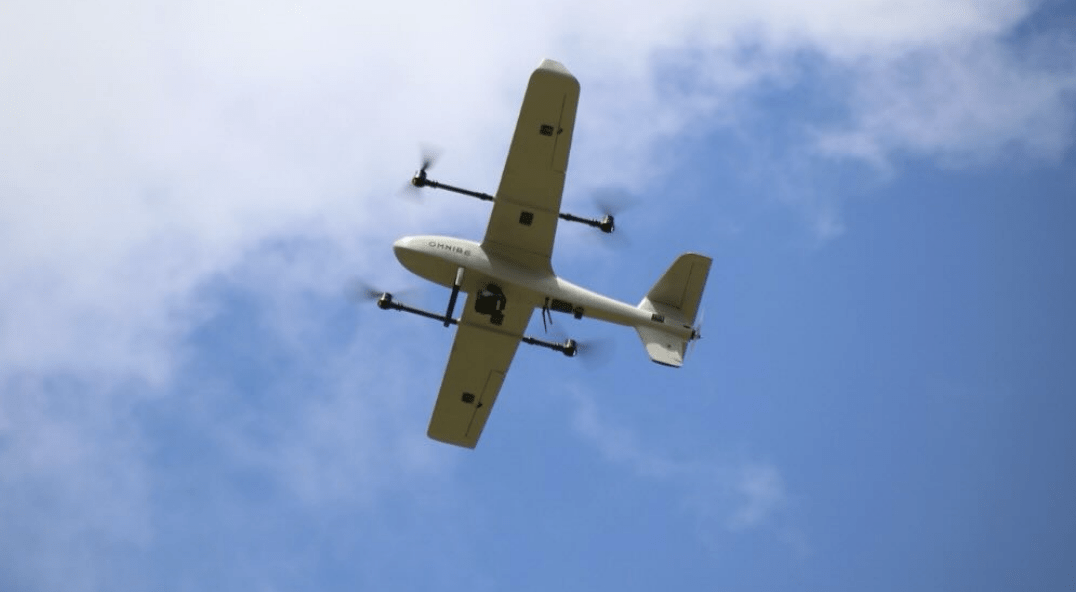
Yet the Kuomintang (KMT), Taiwan’s largest opposition party, did make concessions. In a last-minute reversal, it has allowed the Ministry of National Defense to keep authority over all military procurement paid for by the extra money, as the government wanted, even as the Ministry of Economic Affairs is given responsibility to run the program overall. Local-content rules were softened too, and the final text specifies acquisition of the coastal surveillance drones, coastal-attack drones and one-way attack boats that the military asked for.
Such equipment fits into the hedgehog strategy, which relies greatly on cheap and numerous equipment that can find and hit an approaching enemy but is itself mobile, easily hidden and therefore hard to destroy.
Some members of Lai’s Democratic Progressive Party were reportedly surprised with the helpfulness of the final text. Premier Cho Jung-tai avoided saying whether his government was satisfied.
There are also questions regarding the bill’s constitutionality. According to one interpretation of the constitution, the parliament can’t add budget items to the regular budget. Cho has refused to countersign several previous bills for this exact reason, setting up a constitutional fight. However, since early last year the constitutional court has been unable to function due to quorum restrictions put in place by the opposition parties.
The fight over drone funding itself also goes back further. In November, Lai proposed to include it in a broader special defence budget worth T$1.25 trillion. The opposition kept only funding for foreign procurement, cutting the total to T$780 billion. This meant there would be no money for domestic drone acquisition. It argued that funding for domestic procurement should come from the regular annual budget, where the parliament could maintain oversight.
The cabinet came back in June to propose a standalone special budget just for drones, and the opposition parties countered with their own versions where funding would be included in the regular budget.
Finally, the opposition parties pushed through their version on Thursday, the legislature’s last sitting day of the current session and close to the local elections in November. The KMT evidently didn’t want to go to those elections with a fight over defence hanging over it. Increased defence spending is generally popular. An INDSR poll in May put support for the government’s proposed special defence budget at 62 percent.
Pressure from Washington helped too. KMT chair Cheng Li-wun was repeatedly questioned on the subject during a trip to the United States in June, and towards the end of it she announced the KMT’s proposal, the one that has just passed the parliament. Legislative Speaker Han Kuo-yu of the KMT led a bipartisan delegation to the US weeks later for talks that also touched on drones specifically. A bipartisan US congressional delegation returned the favour in Taipei in early August, pressing Lai and the opposition directly on drone procurement.
Some commentators read the opposition’s earlier resistance less charitably: as expressions of the KMT’s – and especially Cheng’s – reluctance to look confrontational towards Beijing.
President Donald Trump looms in the background, too. He is due to host President Xi Jinping in September, and Taipei is always worried that he may make unhelpful comments, as he did in May 2025, when he called a defence package for Taiwan a ‘bargaining chip’.
Although Lai is unlikely to be happy, some analysts have called the approved bill a step in the right direction, albeit a small one. Taiwan’s drone industry has been growing, but mainly due to foreign demand from Ukraine and the Middle East. Taiwan wants the industry, like the semiconductor sector, to be a pillar of the economy and promote the island’s relevance. Just T$40 billion a year isn’t a big step towards achieving that, however.
The bill’s passage shows that Taiwan’s polarised politics can still pass major legislation, given enough electoral and US pressure. Apparently, the pressure of the enormous military threat from China wasn’t enough.
About Author