Shai-Hulud hackers: two men charged over TeamPCP’s global supply chain crime spree that hit OpenAI, and thousands more
Shai-Hulud hackers: two men charged over TeamPCP’s global supply chain crime spree that hit OpenAI, and thousands more
Police have charged two men from Western Australia over their alleged involvement in TeamPCP, a cybercriminal gang that has been blamed for a massive software supply-chain hacking campaign. TeamPCP is best known for Shai-Hulud, a self-propagating worm that spread itself through open source software.
The Australian Federal Police (AFP), working with the FBI and Western Australia Police, announced that on 26 August they charged a 21-year-old from Cottesloe and a 23-year-old from Mandurah with multiple offences, including data intrusion and unauthorised modification of data. Both men appeared in court in Perth on Thursday.
According to the authorities, the two men were principal members of a “sophisticated cybercrime syndicate” that created malicious open source software designed to steal data and extort ransoms from businesses. More than 1000 organisations around the world are estimated to have been compromised in the attacks, with over 500,000 credentials and at least 300GB of data stolen.
Neither of the men has been formally named by the police, but cybercrime investigative journalist Brian Krebs reports that the 21-year-old is Ruben Thomson, who used the handle “Ellis” and allegedly led TeamPCP until March 2026.
First emerging in late 2025, TeamPCP built a reputation for poisoning popular open source packages rather than directly attacking businesses. By compromising individual pieces of widely-used software their attack could impact thousands of victims at once.
The group’s Shai-Hulud worm hijacks GitHub and NPM developer credentials, and publishes boobytrapped versions of legitimate software packages. Anyone who uses the package in their own software risks sharing their own secret API keys and credentials with the hackers, opening the door for a further round of compromises.
Hacks linked to TeamPCP include the compromise of vulnerability scanner Trivy, which led to the breaches of open source AI gateway LiteLLM, and AI recruitment firm Mercor. TeamPCP also compromised LiteLLM’s own code directly, in an attack CloudSEK found had harvested secrets from more than 2,500 organisations.
The attacks even resulted in the theft of data from OpenAI, and a hack of the European Commission’s cloud infrastructure.
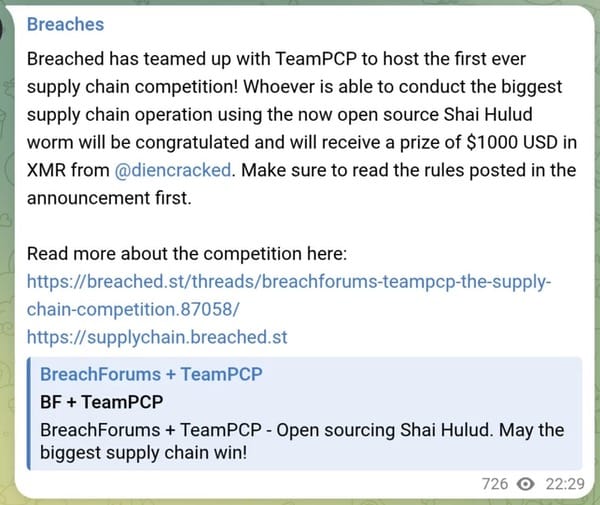
In an audacious twist earlier this year, it was announced on Telegram that TeamPCP was running a competition offering a prize for whoever built the biggest attack with leaked Shai-Hulud code.
Supply chain attacks like Shai-Hulud exploit the fact that most developers trust open source software packages too easily, and can all too easily believe a package from a public registry is safe because thousands of others use it.
About Author